Some orchids stand out mainly because of their color. Others rely on their size. And then there’s a more understated group: orchids that you only truly get to know when the day cools down and the evening air becomes warmer and gentler.
With fragrant orchids, it’s not always about a heavy, immediately noticeable scent. Some varieties, in fact, give off a delicate, crisp, or floral scent that only becomes truly noticeable when the plant is in the right spot. In July, this can be particularly lovely. A warm evening, an open window, a bright sunroom, or a greenhouse slowly cooling down: these are precisely the moments when certain botanical orchids take on much more character than you’d expect during the day.
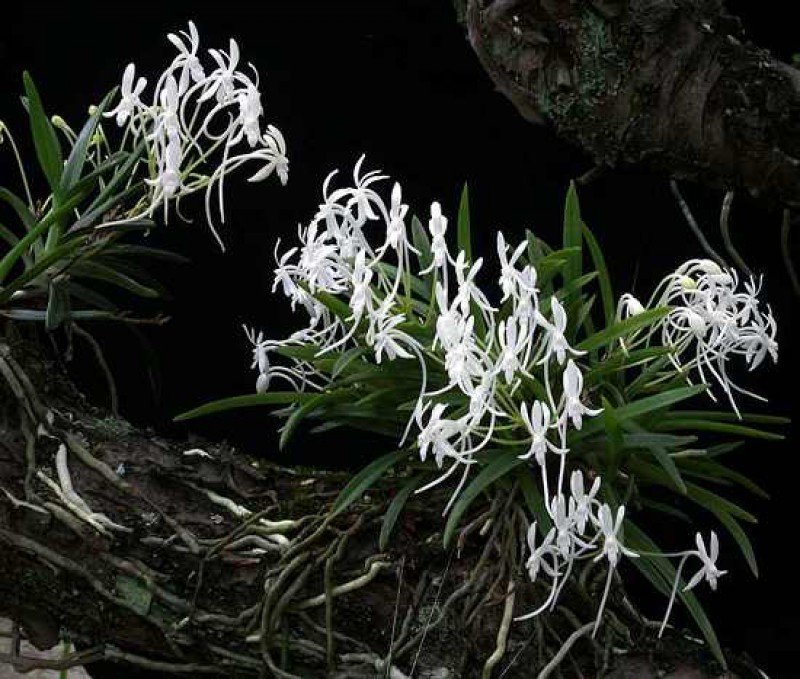
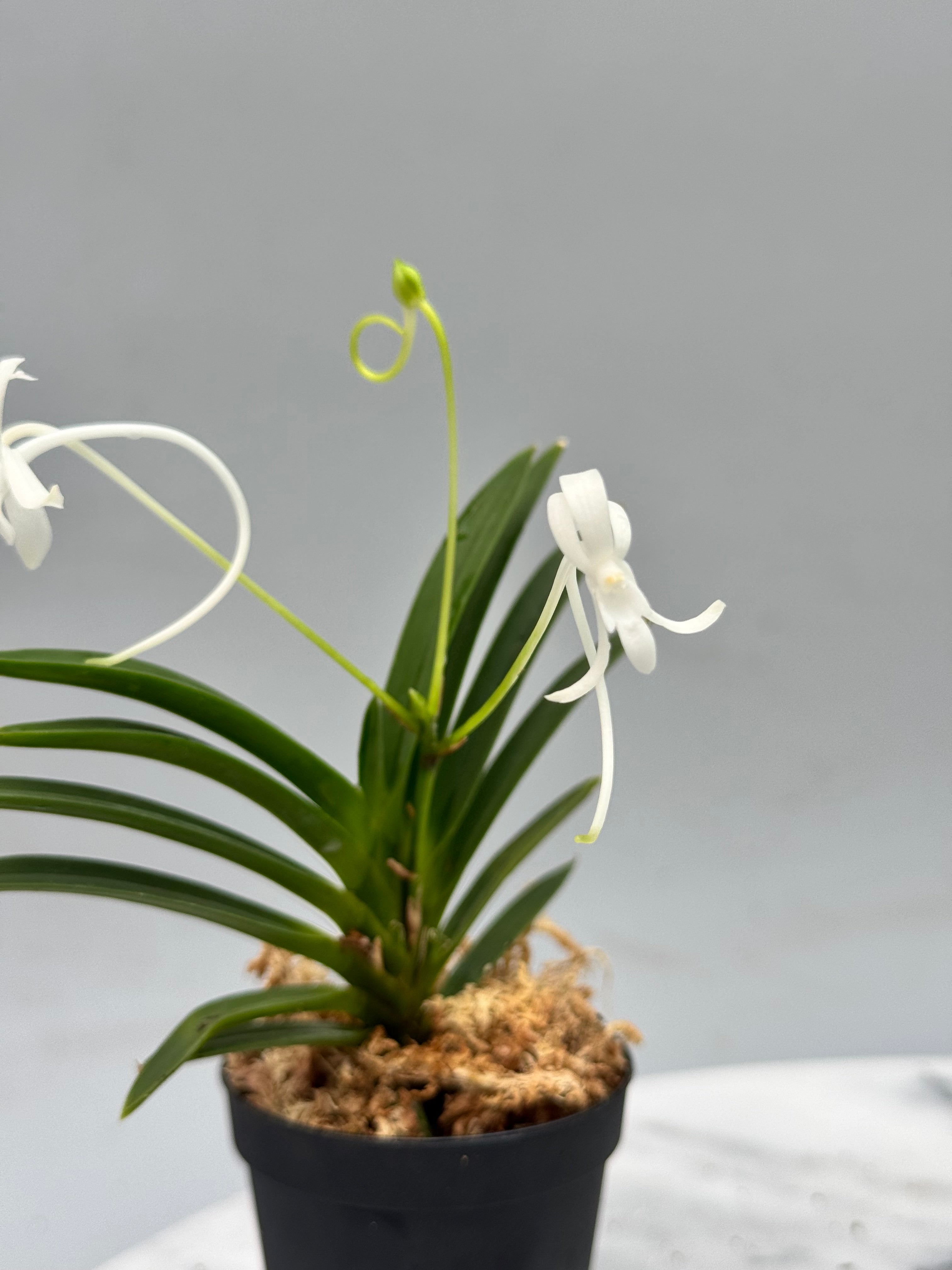
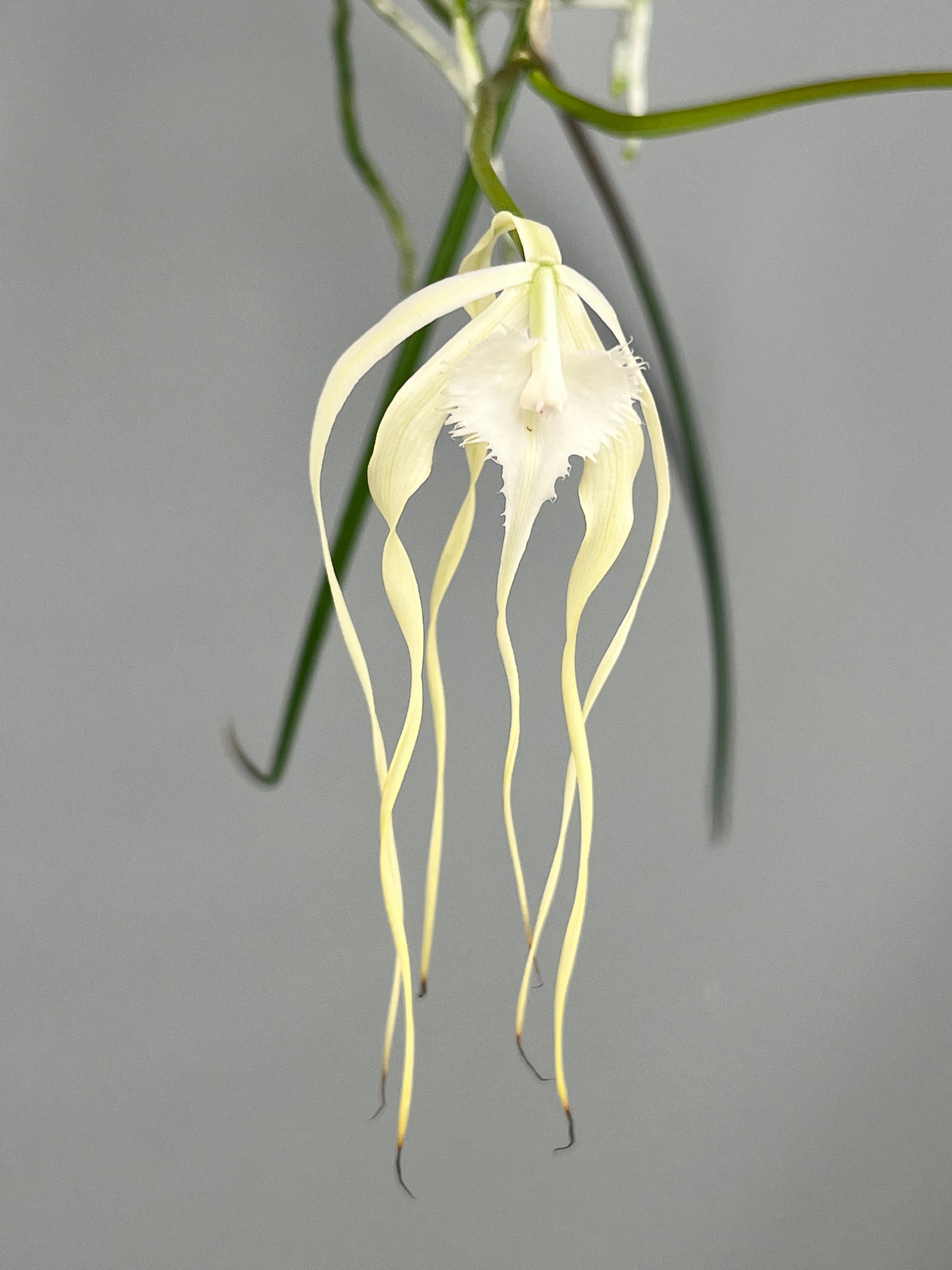
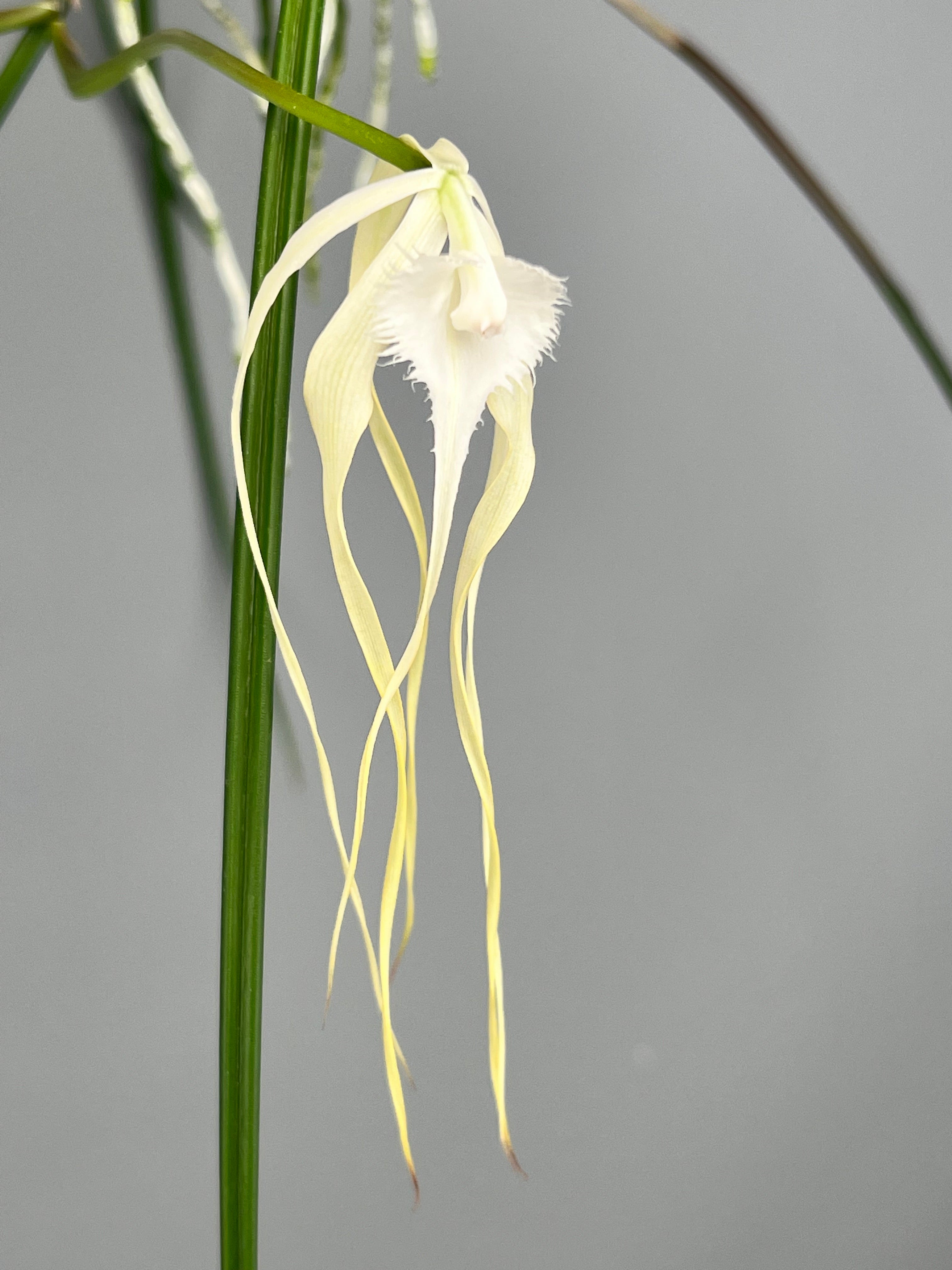
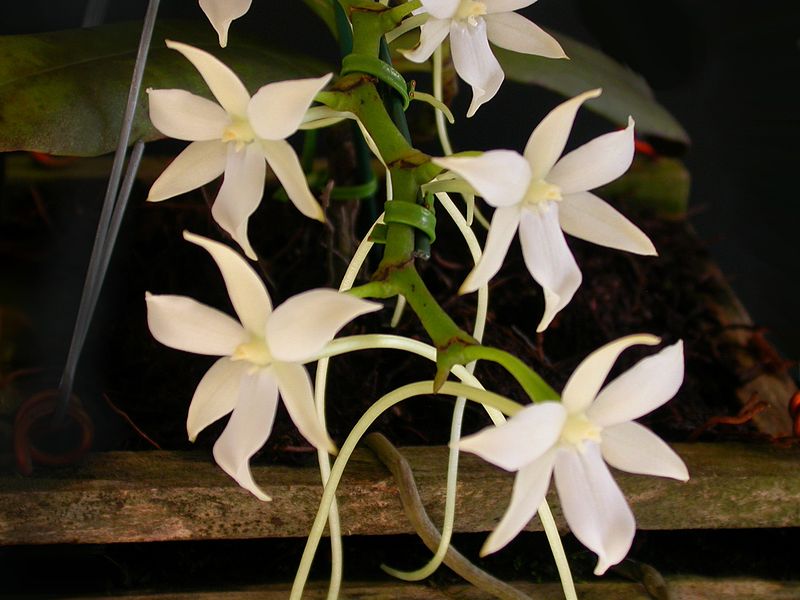
This atmosphere is particularly strong among Aerangis- and Angraecum-like orchids. White, star-shaped flowers, often with a spur, a serene appearance, and a scent that doesn’t seem meant to shout, but to be discovered.
The evening scent is no coincidence
Many orchids with white or pale-colored flowers are evolutionarily linked to nocturnal pollinators. You can often tell by the flower’s shape: bright flowers that remain clearly visible in low light, an elegant spur at the back of the flower, and a scent that can become stronger in the evening or at night.
That doesn’t mean every white orchid has a strong scent, nor does it mean the scent is always equally intense. Scent depends on the species, the stage of flowering, the temperature, the humidity, and even the time of day. A flower that’s barely noticeable during the day can suddenly become much more prominent in the evening.
That is precisely what makes these orchids interesting to collectors. They demand a little more attention. You don’t just walk past them to admire the flower’s color; you notice the plant because it changes the atmosphere in the room.
The Aerangis vibe: compact, botanical, and refined
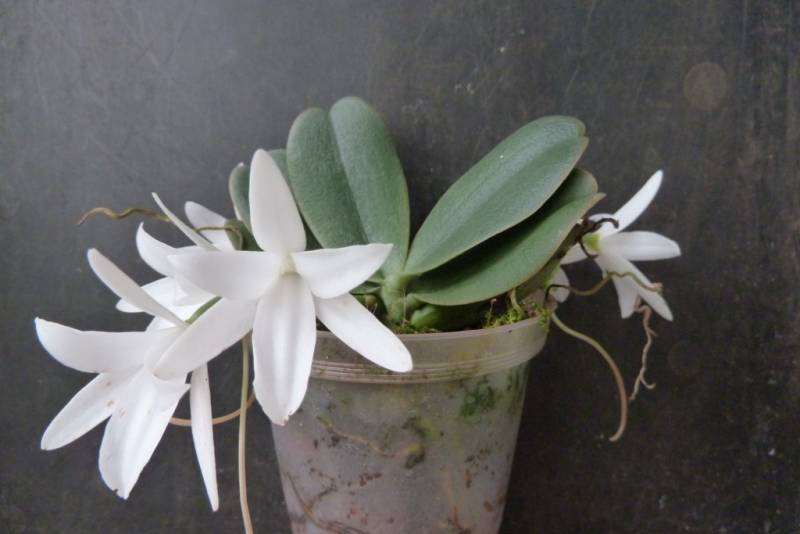
Aerangis is not an orchid for those looking solely for large, brightly colored flowers. Its charm lies in proportion, detail, and timing. Many varieties remain relatively compact, while the flowers can be strikingly large or elegantly shaped in proportion to the plant. The blooms often hang gracefully downward or forward, giving the plant a much more natural look than a classic potted orchid on a stake.
Within a collection, Aerangis species have a certain calmness about them. They usually don’t dominate the entire space, but they do catch the eye of anyone who looks closely. The white or pale-colored flowers, the often slender flower stalks, and their botanical character make them ideal for enthusiasts who seek not only “blooms” but also appreciate origin, growth habit, and fragrance.
This is a particularly well-suited group for warm summer evenings. Not because Aerangis can withstand unlimited heat, but because many species thrive in warm, humid, airy conditions with filtered light. That’s precisely the nuance: warmth can help, but dry heat and bright midday sun usually do not.
Aerangis fastuosa: small plant, big presence
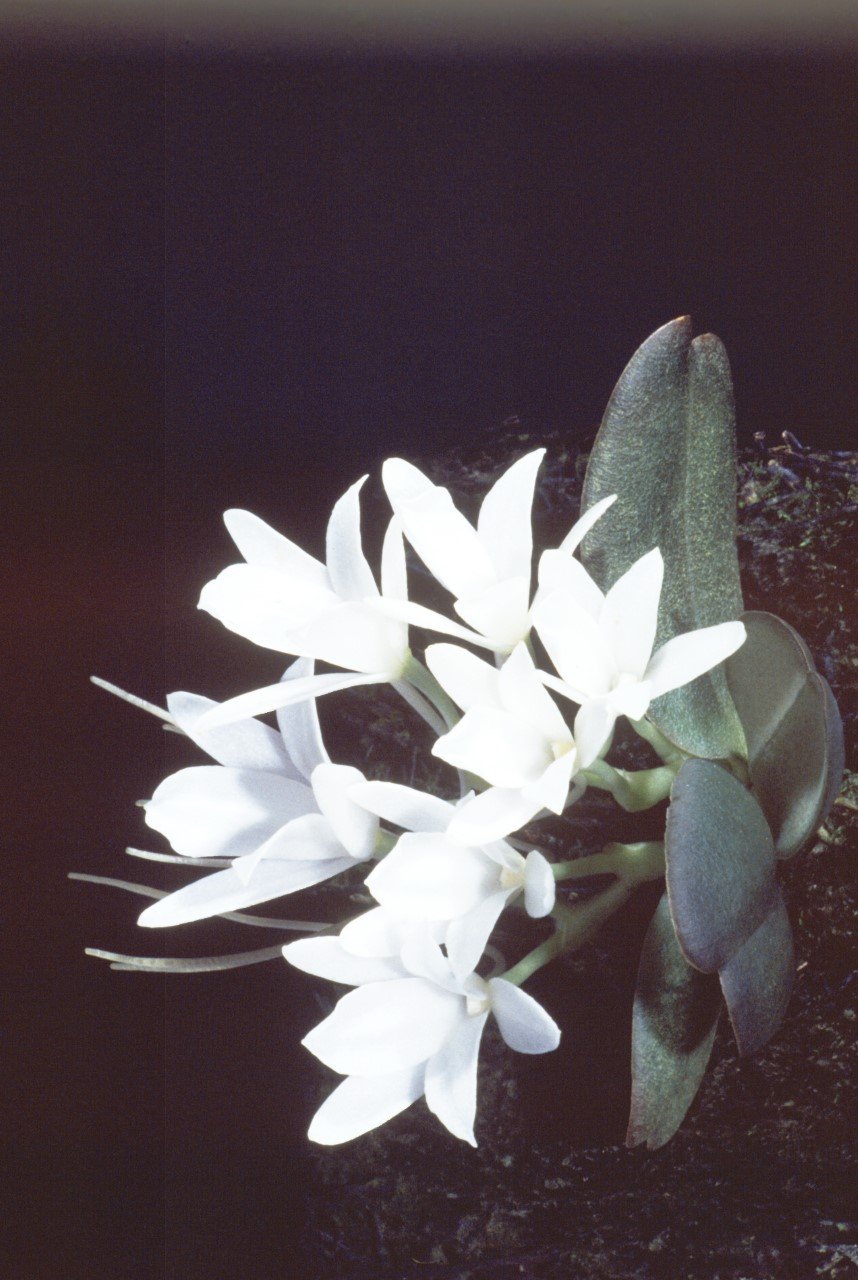
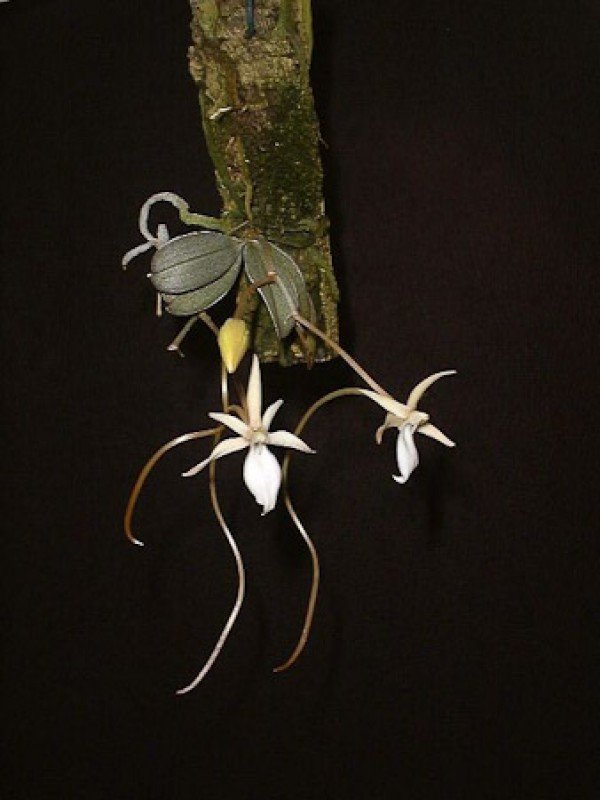
Aerangis fastuosa is one of the species that clearly demonstrates why Aerangis is so beloved. The plant remains compact, but the flowers can be strikingly large and bright white. This creates a beautiful contrast between the small leaves and the almost porcelain-like blooms.
This is not an orchid that looks grand or flashy. Its appeal lies more in its refinement. When in bloom, Aerangis fastuosa has an almost evening-like quality: calm, light, and striking without being garish. Under the right conditions, its fragrance becomes noticeable especially in the evening or at night, making this species particularly interesting for a spot where you actually walk by or sit during the summer.
Think of a bright room without harsh midday sun, a warm conservatory with sufficient air circulation, or a sheltered spot in a greenhouse. The roots should not be waterlogged for long periods, but they also shouldn’t dry out completely in dry, warm air. As with many miniature epiphytes, regular watering is more important than giving a large amount of water all at once.
Aerangis ellisii: elegance with longer lines
Aerangis ellisii has a different appearance. While Aerangis fastuosa tends to look particularly compact and dense, Aerangis ellisii often brings more linearity to the plant. The inflorescence can hang gracefully, with flowers that appear refined and three-dimensional. As a result, this species fits beautifully into a collection where the shape of the flower spike is also important.
The flowers are light, elegant, and botanical. Not meant for a fleeting display, but for close-up appreciation. This is the type of orchid where a photo often tells only part of the story. The proportions between the flower, spur, flower stalk, and leaves often make the plant more interesting in person than in a flat product image.
The same basic care guidelines apply: light but not scorching, warm but not dry, humid but not stuffy. Aerangis ellisii is particularly appealing to enthusiasts who understand that fragrant orchids don’t always perform consistently like a scented candle. The reward lies in the moment when the plant itself decides that the evening is right.
Aerangis bouarensis: rarer, understated, and a collector’s item
Aerangis bouarensis is an interesting species for those seeking something not found in every collection. The plant has a refined, botanical appearance and fits well within the more understated category of fragrant orchids. No stark color contrasts, no exaggerated flower shape, but a serene combination of pendulous blooms, light-colored flowers, and character.
It is precisely this understated nature that makes Aerangis bouarensis a collector’s item. It is a species you don’t buy because it immediately dominates the room, but because it adds something to the collection: origin, rarity, form, and fragrance.
On warm evenings, this type of plant often comes into its own better than in the middle of a busy day. The scent may then come through more subtly or more distinctly, depending on the conditions. A spot with filtered light, sufficient humidity, and gentle air movement is important. Especially in July, you should prevent a small pot or airy growing medium from drying out too quickly without you noticing.
Aerangis verdickii: subtle fragrance and an airy inflorescence
Aerangis verdickii has an elegant, understated appearance. The flowers are not meant to create a mass effect, but rather to serve as a detail. The white blooms, the pendulous form, and the subtle fragrance make this species particularly appealing to those who love botanical orchids with a natural character.
This species fits well with the theme of warm evenings because it doesn’t rely on spectacle. It works best as a quiet plant in a collection: an orchid you have to bring closer to appreciate, or one you suddenly notice one evening.
When it comes to care, good airflow is important. Like many Aerangis species, the plant likes sufficient moisture during active growth, but the roots must be able to breathe. A substrate that is too heavy or wet is less suitable for this type of orchid. In the summer, it’s better to water more frequently and carefully than to let the plant sit in water for long periods.
Angraecum-like orchids: the classic nighttime fragrance
When you think of night-scented orchids, Angraecum and related groups quickly come to mind. The look is recognizable: star-shaped white to greenish-white flowers, often waxy in texture, with a spur and a scent that can intensify in the evening. Some species grow much larger than Aerangis, but they share a similar appearance.
Angraecum-like orchids have a certain classic charm. They evoke a long botanical history, moths, and flowers that seem designed not for the midday sun but for twilight. This makes them particularly well-suited for enthusiasts who view orchids not merely as houseplants, but as living botanical specimens.
The same caution applies in July: warmth is fine as long as the plant doesn’t dry out, get scorched, or become trapped in stagnant air. A warm evening is quite different from a hot windowsill at three o’clock in the afternoon.
What to Watch Out for in July
With fragrant orchids, care is often directly linked to the scent experience. A plant that’s too dry, stressed, or has root problems will grow less well and often bloom less impressively. Small epiphytic orchids, in particular, can dry out faster than expected during hot spells.
Therefore, place these plants in a spot that’s bright but protected from the intense midday sun. Ensure good air circulation, especially when humidity is high. Water based on the condition of the roots and the growing medium, not just according to a fixed weekly schedule. In July, a pot that was drying out slowly in May may suddenly dry out much faster.
Also pay attention to flowering plants during hot weather. Buds and newly opened flowers may be more sensitive to temperature fluctuations, dry air, or transport stress. When buying a fragrant orchid, it’s best not to choose it solely for its “current scent,” but for the plant as a whole: roots, growth, rhythm, and the next bloom.
Not every scent is the same
A common mistake is to lump all fragrant orchids into a single category. In reality, the differences are significant. Some scents are floral or jasmine-like, while others are spicy, citrusy, sweet, or very subtle. The intensity also varies greatly. An orchid that makes a distinct impression in a small room may be much less noticeable in a large greenhouse.
With Aerangis and Angraecum-like orchids, the scent experience is often refined. Not heavy or artificial, but natural and sometimes fleeting. It is precisely that fleeting quality that makes it beautiful. You notice the plant when the conditions are right.
This also fits well with summer. Many people spend more time at home in the evenings, windows are open, and a flowering plant becomes part of the space in a different way. For orchid collectors, scent isn’t just a bonus—it’s an extra layer to the collection.
An orchid for the discerning eye
Fragrant Aerangis species aren’t your typical house orchids. They’re more subtle, more botanical, and often more interesting to people who’ve been observing orchids for a while. The flowers are refined, the plants often remain compact, and the fragrance is tied to timing and care.
On warm summer evenings, these are precisely the qualities that make them appealing—not because they’re loud, but because they create atmosphere. An Aerangis in bloom can transform a room without taking up much space. That makes this group particularly well-suited for collectors looking for something quieter, rarer, and more sensory than the typical flowering houseplant.
So if you’re choosing a fragrant orchid in July, it’s best not to base your decision solely on a photo of the flower. Consider where the plant will be placed. Is there filtered light? Is the air not too dry? Can you regularly check to make sure the roots are getting enough moisture? If so, a fragrant, botanical orchid can be one of the most beautiful plants for warm summer evenings.