What do we mean by a large orchid?
Large orchids do not form a separate botanical group. Within this collection we use the name for three different types of plants.
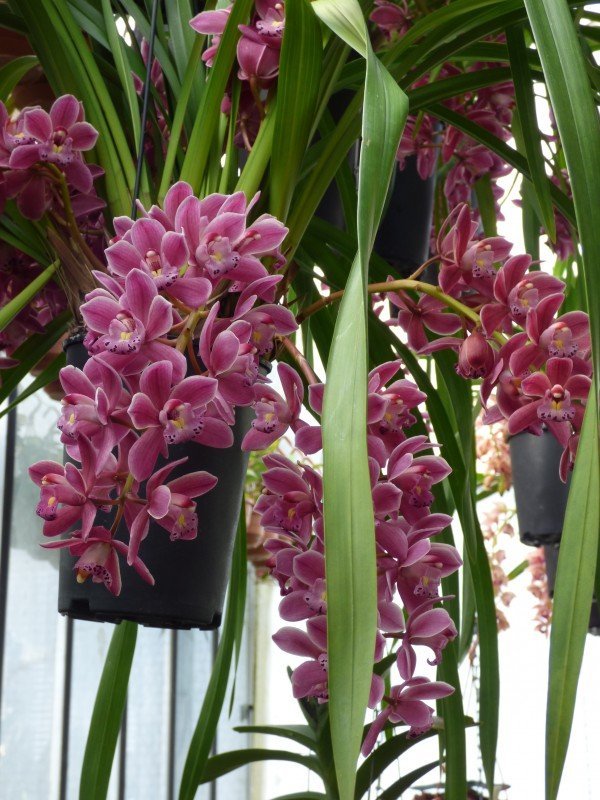
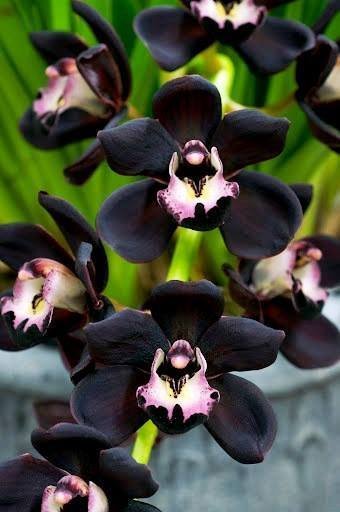
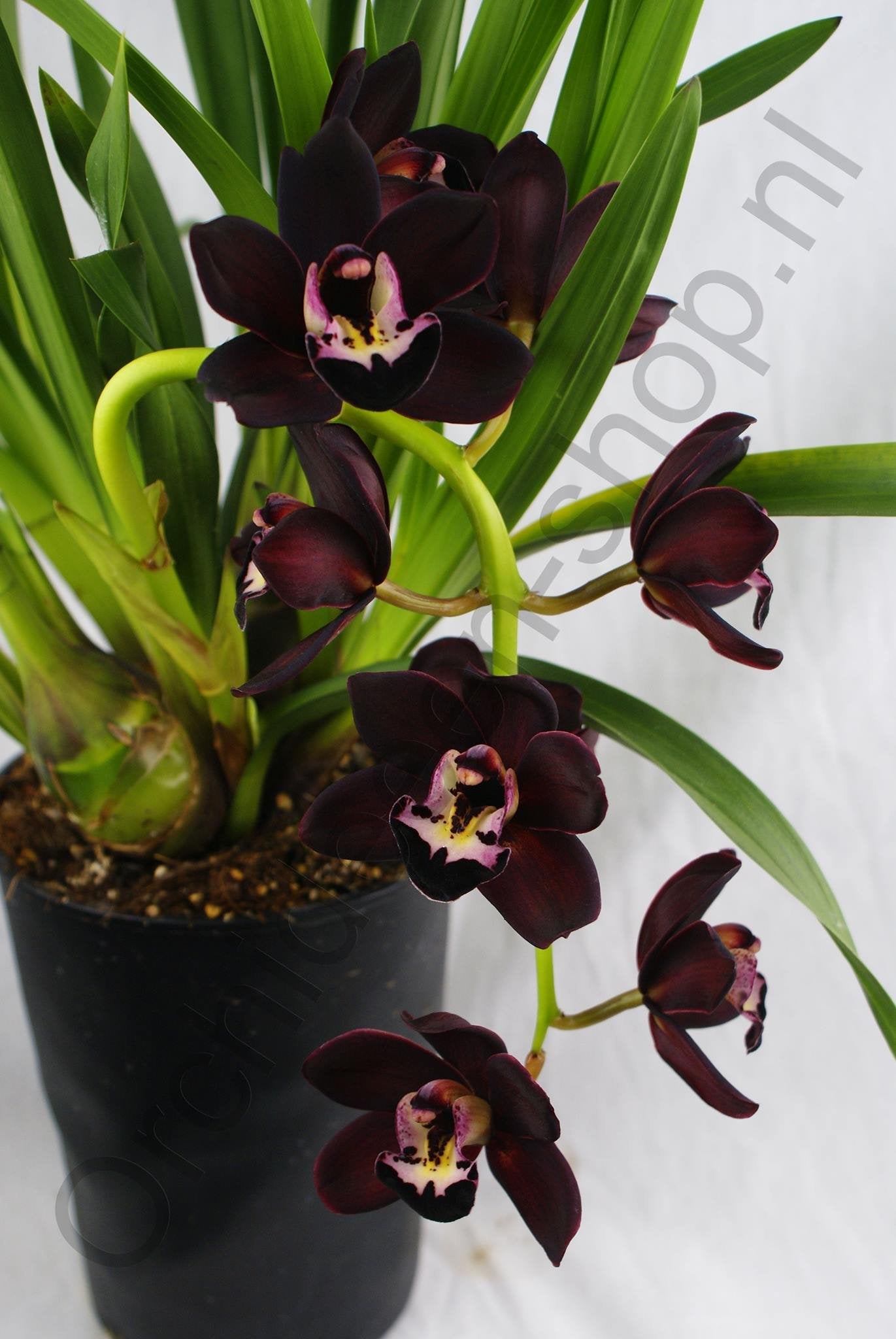
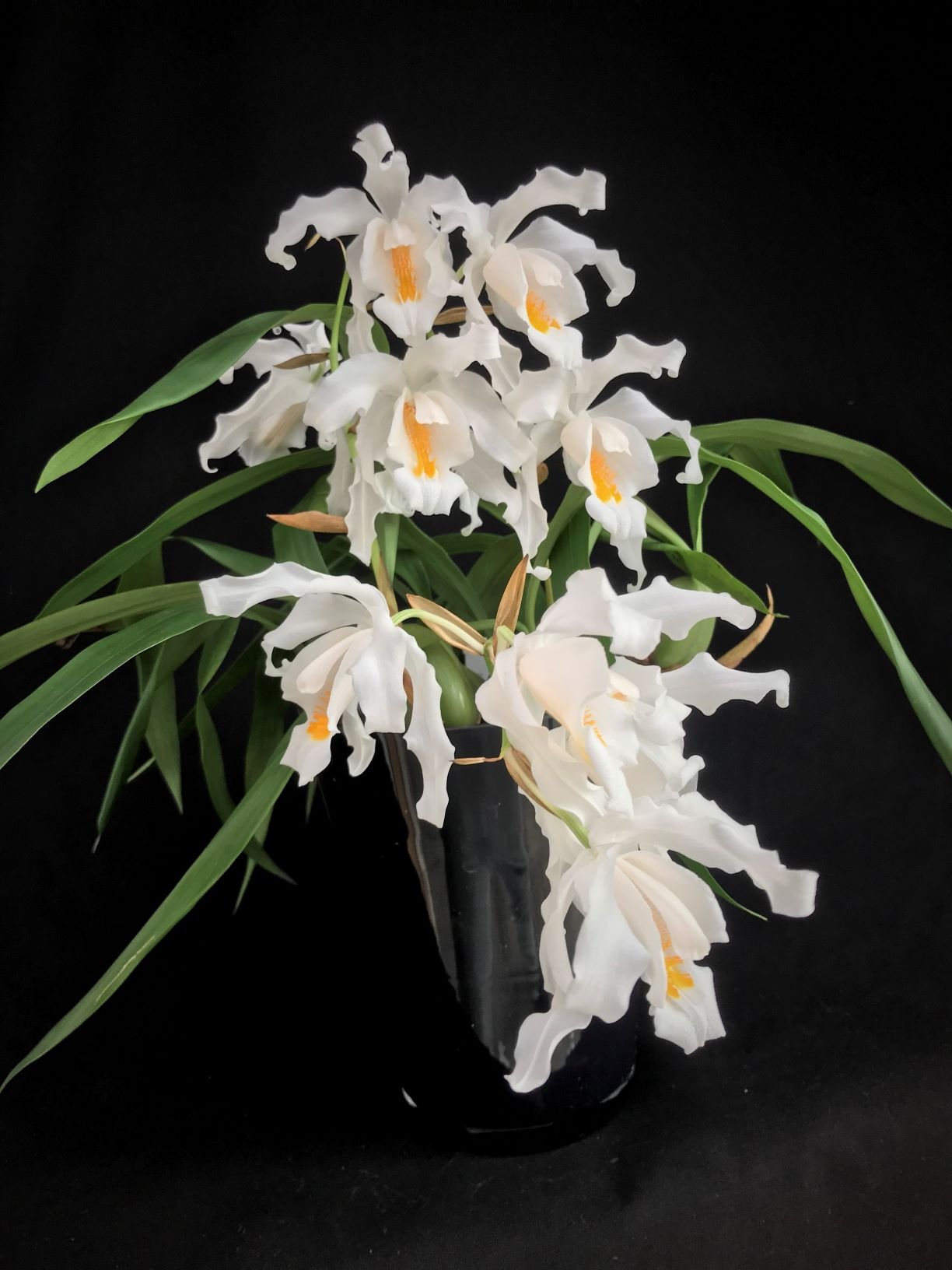
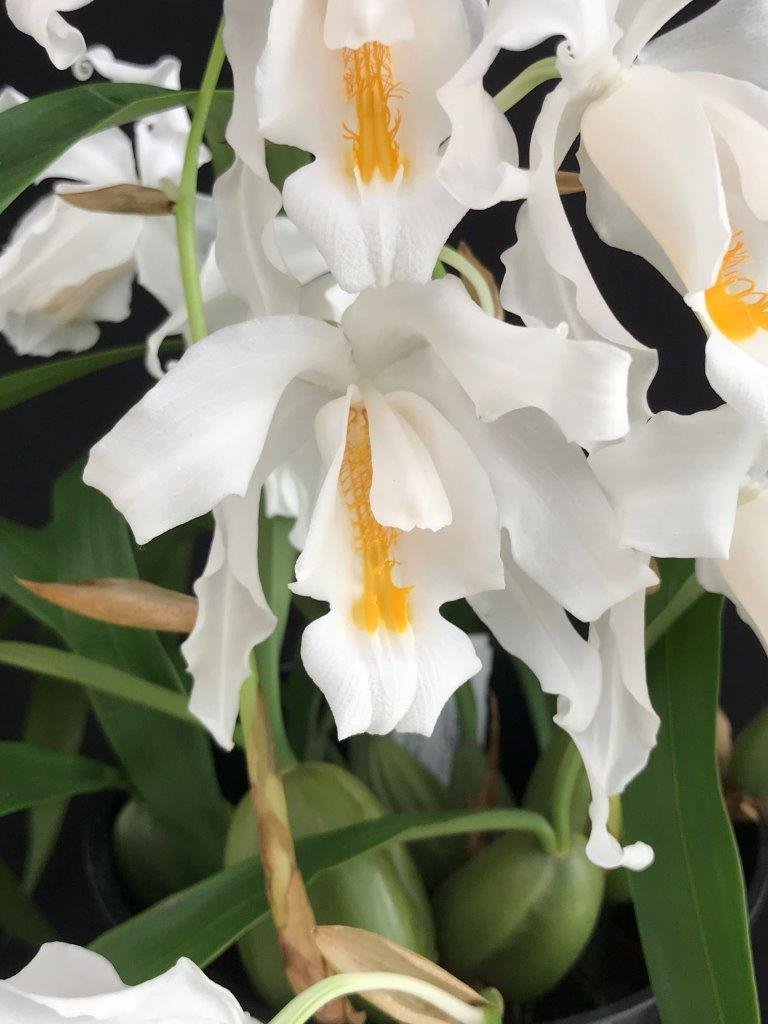
Some consist of orchids that take up a lot of space even as adult plants. They can develop long leaves, large pseudobulbs, multiple growing points or long hanging stems. Cymbidium, certain Dendrobiums and some large botanical ones Phalaenopsisspecies are good examples of this.
In addition, we regularly offer adult specimens that are as Big Plant, XL or XXL are described. This means that the item offered is larger, older or fuller than our usual size. The species itself does not therefore automatically have to be one of the largest orchids in the world.
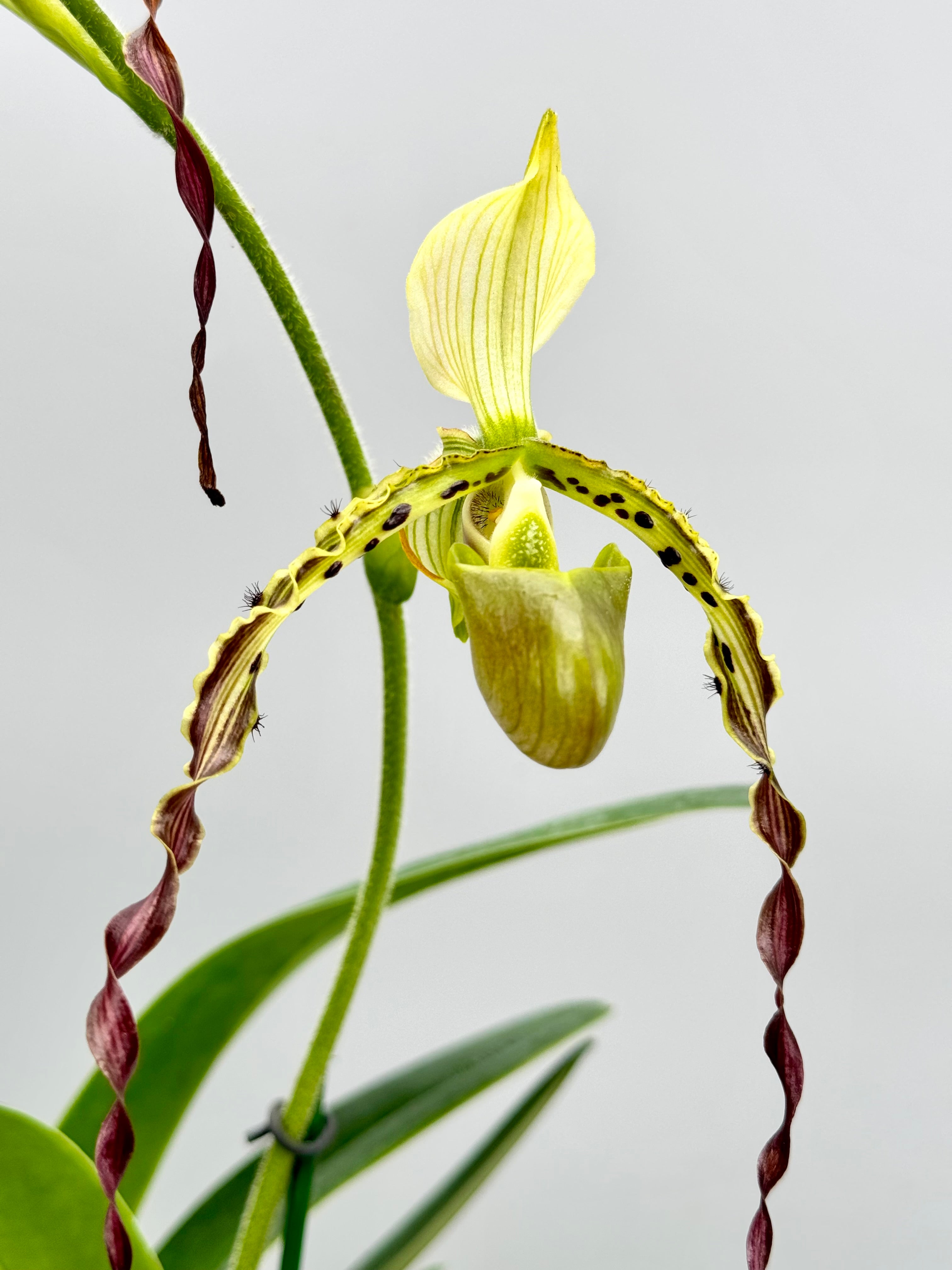
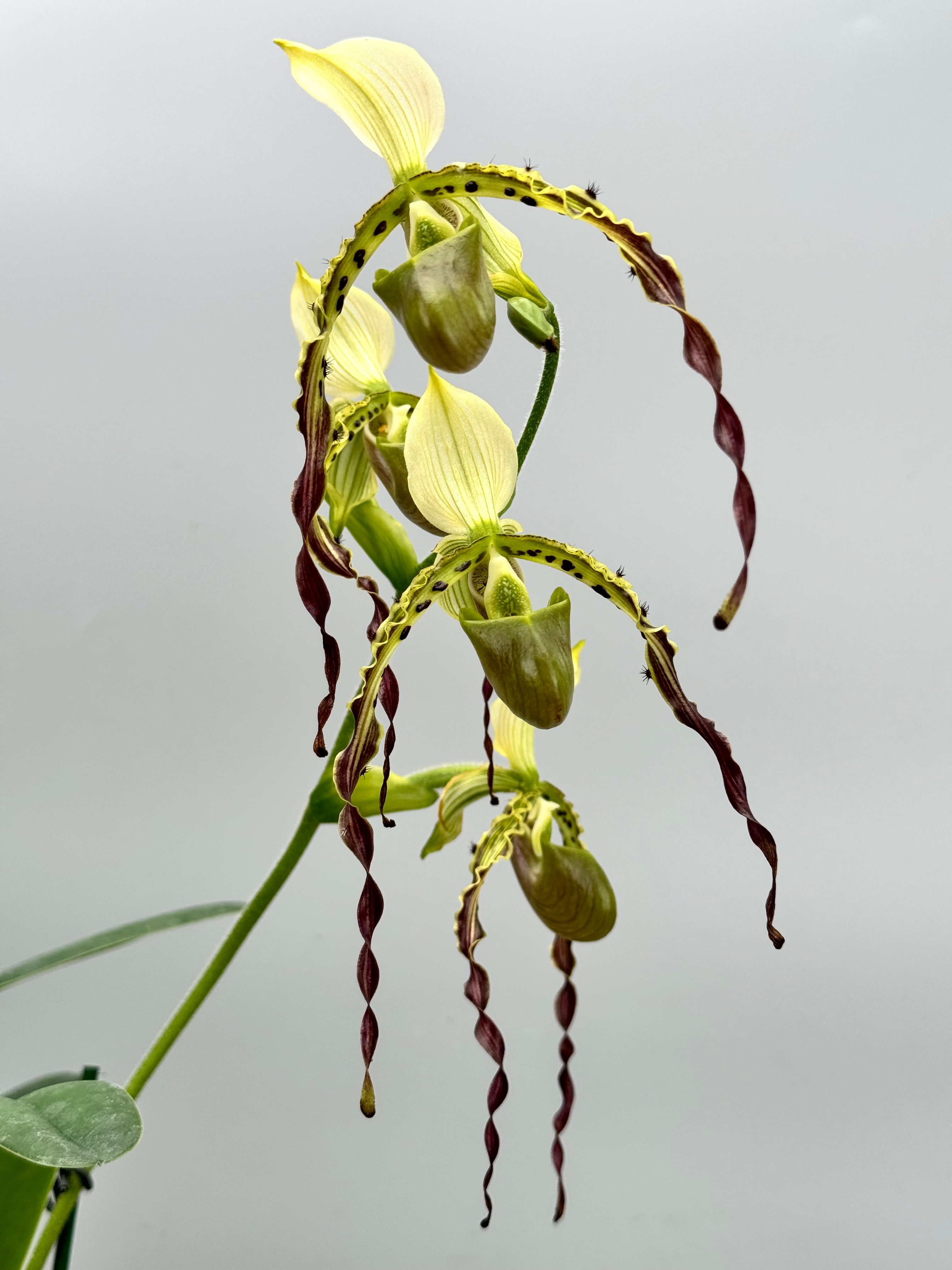
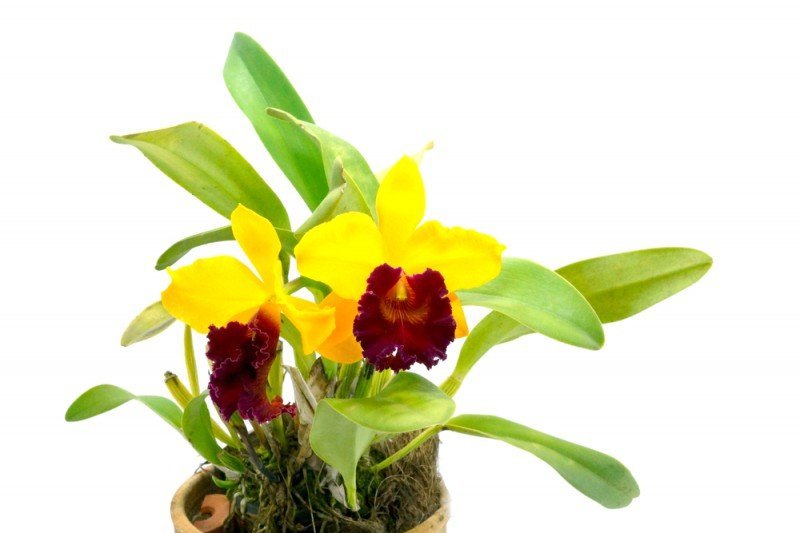
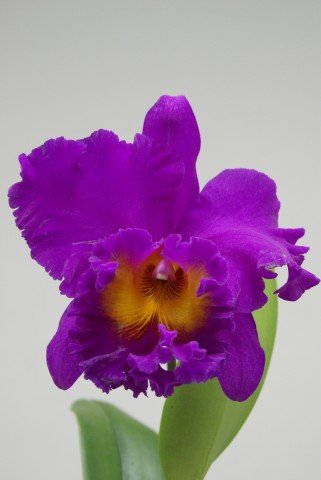
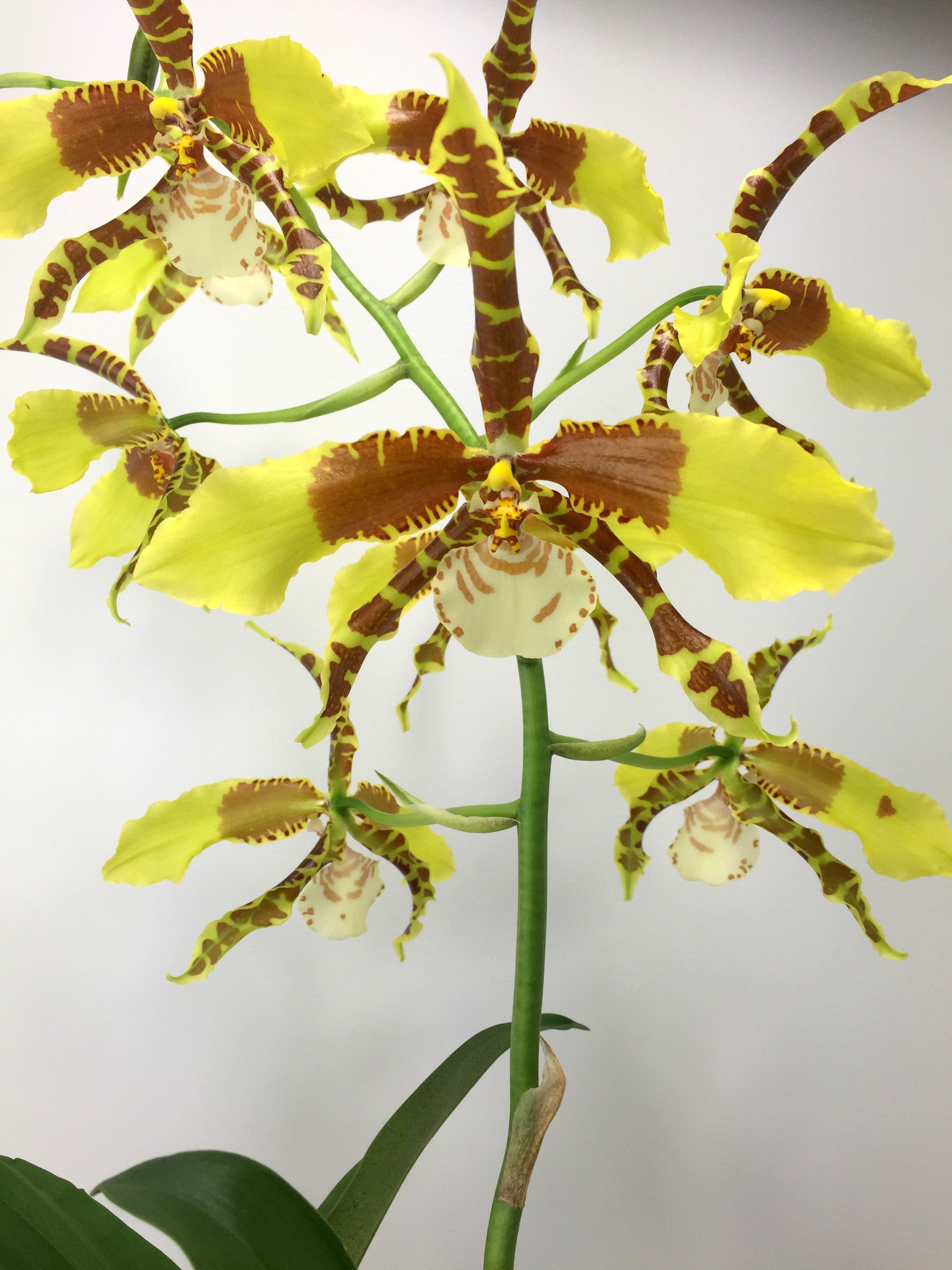
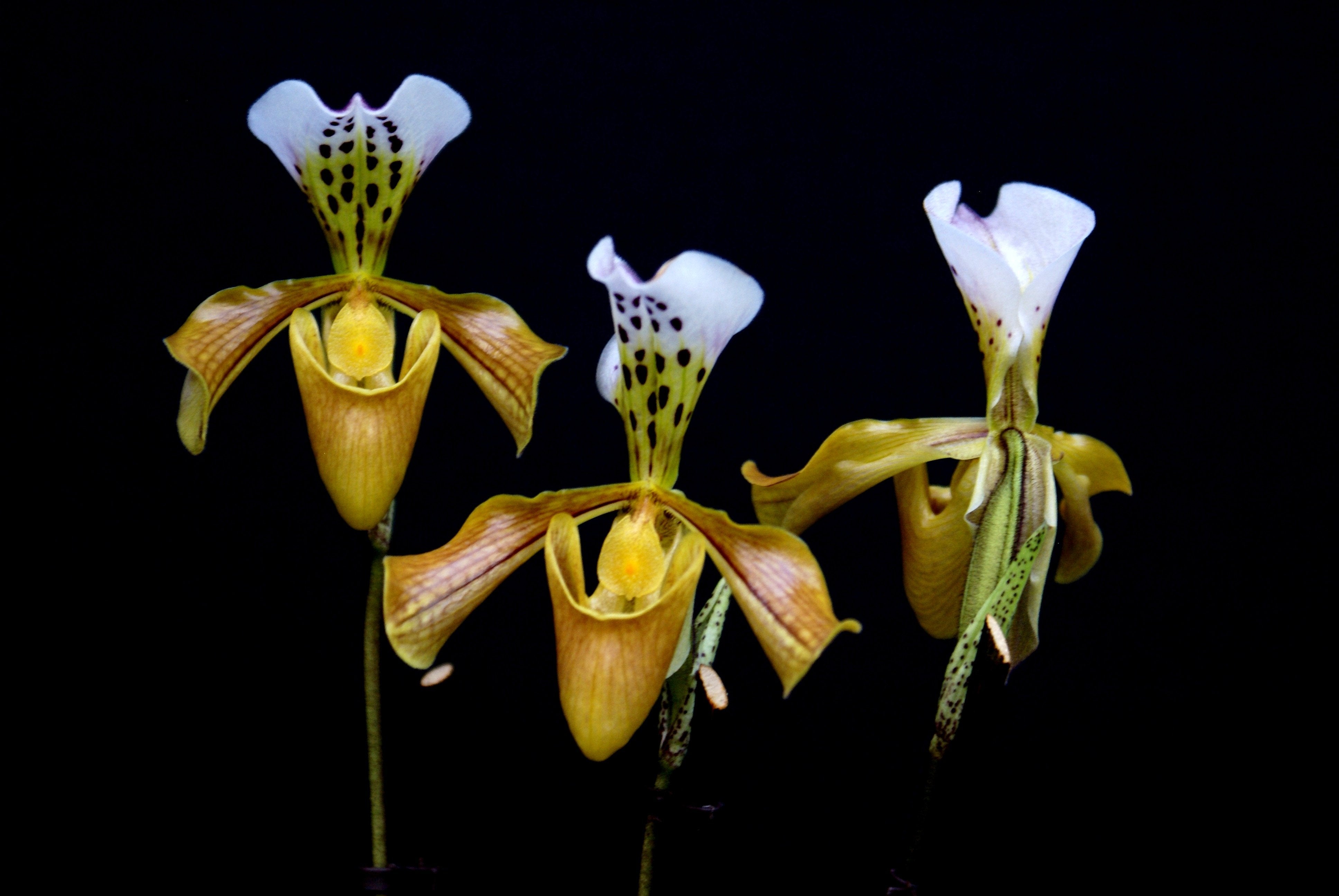
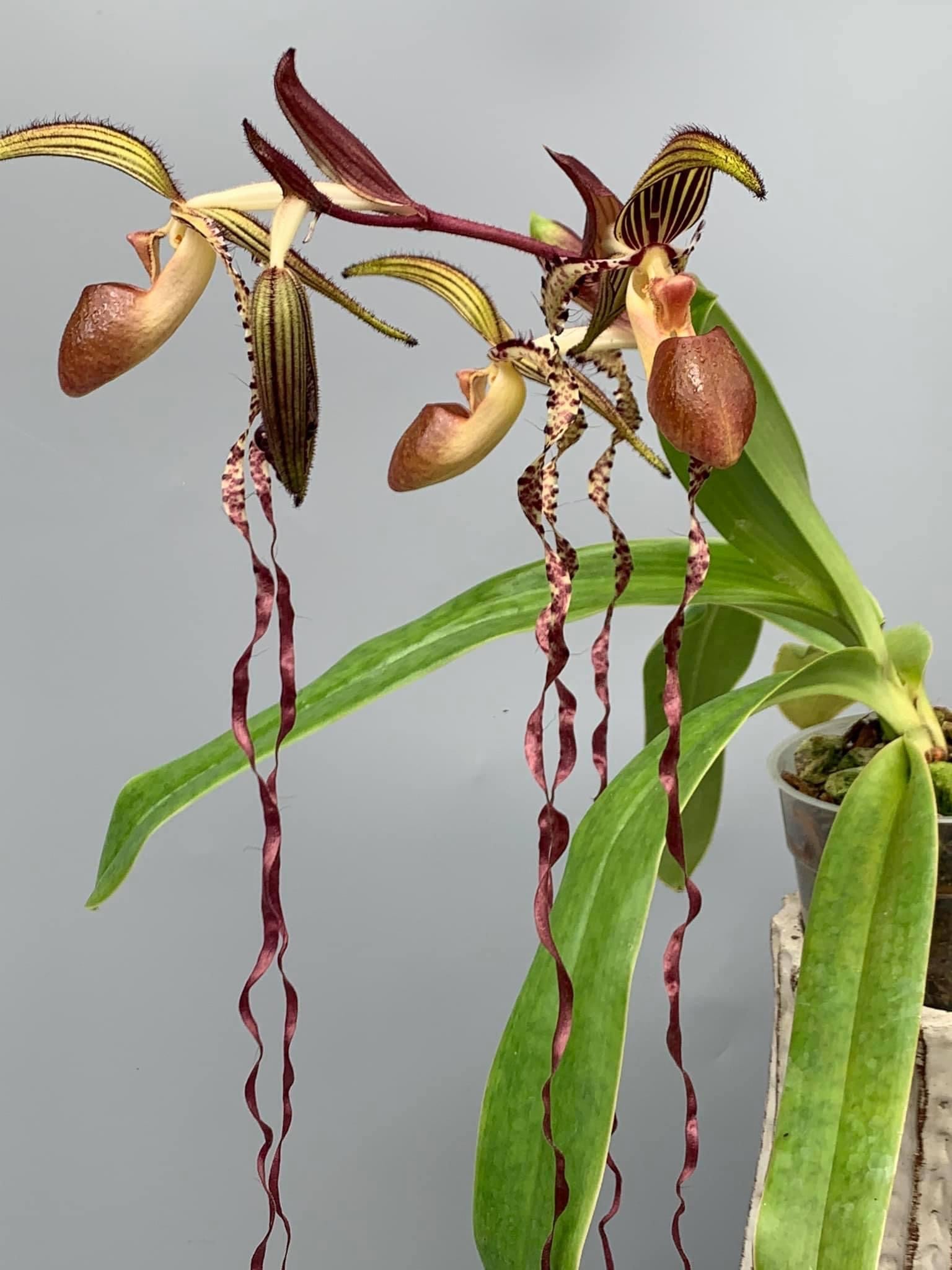
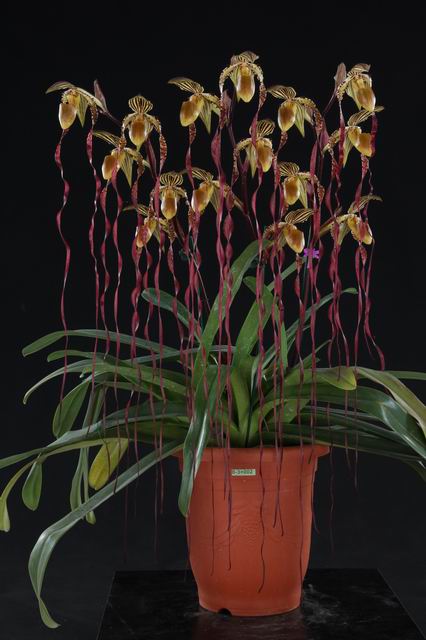
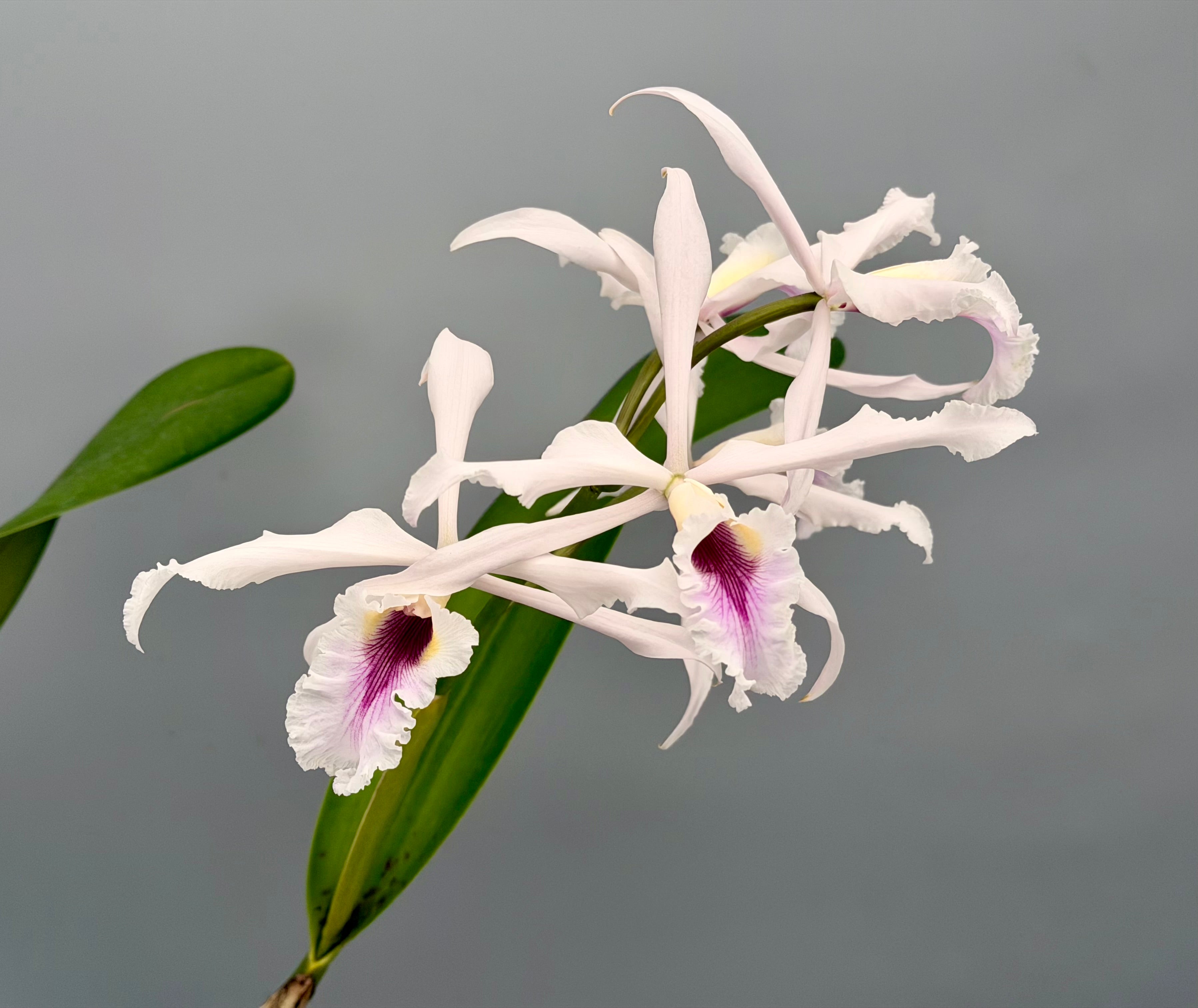
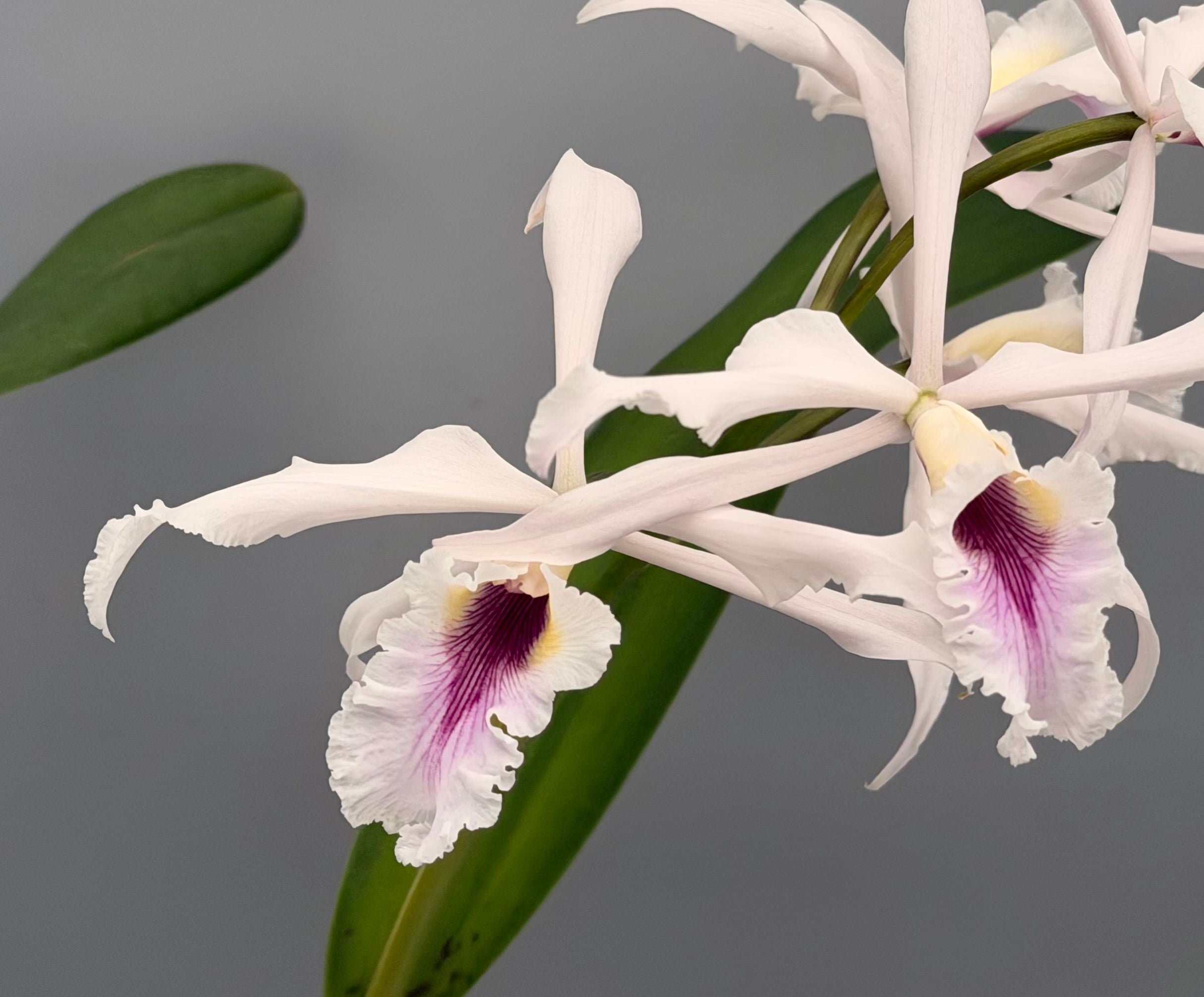
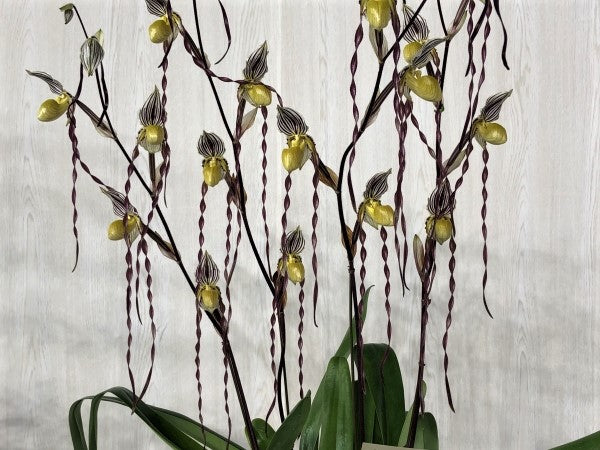
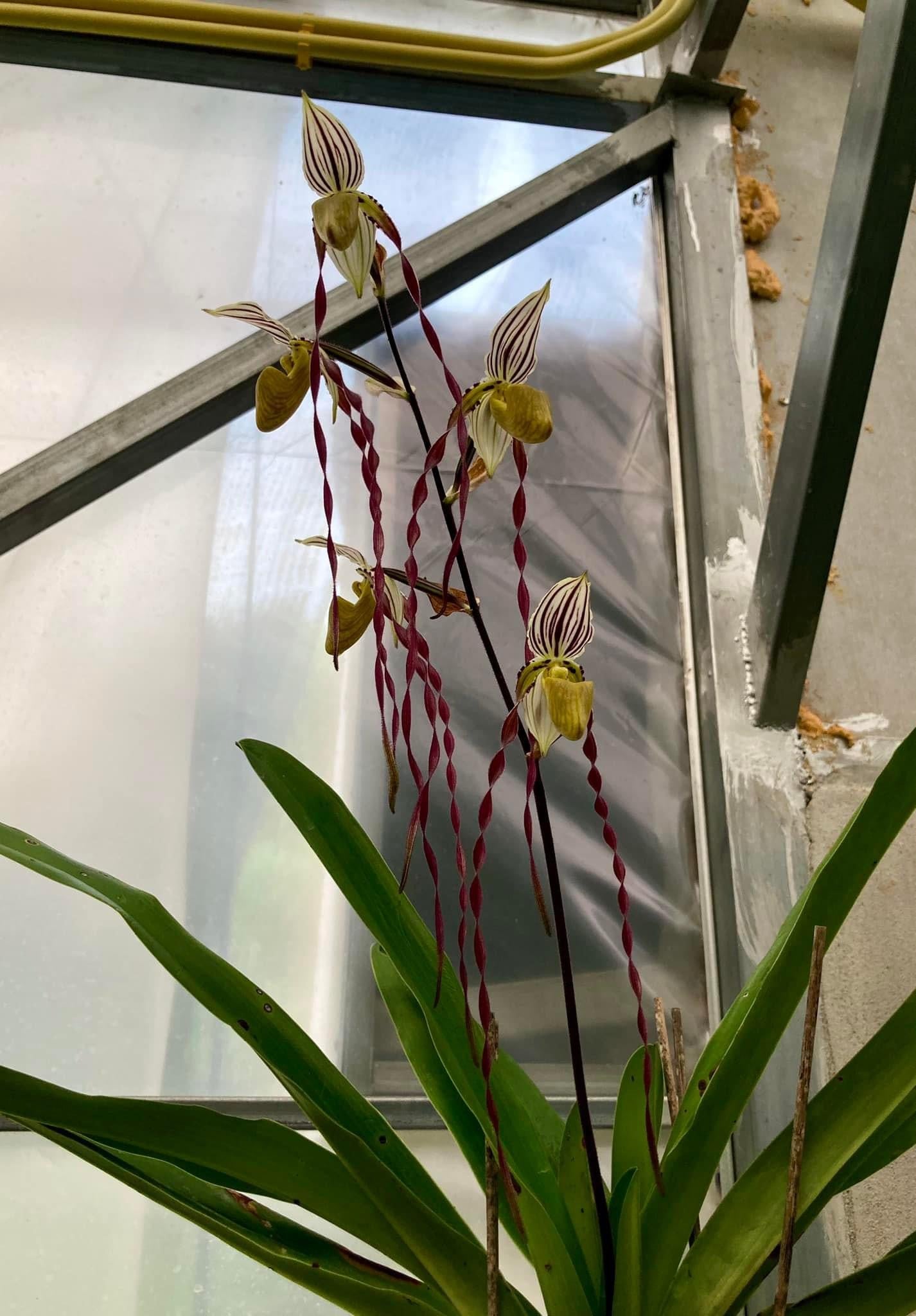
Finally, the collection contains orchids that make a great visual impression. For example, a Cattleya can produce enormous flowers without the plant itself growing exceptionally tall. In certain Paphiopedilums, the size is created by long petals or a high, multi-flowered flower spike.
Why choose an adult or larger specimen?
With orchids, plant size often mainly represents time. An adult plant has already had several growing seasons and may have a sturdier root system, several pseudobulbs or several mature growing points.
This is interesting for collectors because a larger specimen better shows the natural growth habit of the species. In a Cattleya, the build-up of old and new pseudobulbs becomes clearly visible. An adult Dendrobium can develop long stems and multiple flowering points, while a large Paphiopedilum has more space to form new fans.
A larger specimen may also be closer to flowering age than a young plant. However, that does not automatically mean that the plant will bloom immediately or every season. Light, temperature, root condition, seasonal rhythm and care remain decisive.
Anyone who buys a Big Plant does not only pay for centimeters, but also for the time it took to grow that specimen.
Supplied large or naturally large?
The difference between the current delivery size and the final plant size is important.
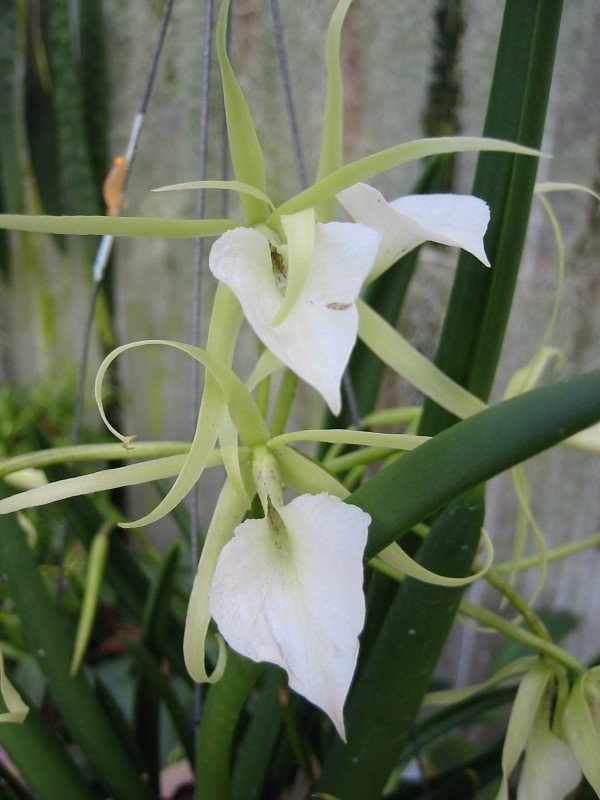
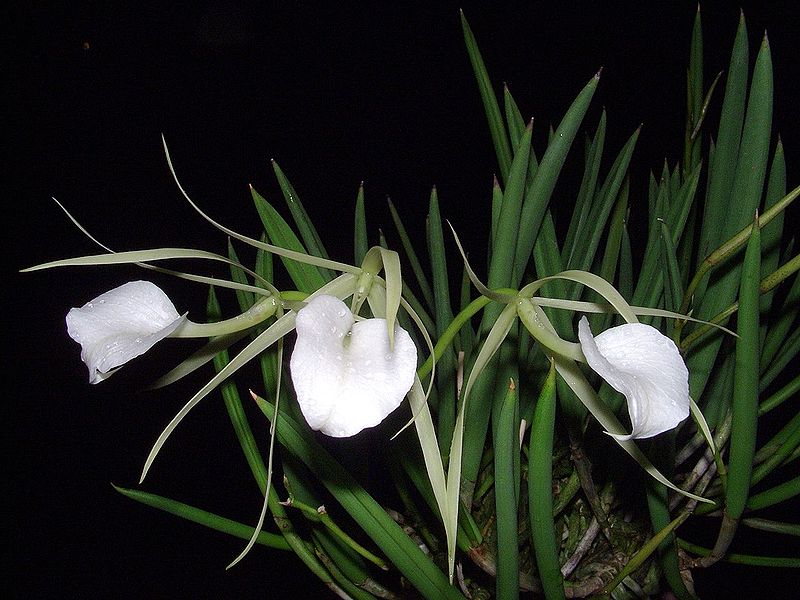
A young one Cymbidium can still be supplied relatively modestly, but later grow into a wide plant with long leaves and a large pot. A Big Plant of Brassavola nodosa can be a full and mature specimen, while the individual growth remains relatively slender.
Therefore, pay attention to the full product name and the information on the product page:
Big Plant, XL or XXL describes the size offered within that lot;
adult means that the plant is of the age and development to flower under suitable conditions;
Blooming: Yes means that the selected variant is offered with a flower or flower branch;
Blooming: No means that the product photo can show the possible flowering, but the plant does not Blooming is delivered.
An adult plant is therefore not the same as a plant that is in bloom at the time of shipment.
How much space does a large orchid need?
When determining the space required, don't just look at the Potsize. The leaves, pseudobulbs, roots and flower branches can extend much further than the pot itself.
Sympodial orchids such as Cymbidium and Cattleya grow gradually sideways as each new growth arises next to the previous one. A fully grown plant can therefore become wider over the years. Dendrobiums can form long upright or hanging stems, depending on the species. In Aerides and other monopodial orchids, height and leaf span mainly increase.
Also take future flowering into account. An orchid that fits easily on a windowsill without flowers may suddenly need considerably more height or width with a long flower branch.
Therefore, measure before purchasing:
the available height and width;
the space around the leaves;
the distance to the window or grow light;
the place for a future flower branch;
the ability to place or hang a heavy pot in a stable manner.
Cymbidium: volume and long flower spikes
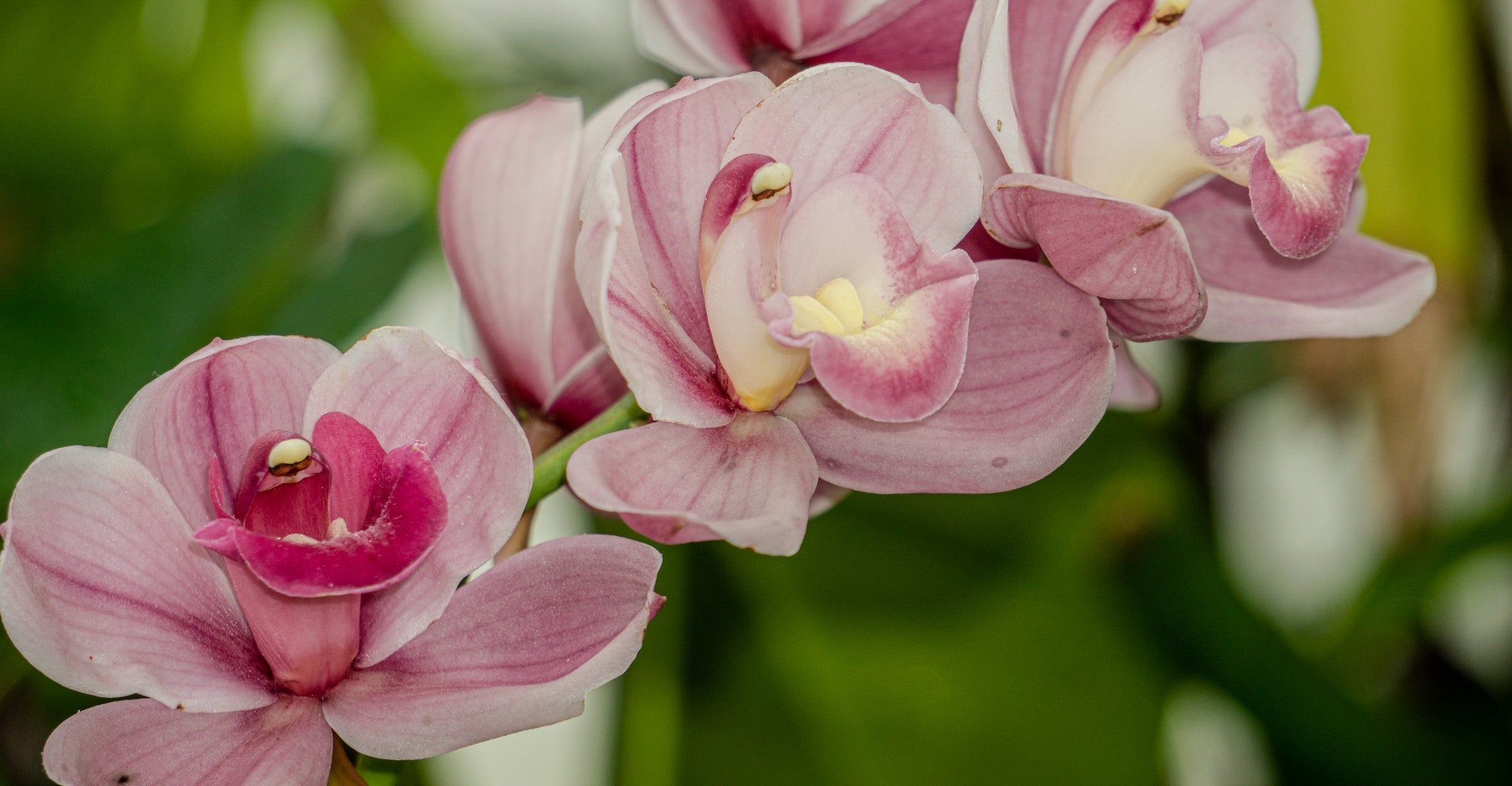
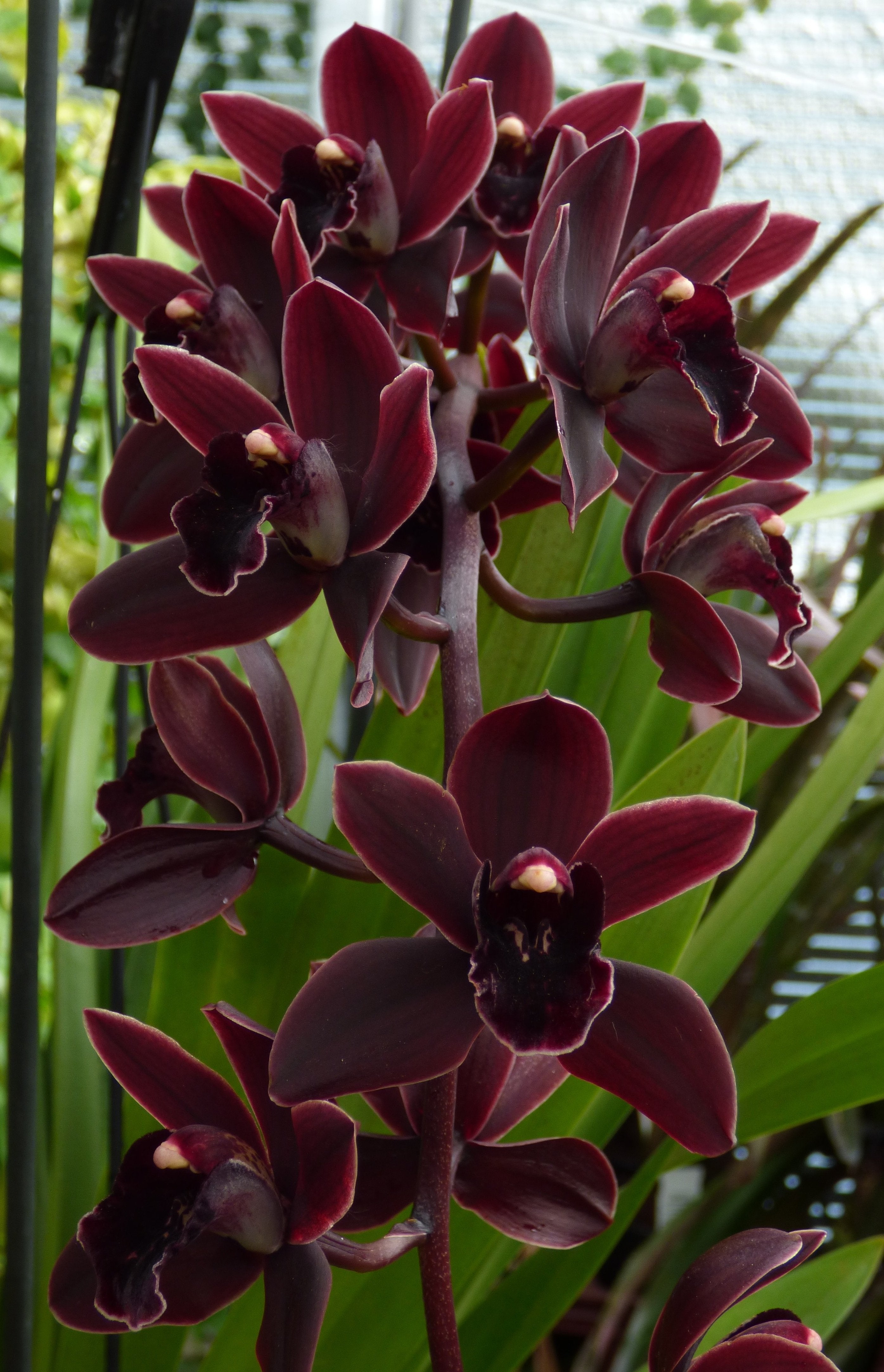
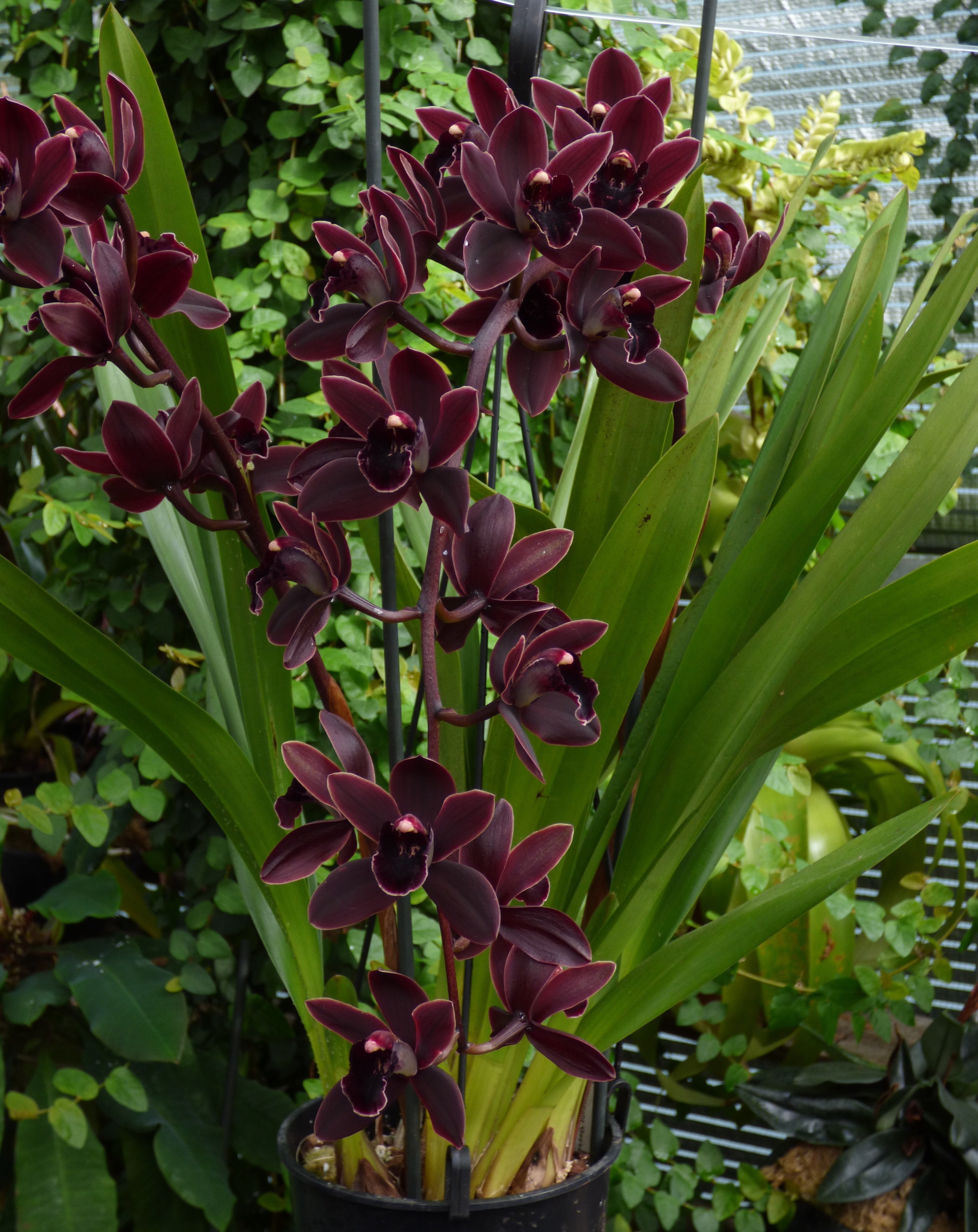
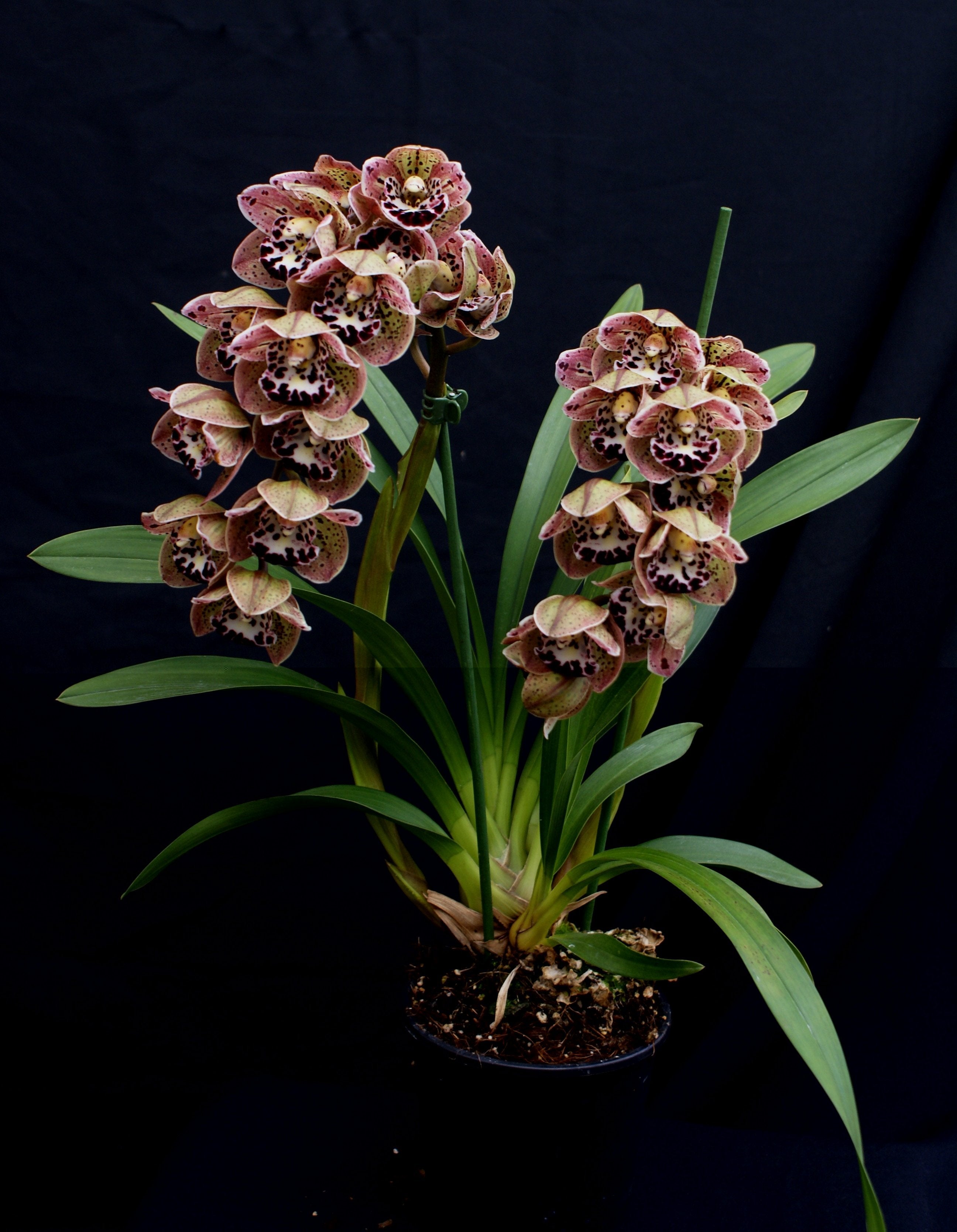
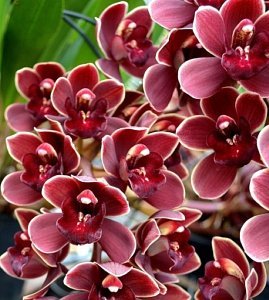
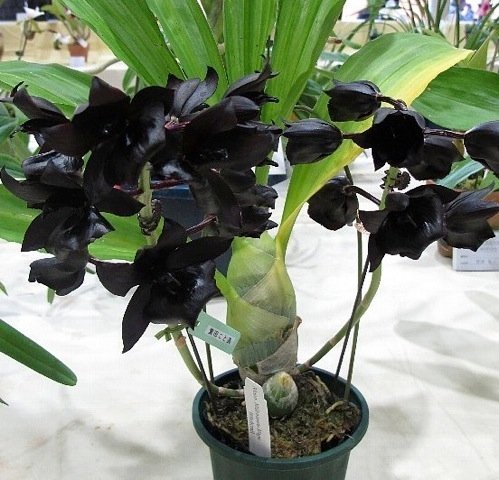
“Cymbidiums” are among the clearest examples of large orchids. They form long, narrow leaves and can develop large flower spikes with multiple flowers from an adult plant. As a healthy plant produces more mature pseudobulbs, the number of possible flower spikes can also increase.
One Cymbidium is, however, not automatically a simple warm living room orchid. Many traditional large-flowered hybrids need plenty of light and a clear difference between warm days and cooler nights to initiate new flower spikes. A bright conservatory, cool plant room or sheltered outdoor area during the growing season may therefore be more suitable than a permanently warm living room.
Moreover, the plants do not normally bloom every six months. The flowering period depends on the hybrid, the growth of the previous season and the temperature stimulus in late summer and autumn.
For enthusiasts with the right space is an adult Cymbidium attractive precisely because of the combination of leaf volume, long-lasting flowers and a pronounced seasonal rhythm.
Cattleyas with large and often fragrant flowers
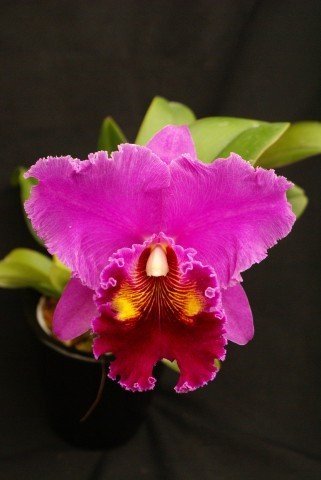
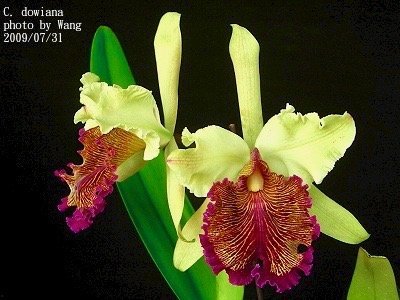
Inside “Cattleya” and related hybrids, the size is mainly reflected in the flowers. Some cultivars produce broad, ruffled flowers with a distinctive lip and a distinct scent. The plant itself can grow to a medium to large size, depending on the parent plants and the number of mature pseudobulbs.
A Big Plant of a Cattleya hybrid is usually fuller and more developed than a young plant. Multiple mature growth points can also provide more flowering opportunities in the long term, provided the plant receives sufficient light.
The latter is essential. Cattleyas usually need considerably more light than a standard Phalaenopsis. A location that is too dark may produce healthy green growth, but few or no flowers. A light windowsill, conservatory or plant cabinet with powerful lighting is therefore more suitable than a dark corner that has been chosen solely for decorative reasons.
Cattleyas can be accessible to an interested beginner, but only when sufficient light and an airy root environment are available.
Dendrobiums with long stems and full flower clusters
Inside “Dendrobium” There are very compact species, but also plants that can reach an impressive size over the years.
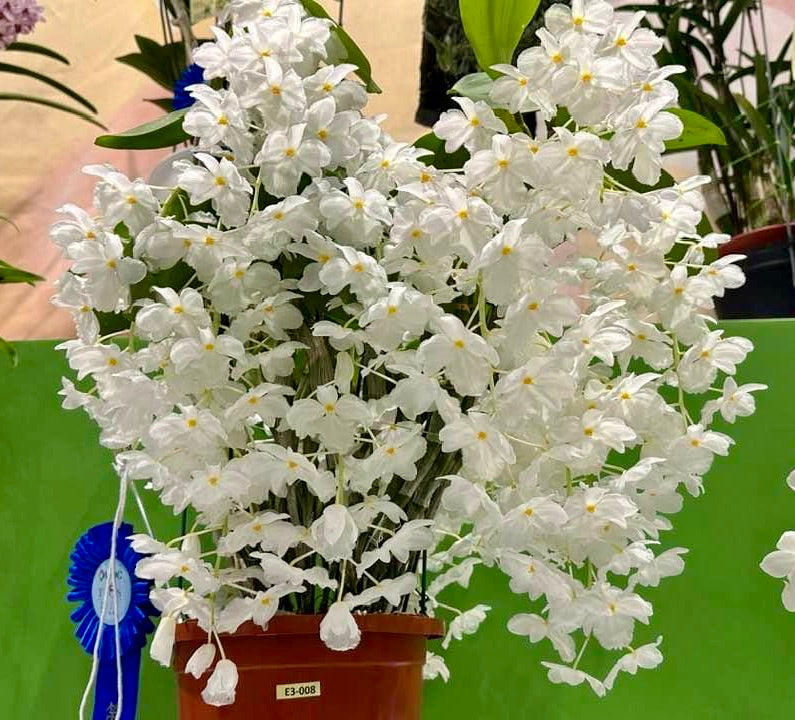
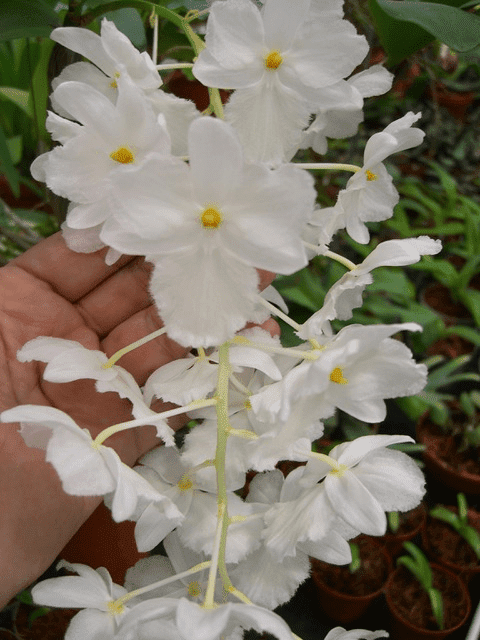
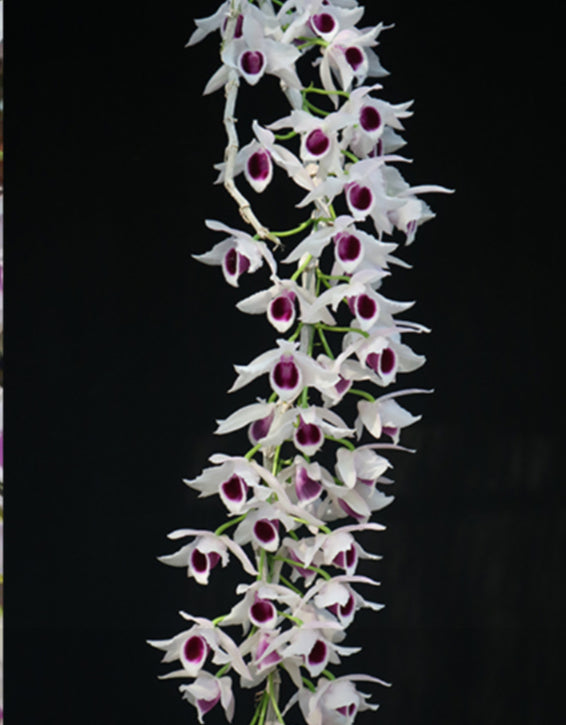
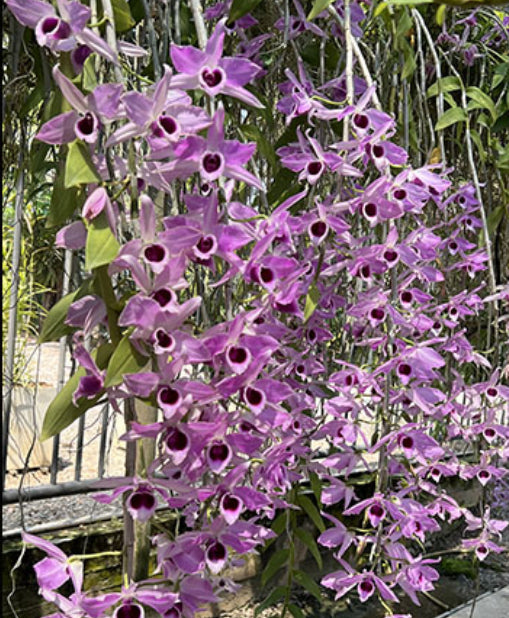
Dendrobium farmeri forms thickened stems and hanging racemes with many flowers. In an adult specimen, a strong contrast is created during flowering between the robust plant and the light, closely spaced flowers. Dendrobium anosmum can develop long, often drooping stems on which the flowers appear along the older growth. Dendrobium spectabile is collected for its whimsical, almost sculptural flowers and can also take up a lot of space as an adult plant.
These species are all included Dendrobium, but do not automatically require the same care. Some develop a decidedly cooler or drier dormancy, while others are kept warm more evenly. Choose a large one Dendrobium therefore based on both the desired appearance and the climate you can provide. Dendrobium farmeri belongs to the Callista group, whose flowers often appear in richly filled bunches.
Paphiopedilums with long petals and multiple flowers
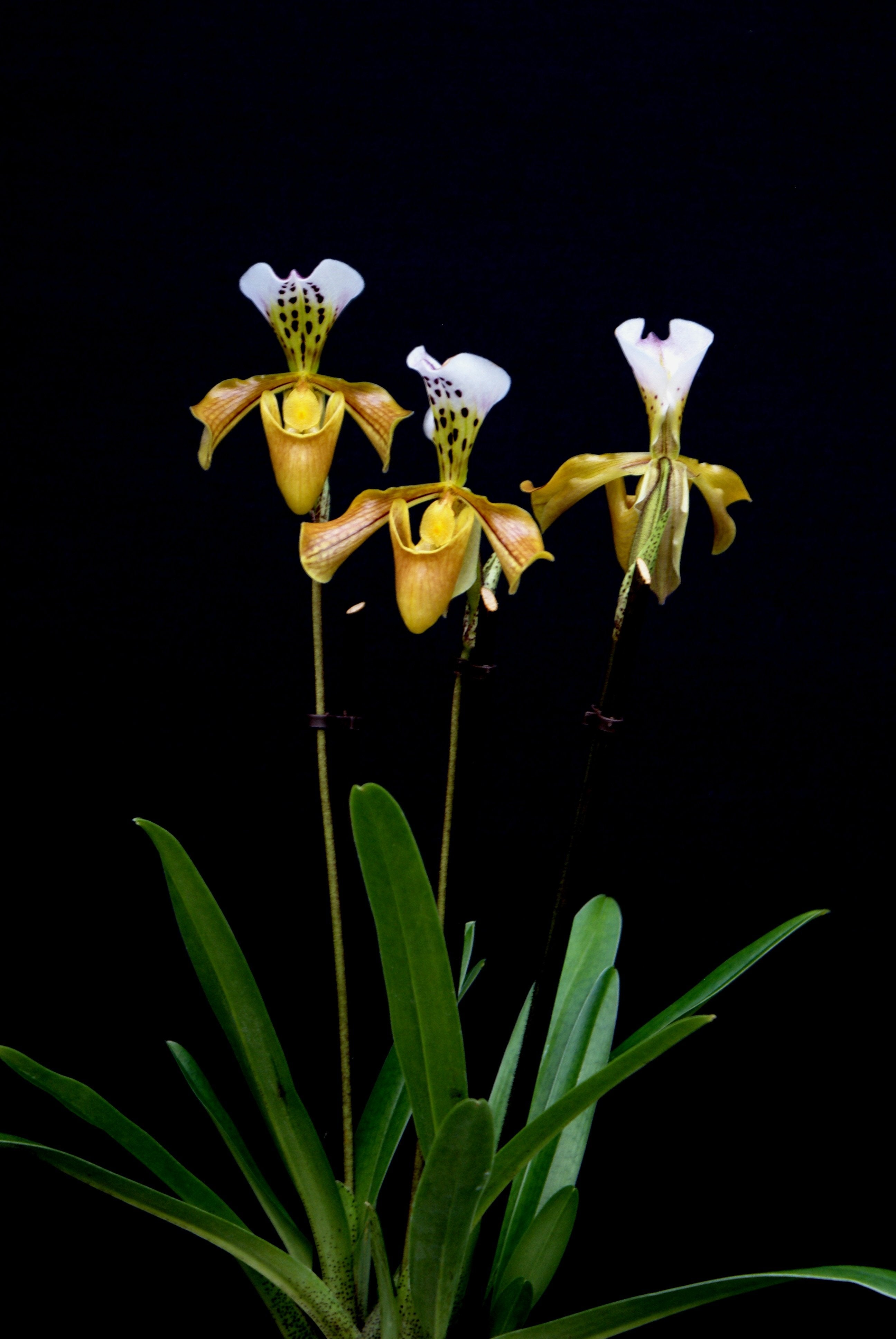
With certain ones “Paphiopedilums” the impressive size is not only in the leaves, but especially in the flowering.
Species and hybrids with Paphiopedilum sanderianum, philippinense, parishii, stonei or rothschildianum in the background may develop long flower spikes, multiple flowers or noticeably elongated petals. The flowering therefore takes up much more space than the pot suggests.
Many of these plants grow relatively slowly. A large or mature specimen therefore represents several years of development. For collectors who do not want to start from a small seedling, a Big Plant can be an interesting intermediate step.
That does not automatically make these plants easy. Multi-flowered Paphiopedilums generally require stable care, sufficient root space and patience. Even with an adult specimen, time may be needed before the plant blooms again after transport, repotting or a change in growing environment.
Big flowers don't always mean a big plant
A collection with large orchids does not have to consist exclusively of very tall or wide plants. Some orchids earn their place because of the relationship between plant and flower.
Cattleya hybrids can produce flowers that dominate almost the entire width of the plant. Laelia purpurata combines relatively long pseudobulbs with large flowers. Paphiopedilums with long petals mainly create vertical and hanging lines, while a rich flowering Dendrobium farmeri looks much larger due to its flower clusters than outside the flowering period.
Therefore, determine in advance which effect you are looking for:
veel bladvolume;
a mature specimen with multiple growth points;
very large individual flowers;
lange bloemtakken;
hangende stengels;
a plant that provides a strong visual focal point during flowering.
This way you avoid choosing a large plant when you are actually looking for an orchid with large flowers.
Are large orchids easy to care for?
The format does not determine the difficulty level. A larger plant often has more reserves than a small seedling, but can also make higher demands on light, space, watering and temperature.
An adult Cymbidium can be strong and robust, but will have more difficulty re-flowering in a permanently warm, dark living room. A large Cattleya can cope with temporary drought well in the pseudobulbs, but needs a lot of light. Een oude Dendrobium can grow vigorously, while incorrect watering during the rest period will still be at the expense of flowering.
For a first large orchid, a well-rooted, mature hybrid is often more practical than a rare botanical species with very specific climate requirements. However, always choose first based on your location and only then based on flower color or size.
A large orchid in the house, conservatory or greenhouse
A large orchid looks best when there is sufficient space around the plant. Not only because the shape is more visible, but also because leaves and roots need sufficient air movement.
A conservatory or bright plant room often offers more possibilities than a regular living room. There, large Cymbidiums, Cattleyas and hanging Dendrobiums can grow more freely. A large orchid can also function well in a living room, provided the available amount of light and the temperature suit the species.
So do not choose the location solely because the plant looks nice on a table or sideboard. The right amount of light ultimately determines whether an orchid remains healthy and can bloom again.
Grote orchidee kopen
Our range of large orchids changes regularly. Some plants are species that grow naturally large, while others are only temporarily available as mature Big Plant, XL or XXL. Older specimen plants in particular are often in limited supply because they have needed several years to reach their current size.
Before ordering please check:
the Potsize;
het plantstadium;
the flowering or non-flowering variety;
the final growth habit;
de gewenste temperatuur;
the amount of light the species needs.
Large orchids require more support during shipping than small plants. The pot and plant are therefore carefully secured and protruding leaves, stems and any flower branches are protected as best as possible. Flowering specimens remain naturally more vulnerable than non-flowering plants due to their flowers and flower branches.
Claessen Orchids & Plants has been working with special orchids since 2005. Each plant is checked before departure and prepared for shipment from the Netherlands. You can find more information about our packaging, delivery and optional weather protection at “shipping” and in the “frequently asked questions”.
Are you looking for an adult orchid that immediately has more presence than a young plant? Then view the current range and choose one that suits not only your collection, but also the available space and growing conditions.