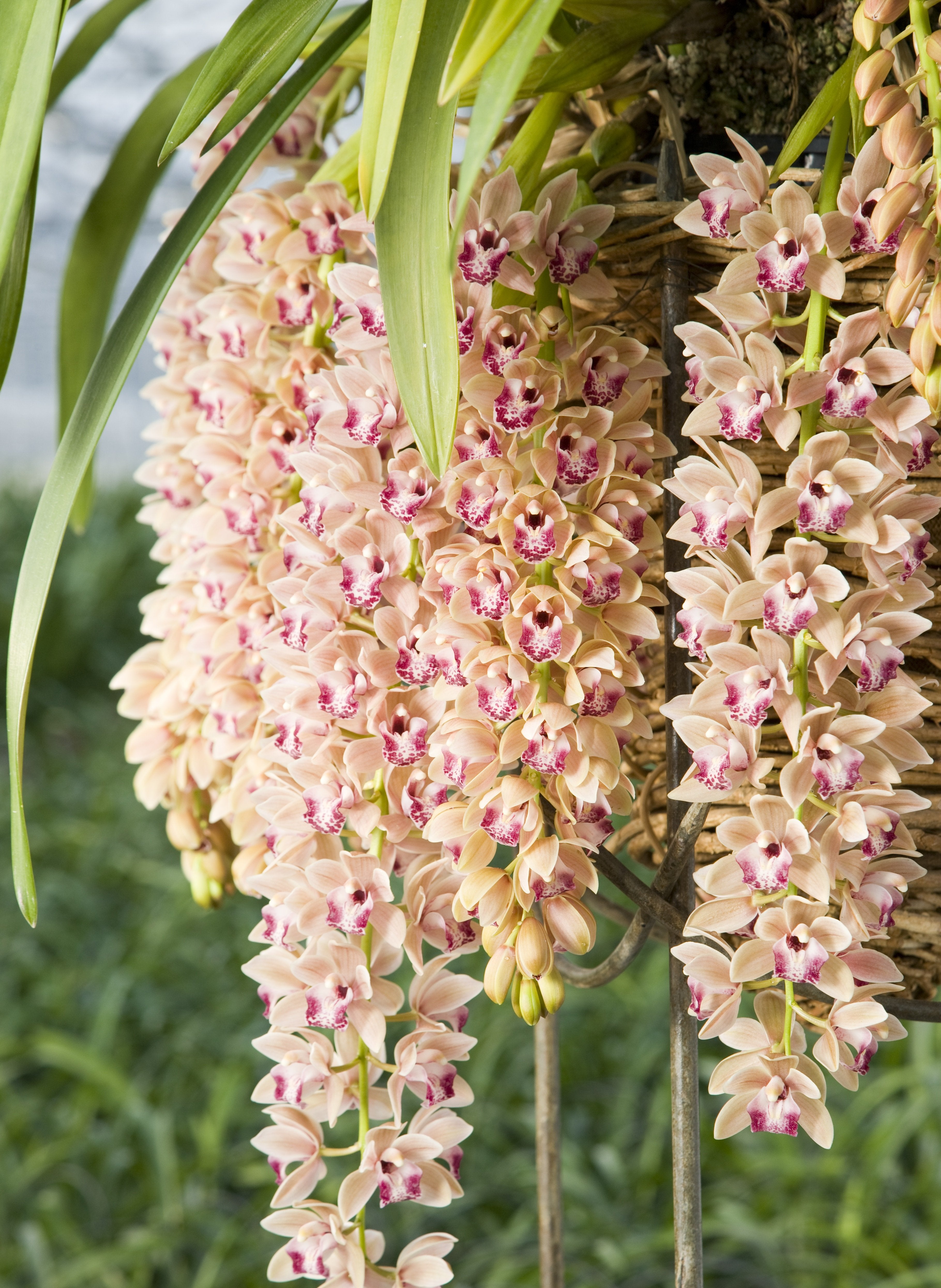
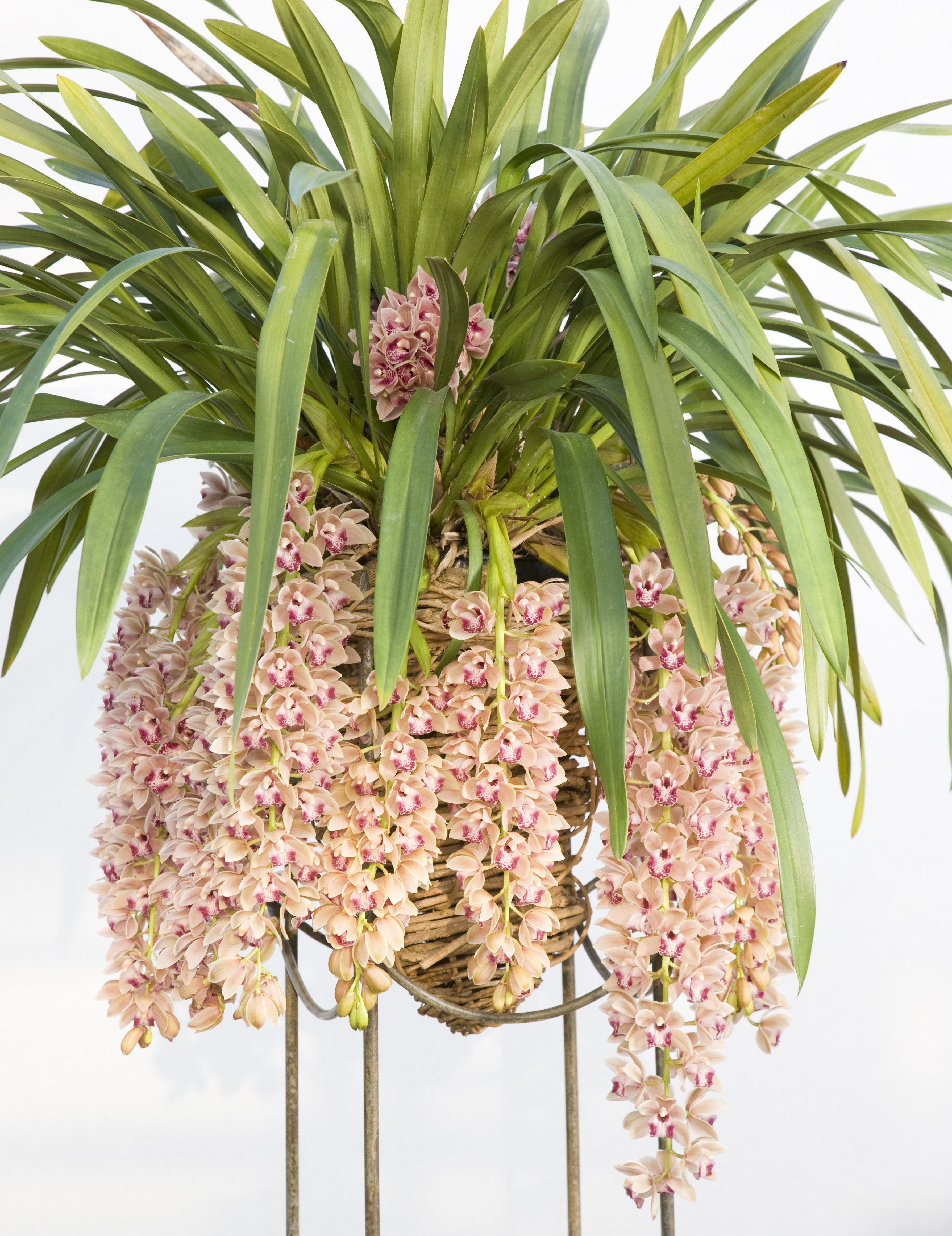
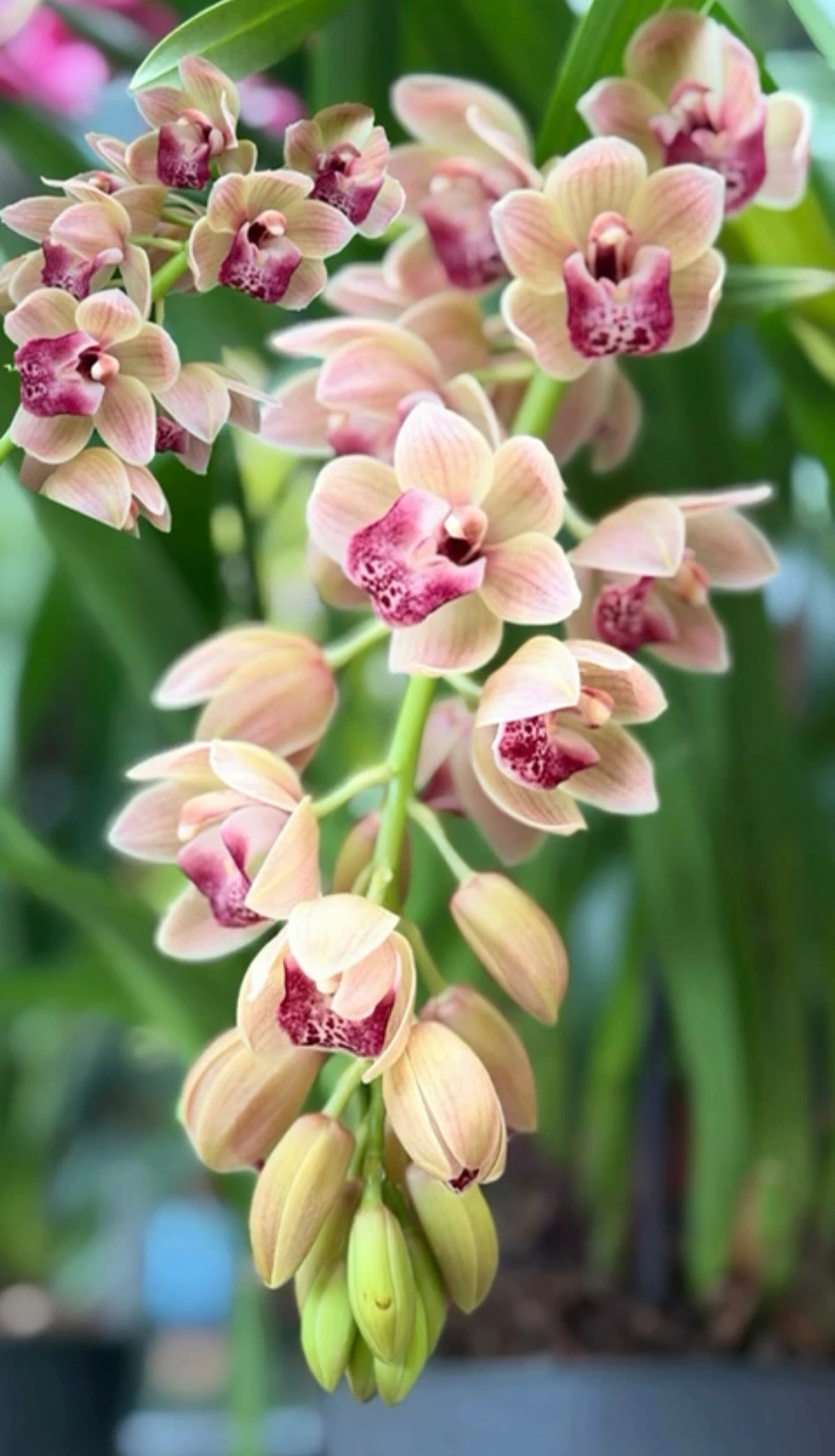
Cymbidium Mary Green ‘Spring Wind’ is a profusely flowering cascade-Cymbidium with long, gracefully overhanging flower clusters. The numerous soft pink flowers feature a more intense pink lip and throat, giving each cluster a light yet colorful appearance. In full bloom, the plant appears to form a cascade of small Cymbidium flowers.
Although this hybrid grows more compactly than many classic cut-flower Cymbidiums, it does need space beneath the pot during blooming. “Spring Wind” therefore looks its best in a hanging pot, on a plant stand, or on a high windowsill where the flower stems can grow freely downward.
Name and Registration
The correct cultivar name is Cymbidium Mary Green ‘Spring Wind’. Mary Green is the registered grex name, while ‘Spring Wind’ is the clone name of this selected form.
The grex was registered in 1991 by J. & H. Larsen. The parents are Cymbidium Sarah Jean and the botanical species Cymbidium devonianum. Due to this lineage, the hybrid combines abundant flowering with the long, pendulous flower stalks characteristic of many offspring of Cymbidium devonianum.
The name ‘Spring Wind’ refers to a single recognizable selection within the grex. Other Mary Green clones may therefore have a different flower color, lip pattern, or growth habit.
Pedigree
Cymbidium Mary Green ‘Spring Wind’ is a human-made orchid hybrid and has no natural range of its own. An important parent is Cymbidium devonianum, an epiphytic species found in montane forests from the eastern Himalayas to Southeast Asia.
This species grows in areas with humid summers, plenty of air movement, and noticeably cooler nights. It produces long, pendulous flower clusters with many relatively small flowers. These characteristics are clearly evident in ‘Spring Wind’.
The other parent, Cymbidium Sarah Jean, contributes to its vigor, flower shape, and richer appearance. The result is not a stiff, large-flowered Cymbidium, but a graceful cascade hybrid with many flowers on supple, overhanging stems.
Characteristics
The flowers of ‘Spring Wind’ are smaller than those of the well-known large-flowered Cymbidiums. As a result, however, many flowers can appear on a single stem without the cluster looking heavy or bulky.
The flower parts range from soft pink to light salmon pink. The lip and throat typically display a brighter pink to reddish-pink color, making the center of each flower stand out even more. The exact shade may vary slightly depending on light, temperature, and the age of the flower. Some color variation may also be visible between individual blooming periods.
The long flower stalks grow curved or pointing fully downward. A strong, mature plant can produce multiple stalks at the same time. The exact number of stalks and flowers depends on the size of the plant, the number of mature pseudobulbs, and the conditions during the preceding growth period.
Growth Habit
This Cymbidium has a sympodial growth habit. New shoots emerge from the base of an older pseudobulb, which develop into mature pseudobulbs with long, narrow leaves over the course of the growing season. Each well-matured shoot can later contribute to flowering.
The plant remains more compact than many standard Cymbidiums, but “compact” here primarily refers to the pseudobulbs and the Potsize. The narrow leaves can fan out widely, and the flower spikes require vertical space. It is therefore not a small table orchid that will fit on any windowsill during flowering.
The plant offered is mature and is potted in a 13-centimeter pot. The product photos show representative, well-developed plants. A younger mature specimen may initially produce fewer flower spikes than a large clump of plants that has been growing for several seasons.
Care
Cymbidium Mary Green ‘Spring Wind’ is easy to care for if you can provide sufficient light, regular watering, and cool nights. The temperature difference at the end of summer and in the fall is especially important for flower formation.
A plant kept in a warm living room all year round may produce healthy foliage and new pseudobulbs but still fail to bloom. Those who can place the Cymbidium outdoors in the summer and bring it indoors only before the first frost usually have the best chance of success.
Light
Give this Cymbidium plenty of bright light. It clearly needs more light than a regular Phalaenopsis. An east- or west-facing window, or a south-facing window with filtered light, is suitable.
Direct morning and evening sun is generally well tolerated. Protect the plant behind glass from the intense midday sun, especially if it hasn’t gradually become accustomed to brighter light. Outdoors, it thrives in a bright spot with filtered sun or light shade during the hottest hours.
With sufficient light, the leaves are medium green. Very dark green, long, and limp leaves often indicate insufficient light. A yellow-green leaf color may be normal under strong light, but pale or dry spots indicate sunburn.
Temperature and Flower Induction
During active growth, daytime temperatures of approximately 18 to 27 °C are suitable. At night, temperatures may cool down to about 12 to 18 °C. Temporarily higher summer temperatures are tolerated if the plant receives sufficient water, humidity, and ventilation.
Cooler nights at the end of summer and in the fall are important for reliable flower induction. Nighttime temperatures of approximately 10 to 15 °C, combined with warmer days, provide the plant with the necessary seasonal signal. This temperature difference must persist for several weeks.
In the Netherlands and Belgium, the plant can therefore be kept outdoors starting in late spring as soon as there is no longer a risk of cold nights or night frost. Let it benefit from the natural cooling in late summer and early fall, but bring it indoors before frost is expected. Also protect the plant from prolonged temperatures below about 7 to 8 °C.
A permanently warm living room with nighttime temperatures above 19 to 20 °C is less suitable for flower induction. A cool, bright bedroom, sunroom, unheated but frost-free greenhouse, or sheltered outdoor location usually works better.
Substrate and Repotting
Cymbidiums require a different growing medium than many strictly epiphytic Cattleya orchids. The mixture must remain airy but may also retain moisture for some time during active growth.
A suitable mix consists, for example, of medium-sized orchid bark combined with coconut chips, perlite, or pumice. A small amount of finer, fibrous, and moisture-retaining material may be added. Do not use compact, regular potting soil, as it does not allow enough oxygen to circulate around the thick roots.
The plant should be fairly firmly seated in the pot. When repotting, choose a pot that provides space for about two years of new growth, but don’t make the upgrade unnecessarily large. A pot that is too spacious contains too much wet substrate, in which the roots will dry out slowly.
It is best to repot after flowering, when a new shoot begins to form fresh root tips. Old, hollow, or soft roots can then be removed. Place the oldest pseudobulbs near the edge of the pot, so that the youngest growth has room to develop further.
The plants offered here are imported, and their roots are still developing. Therefore, do not repot a newly received plant immediately if the current growing medium is still usable. First, provide it with a stable location and, if possible, wait for visible new root growth.
Humidity and Ventilation
A humidity level of approximately 50 to 70 percent is suitable. A normal living room environment can be sufficient, as long as the plant is not placed directly above a radiator or in constantly dry, hot air.
Good air circulation is important, especially at lower temperatures. Leaves, young shoots, and leaf axils must be allowed to dry after watering. High humidity combined with stagnant air increases the risk of leaf spots and rot.
This Cymbidium is not suitable for a small, enclosed terrarium. The leaves, root system, and long flower stalks require an open, bright, and well-ventilated location.
Watering
While new shoots, leaves, and roots are developing, ‘Spring Wind’ requires regular watering. Moisten the entire substrate and then allow the excess water to drain thoroughly. Water again when the top layer begins to dry out, but do not let the root ball become bone-dry for extended periods during active growth.
The thick roots store some moisture, but severe drying out inhibits the growth of new pseudobulbs. A small, poorly developed pseudobulb will have less energy available for flower stalks later on.
Starting in the fall, watering can be reduced as growth slows and temperatures drop. Keep the growing medium slightly moist to nearly dry, without allowing the plant to dry out completely for weeks on end. During the development of flower stalks and buds, consistent watering is important again.
Never leave the pot standing in a pool of water for extended periods. Water preferably in the morning and use soft water if the tap water contains high levels of lime or salts.
Fertilization
Cymbidiums are relatively heavy feeders during active growth. From spring through the end of summer, apply diluted orchid fertilizer regularly. Half the recommended dose every one to two weeks is a good starting point.
Rinse the growing medium regularly with clean water to remove accumulated fertilizer salts. Over-fertilization can cause brown root tips and, over time, render the growing medium unsuitable.
Reduce fertilization as soon as the new pseudobulbs are fully grown and the plant is kept in a cooler environment. During the darkest part of winter, little or no fertilization is needed. Resume fertilization when fresh roots and new shoots become visible.
Flowering
‘Spring Wind’ typically blooms in late winter or spring. The exact timing may vary depending on temperature, light, and when the new pseudobulbs have matured.
The flower stalks emerge from the base of mature pseudobulbs. With this clone, they should be allowed to bend and hang freely. Therefore, place the plant higher as soon as a stalk begins to elongate. A hanging pot or tall stand prevents the flower buds from growing against the windowsill, floor, or rim of the pot.
Do not try to force the stems to stand completely upright. It is precisely their natural, trailing growth that gives this cultivar its ornamental value. Gentle guidance is possible, but the stem may break if it is bent sharply after it has hardened off.
The flowers can remain beautiful for several weeks, especially in a bright, cool location. Keep the plant away from radiators, ripening fruit, and extreme temperature fluctuations during flowering. Cut off a spent stem at the base. An old Cymbidiumstem—unlike some Phalaenopsis hybrids—will not bloom again from the same nodes.
Fragrance
‘Spring Wind’ is primarily grown for its abundant blooms, pink flower color, and trailing habit. A strong or consistent fragrance is not a reliable selling point for this clone.
An individual plant may emit a faint scent in warm temperatures, but the intensity can vary by flowering period and time of day. Therefore, choose this Cymbidium primarily for its cascading form and not if a strongly scented orchid is your top priority.
Care Level
This hybrid has a moderate care level. Daily care is not particularly complicated, but the plant will only bloom reliably if it receives sufficient light and a cool fall period.
For someone with a sheltered garden, balcony, bright sunroom, or cool room, this is a very accessible cascade-Cymbidium. In an apartment that remains warm year-round, inducing flowering is particularly challenging.
The specimens offered are mature. Depending on the variety chosen, the plant will be delivered as Blooming or non-Blooming. With a non-Blooming specimen, a new growth and rooting phase may occur after transport and acclimatization before the next bloom appears.
Who is this plant suitable for?
Cymbidium Mary Green ‘Spring Wind’ is suitable for enthusiasts who appreciate the abundant blooms of a Cymbidium but aren’t looking for large, stiff cut-Cymbidium. The smaller flowers and drooping stems give the plant a more relaxed and botanical character.
It’s also an interesting choice for collectors who specifically want a named clone. Unlike with an unnamed seedling, the clone name indicates the flower shape and color you can expect from a well-cared-for plant.
When purchasing, take into account the display space. The pot and pseudobulbs remain relatively compact, but a mature plant has spreading leaves and long, pendulous clusters. Anyone with only a low, narrow windowsill will find it difficult to showcase the blooms to their full potential.
For a complete beginner without a cool growing location, this Cymbidium is less of a given. However, if you can place the plant outdoors in the summer and adjust watering according to the season, you’ll find it to be a robust and rewarding plant.
Experience growing indoors, in a sunroom, or in a greenhouse
Indoors, the plant does best near a bright window in a room that cools down at night. During flowering, it can be temporarily moved to a prominent display spot, as long as there is sufficient daylight there.
A sunroom or frost-free greenhouse is particularly suitable. There, the plant can receive plenty of light while the natural difference between day and night temperatures is maintained. In the summer, however, be sure to provide light shade and good ventilation to prevent overheating.
Starting in late spring, the plant can also be grown outdoors. Choose a sheltered spot with morning or evening sun and protection from the hottest midday sun. Check the plant regularly for snails, which can damage young shoots and root tips in particular.
During flowering, ‘Spring Wind’ looks its best in a hanging pot, on a tall plant table, or at the edge of a raised plant display. Give the flower stems plenty of room to form their natural cascade.
Extra care tip
In late summer, pay close attention to the difference between a new shoot and a flower stalk. A new growth shoot is usually pointed and firm, while a flower stalk feels rounder and emerges from the base of a mature pseudobulb.
Move or rotate the plant as little as possible once the flower stem clearly begins to droop. The stem grows toward the light and may develop an unnatural bend if rotated regularly. Place the plant in its final flowering location in good time and then let the cluster grow out undisturbed.
Short product description
Cymbidium Mary Green ‘Spring Wind’ is a compact cascade-Cymbidium with long, overhanging flower clusters full of soft pink flowers and more intense pink lips. The mature plant is supplied in a 13-centimeter pot and blooms most reliably after being placed in a sunny summer location and experiencing cool fall nights. A specially named clone suitable for a hanging basket, tall plant stand, conservatory, or frost-free greenhouse.