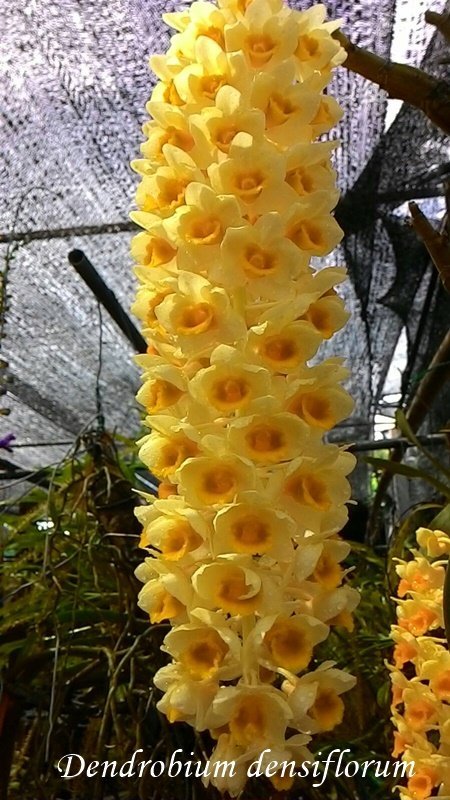
Dendrobium densiflorum is an impressive botanical Dendrobium, beloved for its full, pendulous clusters of golden-yellow to warm-yellow flowers. When the plant is thriving, the inflorescences can hang down like compact bunches of grapes. This gives this species a very different appearance from the well-known Dendrobium nobile or Dendrobium phalaenopsis types.
This is an orchid for enthusiasts who love spectacular, natural blooms and a distinct seasonal rhythm. Dendrobium densiflorum requires plenty of light, water, and nutrients during its growing season, but afterward needs a quieter, cooler, and drier period to bloom profusely. Those who understand this rhythm well can cultivate a plant that blooms profusely.
Origin
Dendrobium densiflorum is native to the region stretching from the Central Himalayas to southern China and Indochina. In the wild, the species grows as an epiphyte on trees or as a lithophyte on rocky areas. The plant thrives in regions where warm, humid growing periods alternate with cooler and drier conditions.
This natural origin explains a great deal about its care. During active growth, Dendrobium densiflorum requires ample water, nutrients, warmth, and bright light. Once the new pseudobulbs have matured, care can be scaled back. This transition helps the plant form flower buds.
Characteristics
Dendrobium densiflorum forms sturdy, thickened pseudobulbs that can grow upright or slightly curved. The leaves are mainly located on the upper part of the pseudobulbs. Older stems may lose their leaves over time, but remain important as storage organs for moisture and nutrients.
Flowering is the most striking feature of this species. The flowers appear in dense, pendulous clusters with many small to medium-sized flowers. The flower color is usually bright yellow to golden yellow, often with a warmer, orange-yellow, or deeper-colored lip. Because of the compact flower clusters, a mature plant in bloom can look very spectacular.
Do not cut away old pseudobulbs as long as they are still firm. Even older, leafless pseudobulbs can contain reserves and contribute to the plant’s vigor.
Care
Light
Dendrobium densiflorum thrives in plenty of bright, indirect light. The plant can tolerate more light than many shade-loving orchids, but bright midday sun through a window can cause leaf damage. Morning sun or late afternoon sun is usually suitable.
If there is too little light, the plant will often produce new growth but will not bloom as well. A bright windowsill, sunroom, greenhouse, or spot under strong grow lights is therefore ideal. Healthy leaves are usually a fresh green; very dark leaves often indicate insufficient light.
Temperature
During active growth, Dendrobium densiflorum thrives in moderate to warm conditions. A daytime temperature of approximately 20 to 28°C is suitable. At night, the temperature may drop by a few degrees.
Once the new pseudobulbs have matured, a slightly cooler period is beneficial. Nighttime temperatures around 12 to 16°C can help signal to the plant that it is time to rest, as long as the plant is kept drier during this time. Avoid cold, wet roots.
Substrate and Cultivation Method
Use a well-aerated orchid mix that drains well. Medium-coarse bark with some perlite or coarse coconut chips works well. The growing medium must be able to retain sufficient moisture during the growing season, but should never become compacted or oxygen-deprived.
A pot or basket with good drainage usually works well. Because of the hanging flower clusters, the plant also looks its best in a slightly raised pot or basket, allowing the blooms to hang freely downward.
Humidity
A humidity level of about 50 to 70% is suitable. During active growth, the humidity may be higher, as long as there is sufficient air circulation. Good ventilation helps prevent fungal problems and supports active root growth.
The plant can grow in a dry living room, but young roots and new shoots develop better under more stable humidity conditions. Do not place the plant directly above a radiator or in a spot with a dry draft.
Watering
Water generously during active growth. When new shoots and roots appear, Dendrobium densiflorum should be watered regularly. Allow the potting mix to dry out slightly between waterings, but do not let the plant stand dry for long periods during this time.
Once the pseudobulbs have matured and growth slows down, reduce watering. Keep the plant drier during this time, but do not let the pseudobulbs shrivel excessively. As soon as flower buds or new growth appear, you can gradually increase watering again.
Preferably use rainwater, demineralized water, or soft water at room temperature.
Fertilization
During active growth, Dendrobium densiflorum needs regular, light fertilization. Apply an orchid fertilizer at about one-quarter to one-half the recommended dose. Fertilize especially when the plant is producing new shoots and roots.
Once growth has matured and the plant is kept drier, fertilization can be significantly reduced or temporarily stopped. Too much fertilizer during the dormant period can stimulate weak growth and actually reduce flowering.
Flowering
Dendrobium densiflorum usually blooms from mature pseudobulbs. The flower spikes hang downward and are densely covered with yellow flowers. A vigorous plant can produce multiple spikes at once, making the blooms very striking.
Flowering is stimulated by a good growing period with plenty of light, water, and nutrients, followed by a cooler and drier period once the pseudobulbs have matured. Without this seasonal variation, the plant can still grow, but it will flower less readily.
Care Level
Dendrobium densiflorum is of moderate difficulty. The plant is not extremely sensitive, but it does require a more distinct annual rhythm than many standard house orchids. During the growth phase, it should be actively cared for; after the pseudobulbs have matured, care should be scaled back.
The biggest mistake is keeping the plant warm and wet all year round. This can lead to weak growth, root problems, and poor flowering. If you properly observe the difference between the growth period and the dormant period, this species will reward you with a strong and rewarding orchid.
Who is this plant suitable for?
Dendrobium densiflorum is suitable for enthusiasts looking for a botanical Dendrobium with spectacular hanging flower clusters. The plant is a good fit for collectors who have experience with Dendrobium species, Cattleya-like care, or orchids with a seasonal rhythm.
For someone looking for an orchid that requires exactly the same care all year round, this species is less suitable. For enthusiasts who want to adjust light, water, and temperature according to the season, Dendrobium densiflorum is actually a very attractive choice.
Growing Experience at Home or in a Greenhouse
In a greenhouse, conservatory, or well-lit plant room, Dendrobium densiflorum usually grows more easily, because light, humidity, and temperature are easier to control. The plant can also thrive on a bright windowsill, provided it receives sufficient light and can be kept in a cooler, drier environment during its dormant period.
The blooms hang downward, so give the plant plenty of space around the pot. A mature plant in bloom can be very striking and looks its best when the flower clusters are allowed to hang freely.
Extra care tip
Pay attention to when the new pseudobulbs have matured. That is the turning point in care. As long as the plant is actively growing, water it more frequently and provide light fertilizer. As soon as growth stops and the pseudobulbs are firm, reduce watering and keep the plant slightly cooler. That difference is often the key to flowering.