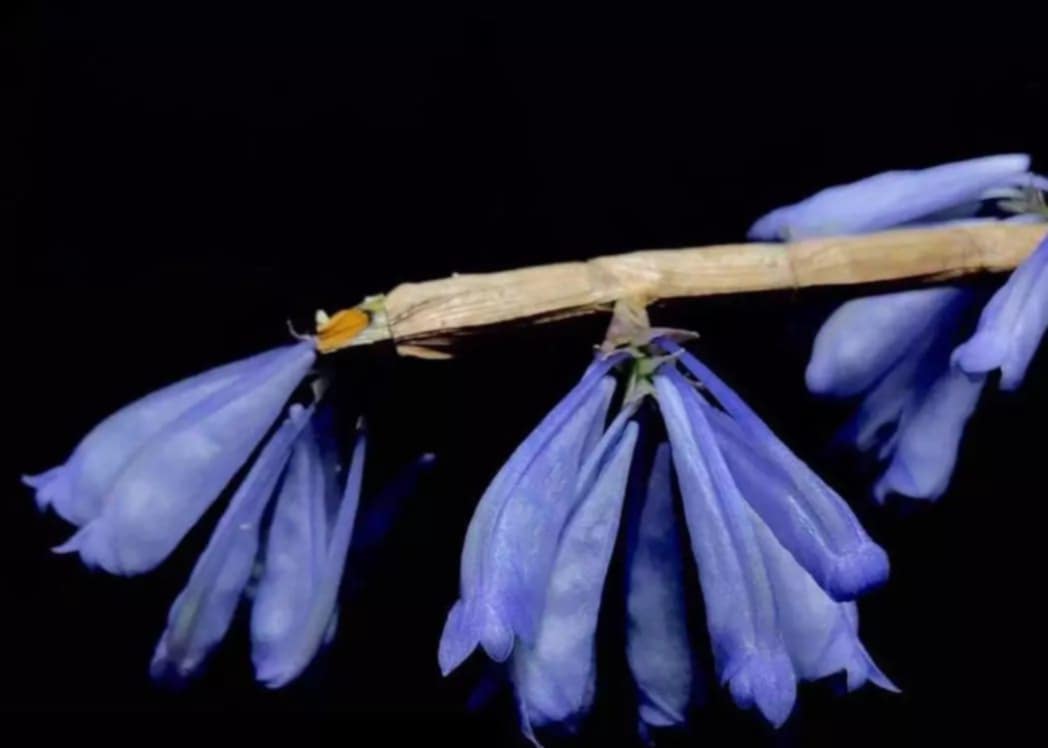
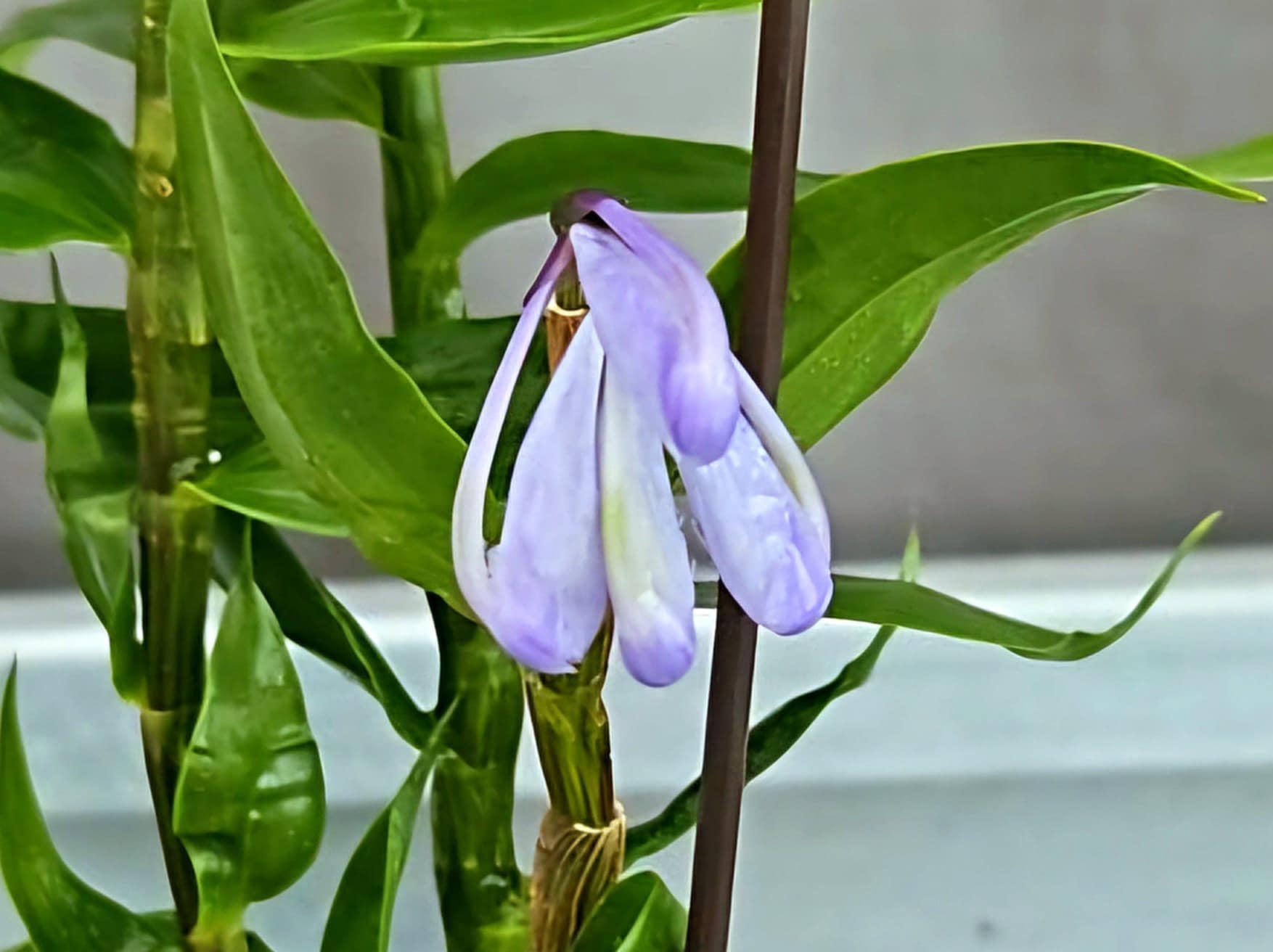
The Dendrobium (aphanochilum × sp blue) is an elegant hybrid that is especially popular among collectors who love compact cool-loving orchids with unusual color changes. This hybrid combines the refined growth habit of aphanochilum with the deep blues of an unknown blue-colored species, resulting in a plant with character and surprising flowering.
Origin
The origin of this hybrid is in the mountainous regions of Southeast Asia, where Dendrobium aphanochilum occurs naturally. This species grows in light forests with cool nights, morning fog and filtered sunlight. Combining this species with a blue-tinged Dendrobium has created a plant that carries both the gracefulness of one parent and the rare color intensity of the other. The hybrid was specially developed to maintain that natural elegance, while making the flower color even more striking under the right conditions.
Characteristics
This Dendrobium forms slender upright stems with narrow leaves, giving the plant an airy and graceful appearance. The flowers are small but very expressive, displaying a variety of shades of blue that become deeper and deeper toward the lip. A special detail that makes this hybrid extra attractive to connoisseurs is the color change during flowering. If you keep the plant cooler and place it in a light spot during this period, the flowers deepen to a striking dark blue color. The plant usually blooms once a year, often in the period between late winter and early spring, where several flowers may form along the canes.
Care
Light
This orchid prefers a bright spot with bright, indirect sunlight. A window with filtered daylight provides just the balance needed for healthy growth and rich blooms.
Temperature
The plant feels most comfortable in cooler conditions. During the winter months, nights between ten and fourteen degrees are ideal, while in the summer the plant likes moderate heat without going above twenty-eight degrees. A clear difference between day and night temperatures helps flower stalks form.
Substrate
An airy mixture of bark and moss works well for this hybrid. The substrate should be able to dry out quickly but retain enough moisture for the fine roots. Materials such as perlite or limestone-like compounds are deliberately avoided to maintain optimal root health.
Humidity
A humidity level between sixty and seventy-five percent fits well with the natural conditions in which the plant occurs. A humidifier, or regular light misting in the morning, helps keep young roots vital.
Watering
The plant likes regular but controlled watering. It is important that the substrate almost dries up before you water again. Room temperature demineralized water prevents accumulation of minerals and supports healthy root growth.
Nutrition
During the growing season, the plant benefits from a slightly diluted orchid nutrient, which helps build strong canes and future flower wood. As winter approaches and growth slows, nutrition may be temporarily reduced until new shoots emerge.
Flowering
Flowering is stimulated primarily by cooler nights in winter and adequate light during the day. A slight dehydration prior to the formation of flower stalks can give the plant an extra push. During the flowering period, a cooler, light location for the special dark blue color that makes this hybrid so special.