Prosthechea cochleata × Prosthechea prismatocarpa
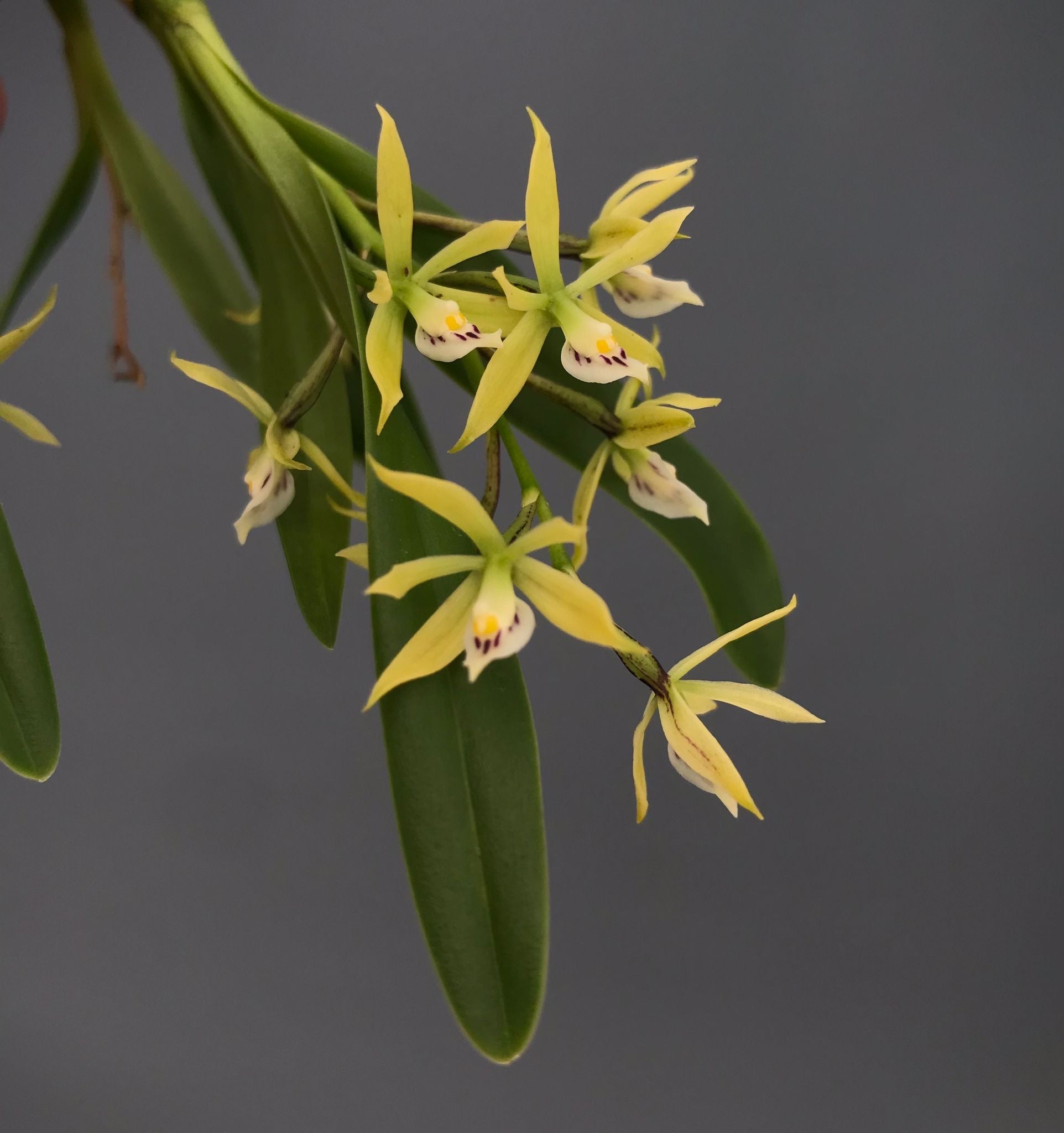
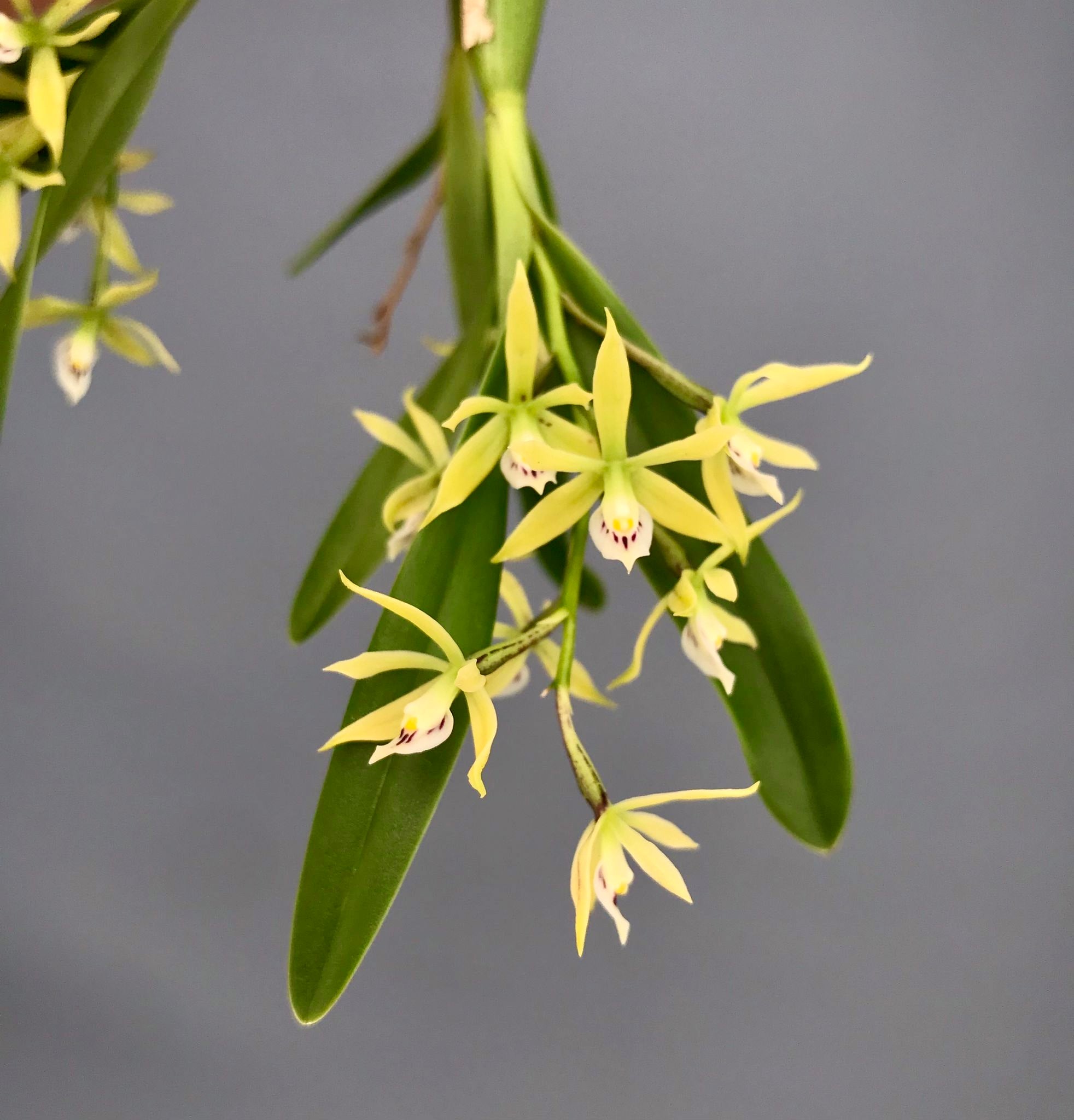
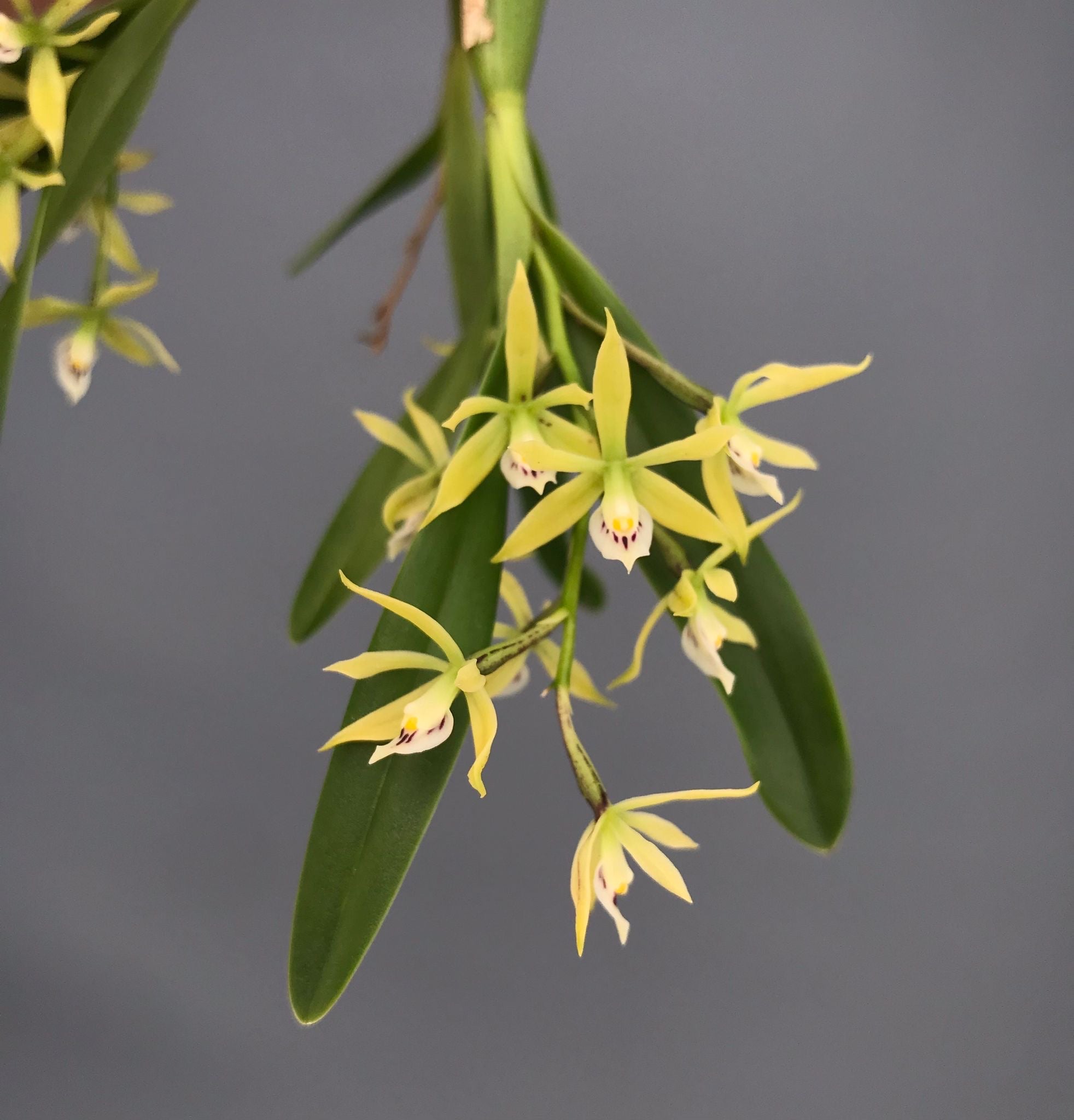
Prosthechea Elfin is a historic primary hybrid with multiple yellow-green star-shaped flowers on an elegant flowering stem. The creamy-white lip, wine-red markings, and warm-yellow callus give the flowers a surprising amount of detail when viewed up close. A subtle morning fragrance and its relatively easy-to-care-for nature make this hybrid appealing to both collectors and enthusiasts looking for their first botanically-looking hybrid.
The grex was registered in 1967 by L. DeGarmo. Older labels may list the name Encyclia Elfin, but Prosthechea Elfin is the current name.
Origin
Prosthechea Elfin does not occur in the wild. It is a direct cross between two botanical species and is therefore a primary hybrid.
Prosthechea cochleata has a wide range extending from Florida, Mexico, and the Caribbean to northern South America. This species is known for its vigorous growth and flower spikes that continue to produce new blooms over a long period.
Prosthechea prismatocarpa is native to the humid mountain forests of Costa Rica and western Panama. This parent contributes the yellow-green flower color, slender flower segments, dark markings, and a preference for moderate temperatures. Elfin combines these traits into a generally vigorous and more adaptable hybrid.
Characteristics
The plant forms sturdy pseudobulbs with elongated, leathery leaves at the top. New shoots emerge from the base of the older pseudobulbs and eventually develop their own roots.
The flower spike emerges from the top of a mature pseudobulb and may bear multiple flowers. The sepals and petals are long, narrow, and yellow-green to pale yellow. The smaller lip is cream to white and has a warm yellow callus with wine-red to purplish-brown spots.
The flowers have an airy, botanical appearance and may emit a soft, pleasant fragrance, especially in the morning. The intensity of the fragrance and the exact pattern may vary from plant to plant.
Care
Prosthechea Elfin grows best in bright, filtered light, moderate temperatures, and a well-aerated root environment. During the formation of new shoots and roots, the plant should be watered and fertilized regularly. Once the pseudobulbs have matured, watering should be reduced slightly.
This hybrid is generally more forgiving than Prosthechea prismatocarpa in its pure form, but it does not tolerate a substrate that remains wet and compacted for long periods.
Light
Place Prosthechea Elfin in a bright spot with bright, indirect light. Gentle morning or evening sun is beneficial, but protect the leaves from intense midday sun through a window on hot summer days.
A medium-green leaf color is ideal. Very dark green leaves usually indicate insufficient light and can delay flowering. Yellow or locally bleached leaves may occur when the plant is exposed too suddenly to intense sunlight.
Temperature
This hybrid thrives in moderate to warm conditions. Daytime temperatures of approximately 19 to 27 °C are suitable. At night, temperatures may cool down to about 14 to 18 °C.
A clear difference between day and night temperatures supports the development of sturdy pseudobulbs and can stimulate flowering. During hot summer days, higher temperatures are possible, provided the plant receives sufficient air circulation and moisture around the roots.
Avoid prolonged cold and wet conditions.
Substrate and Cultivation Method
Use an airy orchid growing medium consisting of medium-coarse bark, possibly mixed with pumice, charcoal, or a small amount of moisture-retaining material. The growing medium should absorb water but then dry out quickly enough.
A pot with large drainage holes or an open basket is suitable. Training the plant on a support is possible, but requires higher humidity and significantly more frequent watering.
Repot preferably when a new shoot begins to form fresh root tips. Do not place the plant in a larger pot than necessary; a compact root zone dries out more evenly and reduces the risk of root rot.
Humidity
A humidity level of about 55 to 75 percent is usually sufficient. In a greenhouse or plant cabinet, the humidity can be higher, as long as there is a constant, gentle air current.
Ventilation helps young shoots, leaf axils, and flower stems dry out after watering. In particular, water that remains on a young shoot for an extended period can cause damage or rot.
Watering
Water generously during the active growth period. Moisten the growing medium thoroughly and then allow it to dry out mostly before watering again. The pseudobulbs should remain firm and should not shrivel severely for long periods.
Once the new pseudobulb has fully matured and growth slows, watering can be reduced. A severe, prolonged dry period is not necessary. Water just enough to keep the roots healthy and the pseudobulbs slightly plump.
Preferably use rainwater or other water with low levels of dissolved salts. Water in the morning so that young shoots and leaf axils can dry off before nightfall.
Fertilization
During active growth, apply a low dose of orchid fertilizer every one to two weeks. A quarter to half the recommended dose is usually sufficient.
Rinse the substrate regularly with clean water to remove accumulated fertilizer salts. Reduce fertilization once the new pseudobulb has matured and resume it when new root tips become visible.
Flowering
Prosthechea Elfin blooms from the tip of a mature pseudobulb. Flowering often occurs from spring through summer, but the exact timing is determined by the plant’s growth rhythm and growing conditions.
A flower spike can bear several flowers at once and sometimes continue to produce new buds over an extended period. Therefore, do not cut off the flower spike until it is completely brown and dried out.
Old green pseudobulbs should be left intact. They store water and nutrients and support both new growth and the development of flower spikes.
Care Level
Prosthechea Elfin has moderate care requirements. This hybrid is generally vigorous and easier to care for than various botanical Prosthechea species. Anyone with experience caring for Cattleya, Encyclia, or Oncidium will quickly recognize its care needs.
The most important considerations are sufficient light, fresh air, and a growing medium that can dry out largely between waterings. For a moderately advanced beginner with a suitable location, this is a very achievable collector’s orchid.
Who is this plant suitable for?
This hybrid appeals to enthusiasts of historic orchid crosses, botanically shaped flowers, and subtle fragrances. The direct combination of two wild parents, its 1967 registration, and the airy yellow-green flower spike give Prosthechea Elfin a distinctive collector’s value.
The plant is also appealing to those seeking a more unusual orchid without immediately opting for a highly demanding botanical species. It is less suitable for a dark windowsill or a pot that is kept constantly warm and wet.
Growing Experience Indoors or in a Greenhouse
Indoors, Prosthechea Elfin grows well near a bright window facing east, west, or a sheltered south. Slightly cooler nights than daytime temperatures are beneficial. Make sure the plant is not placed directly above a hot radiator.
In a moderate greenhouse, conservatory, or well-ventilated plant cabinet, light, humidity, and temperature fluctuations are easier to manage. A closed terrarium is less suitable due to the plant’s need for air circulation and the eventual height of the plant and flower spike.
Although the plant offered may be in a compact pot, Prosthechea Elfin is not a permanent miniature. Mature pseudobulbs, leaves, and especially the flower spike can clearly outgrow the pot.
Additional care tip
Do not remove a spent flower spike as long as it is still green. The influence of Prosthechea cochleata may cause new buds to develop on the same flower spike later on. Do not cut it until the entire stem is brown and dry.
Brief product description
Prosthechea Elfin is a fragrant primary hybrid from 1967 between Prosthechea cochleata and Prosthechea prismatocarpa. The plant produces graceful flower spikes with yellow-green star-shaped flowers, a creamy-white lip, and delicate wine-red accents.