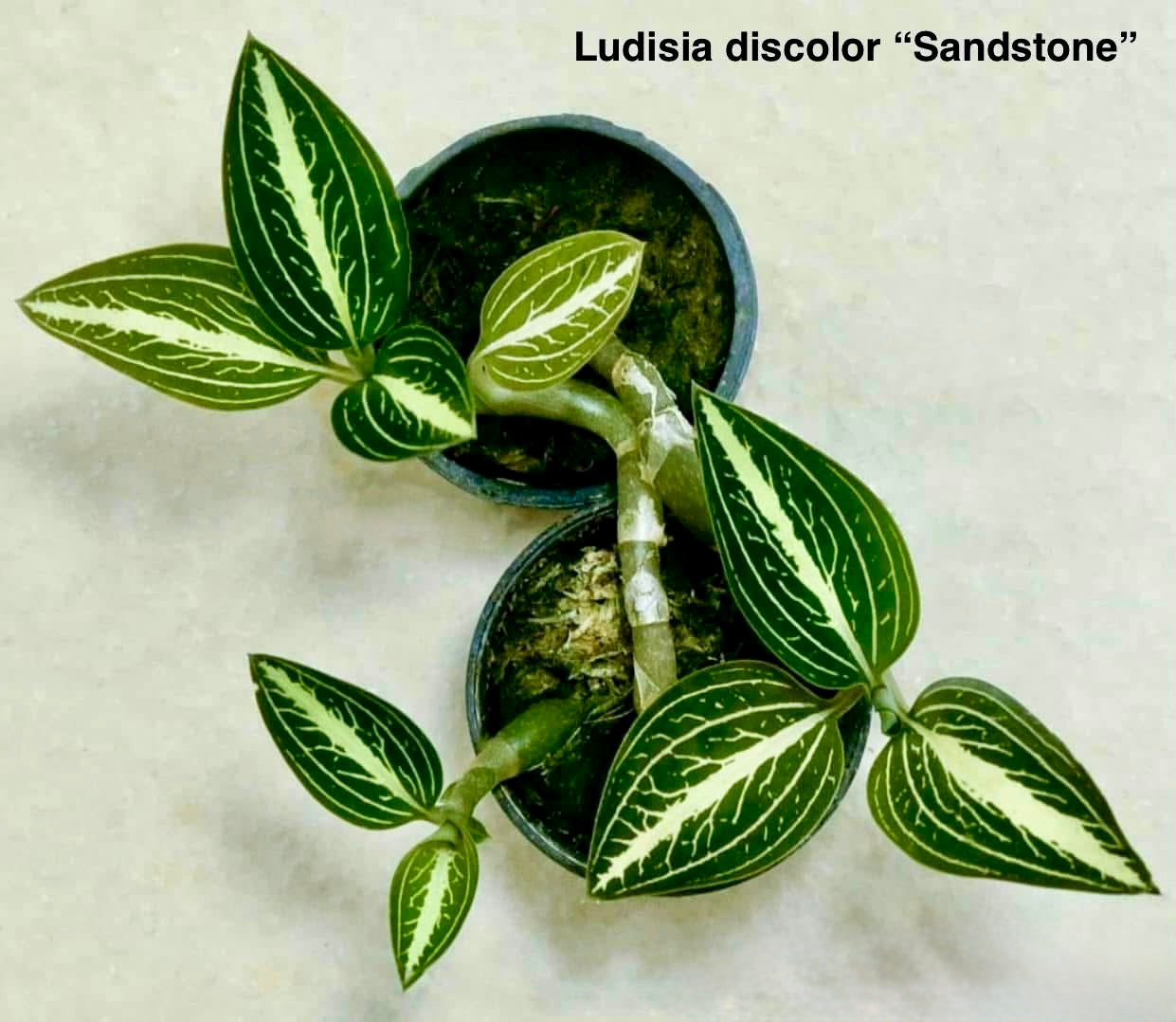
Ludisia discolor 'Green Sandstone' is a special variation within the well-known jewel orchid Ludisia discolor. Unlike many orchids, this species is valued primarily for its decorative foliage. The cultivar 'Green Sandstone' is distinguished by its strikingly fresh leaf color and the subtle pattern of fine veins running across the leaf surface. This gives the plant a calm, natural look that fits well into a collection with other unusual foliage plants or jewel orchids.
Origin
The species Ludisia discolor is native to tropical areas of Southeast Asia, including parts of China, Vietnam, Thailand and Malaysia. There, the plant grows terrestrially on the forest floor of humid rain forests.
In this environment, the plant grows in humus-rich layers of leaves, moss and organic matter. Light is filtered through the dense forest canopy, so the plants have adapted to shady conditions with a stable and humid microclimate.
The selection 'Green Sandstone' is a cultivar name referring to the unusual leaf color and texture of this variety.
Characteristics
Ludisia discolor 'Green Sandstone' forms compact shoots with oval, slightly pointed leaves. The leaves have a velvety texture and a striking green to olive green color. Fine veins run across the leaf surface that can give a subtle sheen in the right light.
The plant grows creeping along the substrate and over time forms multiple shoots from the base. This allows a mature plant to form a compact group with multiple leaf rosettes.
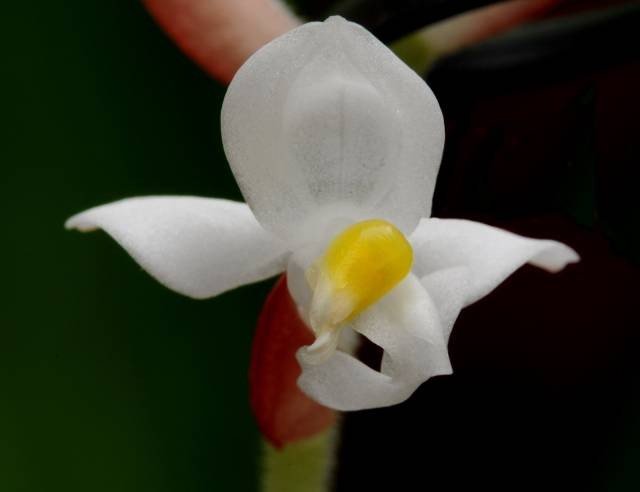
Unlike many orchids, in this species the leaves are the main ornamental feature. Nevertheless, the plant also produces flowers. During flowering, slender flowering stems appear with small white flowers protruding above the leaves. The flowering gives the plant an extra botanical character without overshadowing the leaves.
Care
Light
Ludisia discolor 'Green Sandstone' grows best in soft, indirect light. The plant tolerates little direct sunlight and develops well in a shady spot in the house or in a terrarium.
Temperature
This species grows well at temperatures between about 18 and 26°C. Large temperature fluctuations are less well tolerated.
Substrate
Use an aerated but moist substrate rich in organic matter. Mixtures based on fine bark, peat moss and humus-rich components are suitable for this terrestrial orchid.
Humidity
Humidity between 60 and 80 percent promotes healthy leaf development. In terrariums or display cases, the plant often develops particularly well.
Watering
The substrate should remain slightly moist but not constantly wet. Give small amounts of water regularly and preferably use demineralized water or rainwater.
Feeding
During the growing period, highly diluted orchid nutrition can be given occasionally. Over-fertilization can cause damage, so a low dosage is sufficient.
Flowering
Flowering usually occurs in fall or winter. Upright flowering stems with several small white flowers appear from the shoots. After flowering, the flowering stalk can be removed so the plant can put its energy back into new shoots.