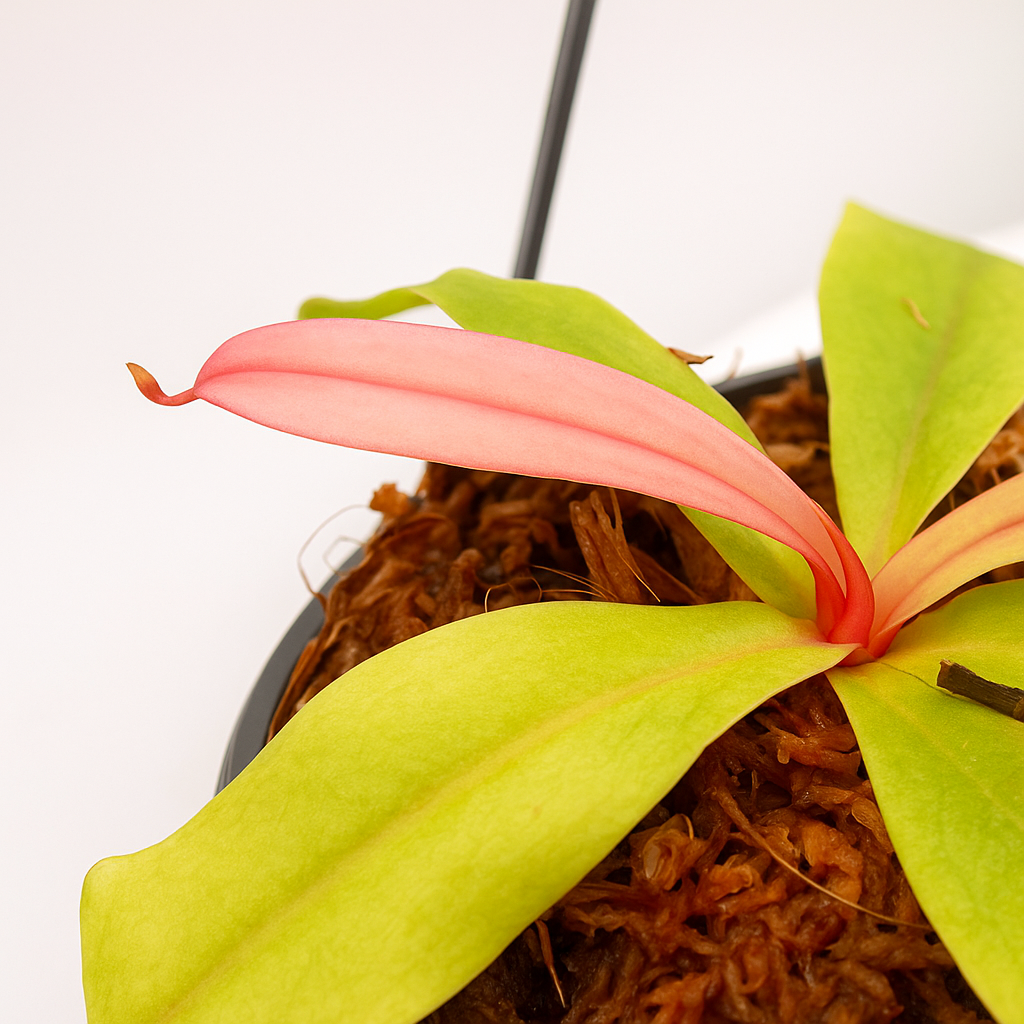
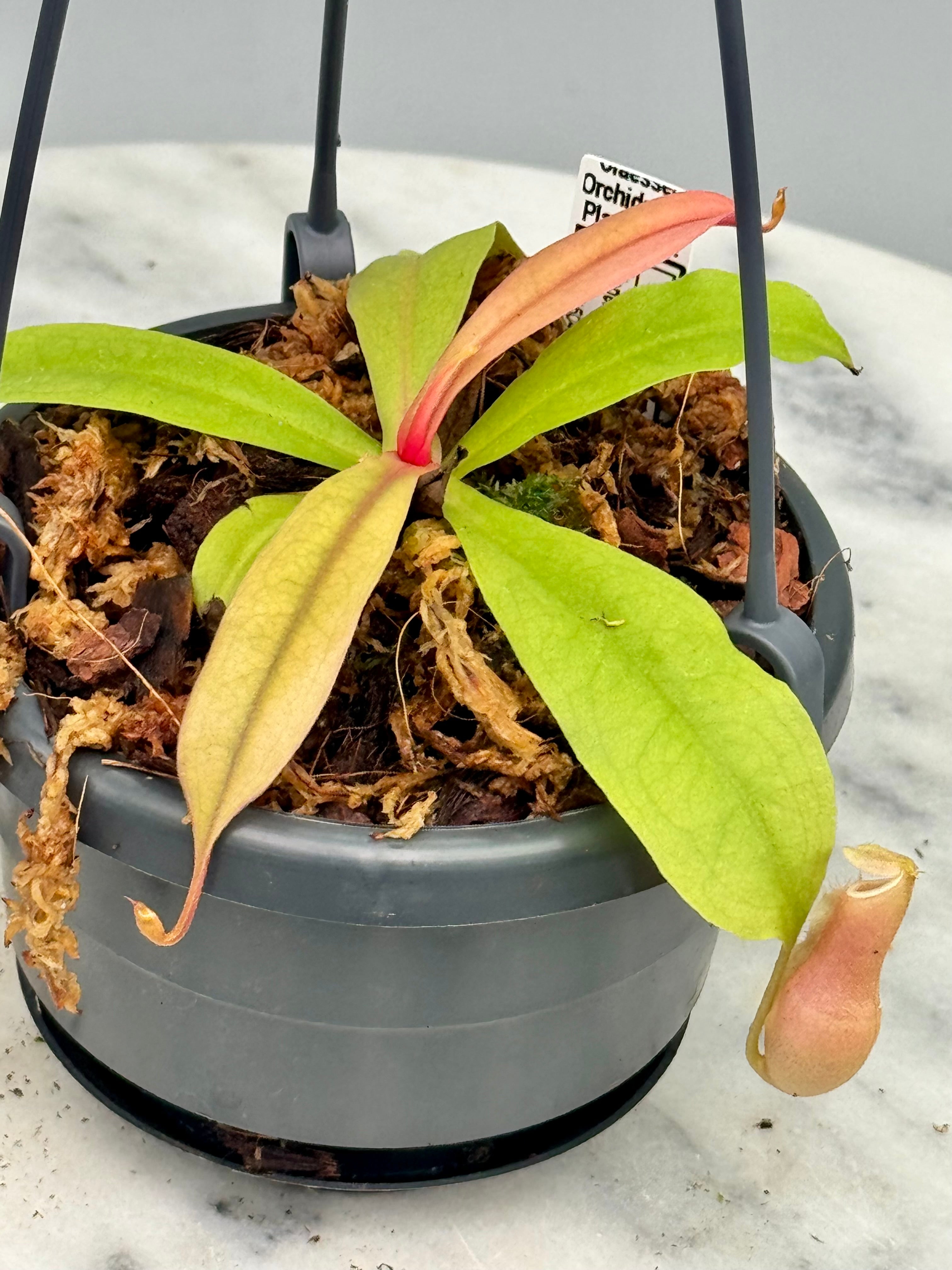
The Nepenthes rosea is a beautiful and rare carnivorous plant that attracts attention with its delicate, pink-violet traps and elegant appearance. This tropical pitcher plant is a must-have for lovers of exotic and unique plants. With its impressive traps, which trap and digest insects, and its striking, colorful flowers, the Nepenthes rosea is a real eye-catcher for any plant collection.
Origin
Nepenthes rosea is native to the tropical rainforests of Southeast Asia, particularly the islands of Borneo and Sumatra. The plant grows there in shady, moist environments, where it feeds itself on the insects that fall into its cup traps. Nepenthes rosea belongs to the family of carnivorous plants and is an epiphyte, meaning that in nature it often grows on trees or rocks.
Characteristics
The Nepenthes rosea has a graceful, tropical appearance. The traps are relatively large and have a beautiful pink to purplish color that deepens toward the edge and often has a small, green spot at the opening. The traps have a typical cup-like shape with a lid that falls over the opening. These traps contain a liquid that is used to lure, trap and eventually digest insects. This natural mechanism makes the Nepenthes rosea not only a visual spectacle, but also a functional plant in an exotic garden.
The long tendrils from which the traps grow can grow up to 1 meter long. The leaves themselves are narrow and lanceolate, with a fresh green color that offers a nice contrast to the pink-violet traps. The plant itself can grow up to 30-50 cm tall, with tendrils spreading out further. It is a slow-growing plant, but with patience it will develop beautifully.
Care
The Nepenthes rosea requires specific care to flourish and grow. As a carnivorous plant, this species has special care needs, but with the right conditions it will develop well.
Light
This plant needs bright, indirect light. Too much direct sunlight can burn the leaves and traps, so it is important to keep the Nepenthes rosea in a bright spot, but not in direct sunlight.
Temperature
The Nepenthes rosea grows best at temperatures between 20-30°C. This plant likes a little coolness at night, which can help stimulate traps. Make sure the plant is not exposed to cold, especially below 15°C.
Substrate
Nepenthes rosea needs a well-drained, acidic substrate, such as peat moss and perlite or a mixture specifically for carnivorous plants. The substrate should be airy so that the roots can breathe well and water does not remain trapped for too long.
Humidity
The plant thrives best at a high humidity of 60-80%. Increase the humidity if necessary by misting the plant occasionally or using a humidifier.
Watering
Use demineralized water, rainwater or distilled water to water the Nepenthes rosea to moisten it. Avoid tap water, as it often contains minerals that can be harmful to the plant. Keep the substrate moist, but not soggy, and make sure the roots are not in standing water.
Nutrition
The Nepenthes rosea feeds mainly on insects that fall into the traps. If you keep the plant in an environment where insects are scarce, you can feed it occasionally with small insects or dried food, but this is usually not necessary if the plant itself is in an insect-rich environment.
Growth and Cups
The Nepenthes rosea is a slow-growing plant, but with patience it will develop an impressive collection of traps that catch insects. The traps may continue to develop over time and will produce new, colorful specimens each season. The plant grows best in an airy environment where it can expand and where there is adequate light and humidity.
With the Nepenthes rosea you bring into your home an intriguing, exotic plant that not only provides a visual spectacle, but is also functional by catching insects. It is the perfect choice for plant lovers looking for an unusual plant that is both decorative and interesting.