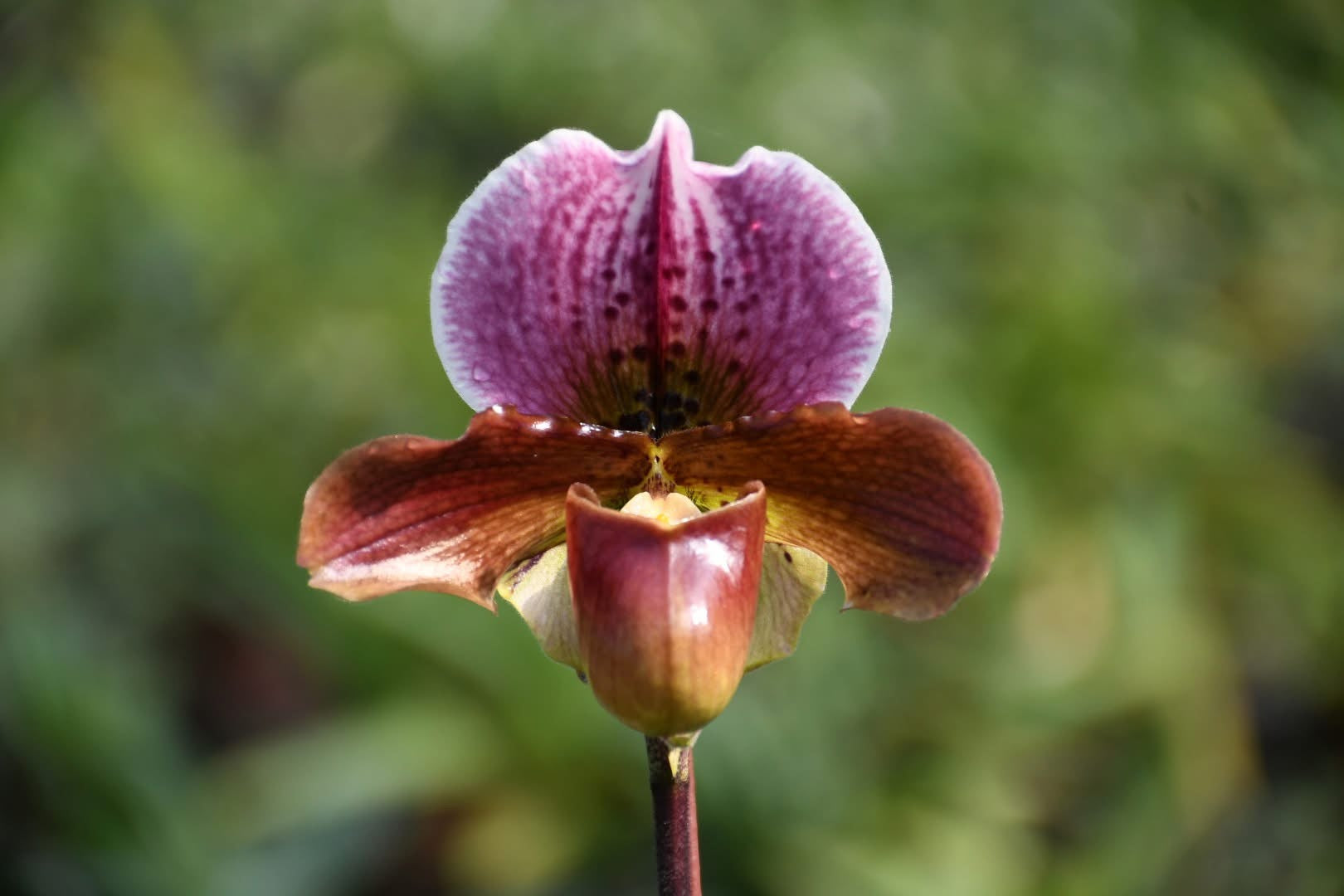
Paphiopedilum Doll's Kobold is a compact hybrid within the genus Paphiopedilum and is known for its striking flower pattern and relatively small growth habit. This cultivar belongs to the so-called lady's shoes and is appreciated by collectors for its contrasting flowers and good suitability for windowsill culture. Due to its compact size and characteristic flower shape, Paphiopedilum Doll's Kobold is an interesting choice for both novice enthusiasts and experienced orchid collectors.
Origin
Paphiopedilum Doll's Kobold is a horticultural hybrid developed within the genus Paphiopedilum. These hybrids originated from crosses between several Asian Paphiopedilum species, selecting for flower color, shape and vigor.
The original species from which Paphiopedilum hybrids are descended are mainly from tropical and subtropical regions of Asia. There they usually grow terrestrially on forest soils or lithophytically on rocky slopes in shaded forests with high humidity.
Through directed selection, Paphiopedilum Doll's Kobold developed as a compact hybrid with distinct flower pattern and stable flowering.
Features
Paphiopedilum Doll's Kobold forms compact rosettes with broad, even green leaves. The plant remains relatively small, taking up little space in a collection.
From a mature growing point, a flowering stem develops with usually one flower. The flower has the distinctive shoe-shaped lip typical of the genus Paphiopedilum. The petals often show contrasting markings with stripes or spots in shades of green, brown, cream and sometimes purplish highlights.
The distinct markings and compact construction give this hybrid a strong visual appeal despite its modest size. The flowers usually remain beautiful for a long time, which is a feature appreciated in many Paphiopedilum hybrids.
Care
Light
Paphiopedilum Doll's Kobold grows best in bright, indirect light. Avoid direct sunlight, especially during the hottest hours of the day.
Temperature
This hybrid grows well at moderate temperatures between about 17 and 24 °C (73 and 86 °F). A slight drop in temperature at night may help flower bud formation.
Substrate
Use an aerated orchid substrate based on fine to medium bark. This provides adequate ventilation around the roots and prevents the substrate from staying wet for too long.
Humidity
Humidity between about 50 and 70 percent is usually sufficient for healthy growth.
Watering
Paphiopedilum species do not have pseudobulbs and therefore should not be allowed to dry out completely. Keep the substrate slightly moist and water as soon as the substrate begins to dry up. Preferably use demineralized water or rainwater.
Feeding
During the growing period, a slightly diluted orchid nutrition can be given regularly. In winter, the amount of nutrition can be reduced.
Flowering
A mature plant usually produces one flower per flowering stem. The flower may remain beautiful for several weeks to months. After flowering, the plant develops new growth points from the base that can later rebloom.