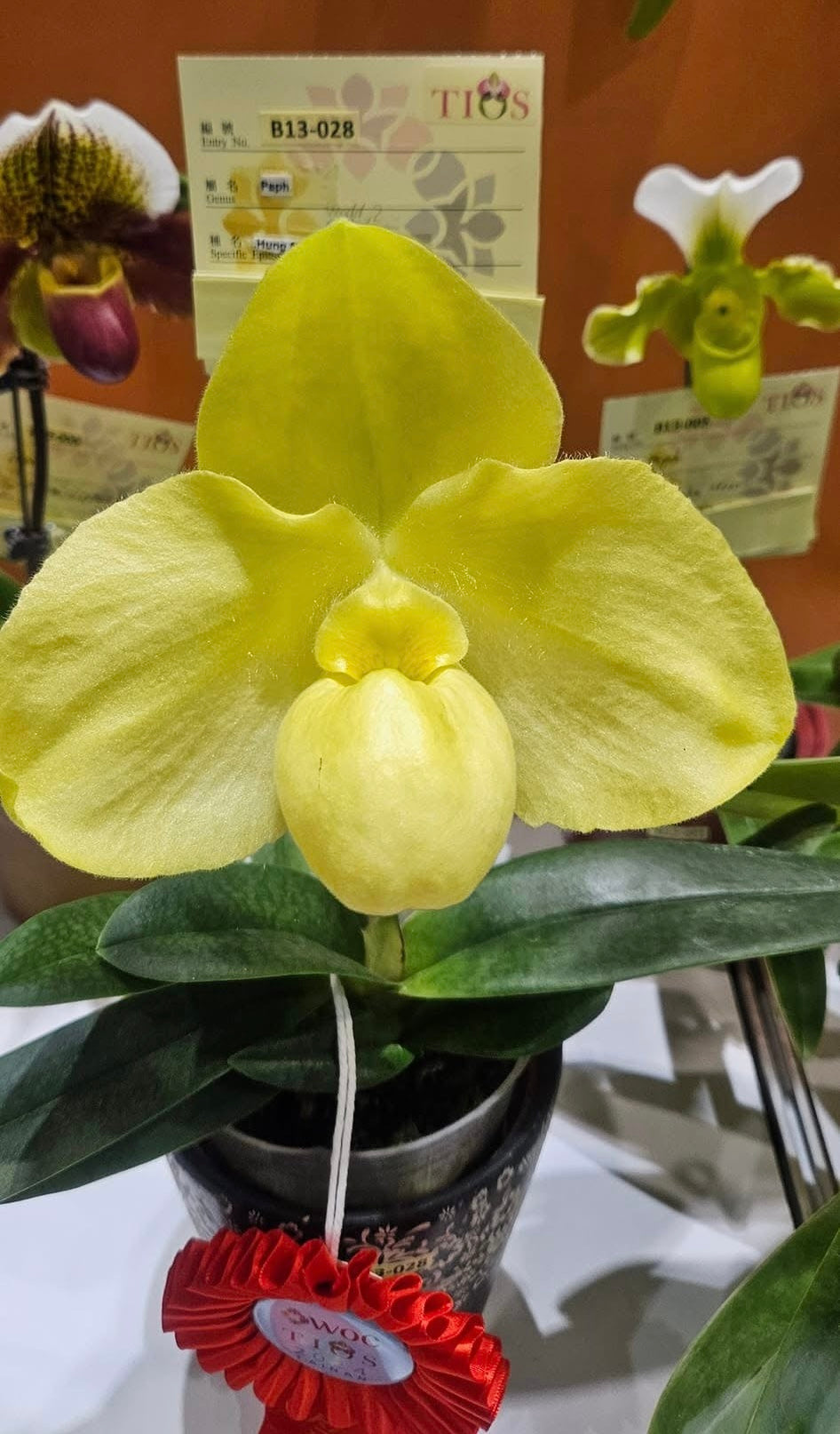
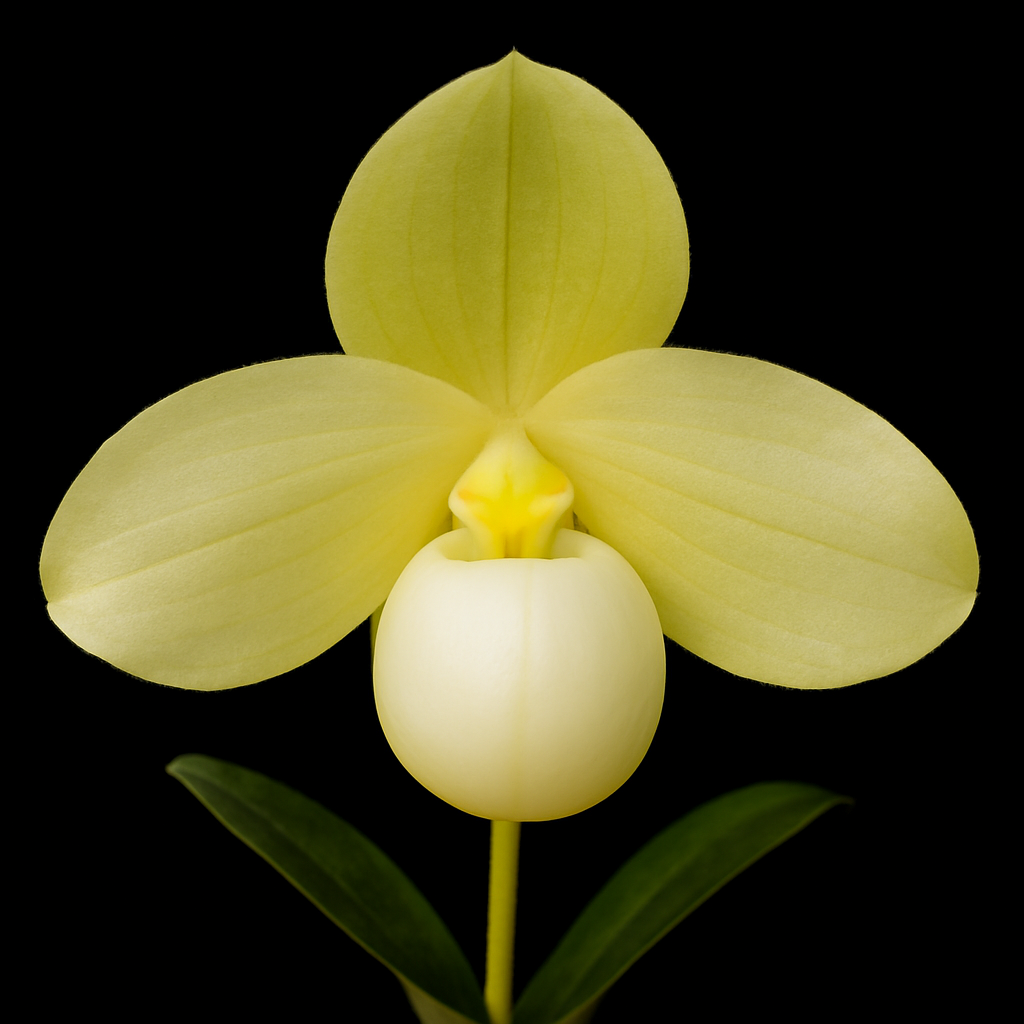
Paphiopedilum hangianum 'Alba' is a selection form of a botanical species in the slipper orchid group. Within the trade, "alba" usually refers to a form with strikingly light to white flower color, while retaining the robust build and substantial flower size of the species. It does not grow on a stem like many epiphytic orchids, but rather behaves as a species rooting among humus and moss in rocky places, making an airy but evenly moist substrate important.
Origin
Paphiopedilum hangianum is a Kew-accepted species with a natural distribution from southern Yunnan in China to northern Vietnam. In nature, the species grows as a lithophyte, that is, on rocks with organic material accumulated in crevices and ridges, in a humid tropical forest climate.
The addition "Alba" is a horticultural designation for a light color form and not a separate botanical species name.
Characteristics
The plant produces firm, oblong, evergreen leaves and gradually grows into a compact clump. Flowering usually consists of one vigorous flower per stem, with the typical slip-shaped lip and broad flower parts that can be distinctly lighter to white in this selection. Flowers often have a waxy texture and, under stable conditions, remain decorative for a relatively long time. Variation in hue and markings is normal, even within the alba form, as light, temperature and growth stage affect the final color impression.
Care
Light
Bright, indirect light is suitable, with protection from bright midday sun behind glass. In too dark light, growth often remains quieter and bud formation may fail.
Temperature
An intermediate to warm regime generally suits this type Paphiopedilum well, with nights roughly around 13 to 22 °C and days around 21 to 29 °C as a practical range. A slight night fall supports a stable growth rate.
Substrate
An airy, fine but textured orchid substrate works most predictably. Consider a base of fine bark structure with moisture retaining components such as sphagnum, so that the mixture can remain evenly moist without slaking. Importantly, the roots should always retain oxygen and there should be no prolonged wet areas in the pot.
Humidity
A humidity of about 50 to 70 percent usually gives a calm leaf appearance and neater bud development, especially when combined with light air movement.
Watering
Because Paphiopedilums do not have pseudobulbs, the substrate usually does not tolerate prolonged drought. Evenly slightly moist is the starting point, with a pot and substrate that drain excess water quickly. Preferably use demineralized water to limit salt buildup in the substrate.
Nutrition
During active growth, a low dose of orchid nutrition works well. A practice that often proves stable is light fertilization at regular intervals, with ample flushing in between so that salts do not build up.
Repot
Repotting can be done when the substrate sags or becomes less airy, or when the root zone becomes noticeably fuller. Many Paphiopedilums respond best to repotting in a growth phase, after which the plant is mainly given rest and stability.
Flowering
Flowering often falls in the cooler half of the year for many Paphiopedilums, with flowers that can last for several weeks. A combination of adequate light, stable watering and slightly cooler nights increases the likelihood of bud formation and helps keep flowers beautiful longer.