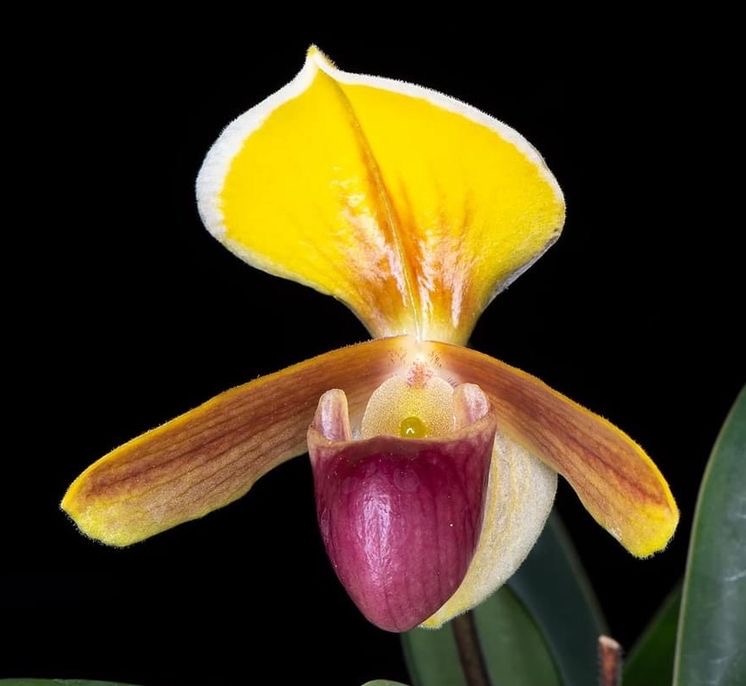
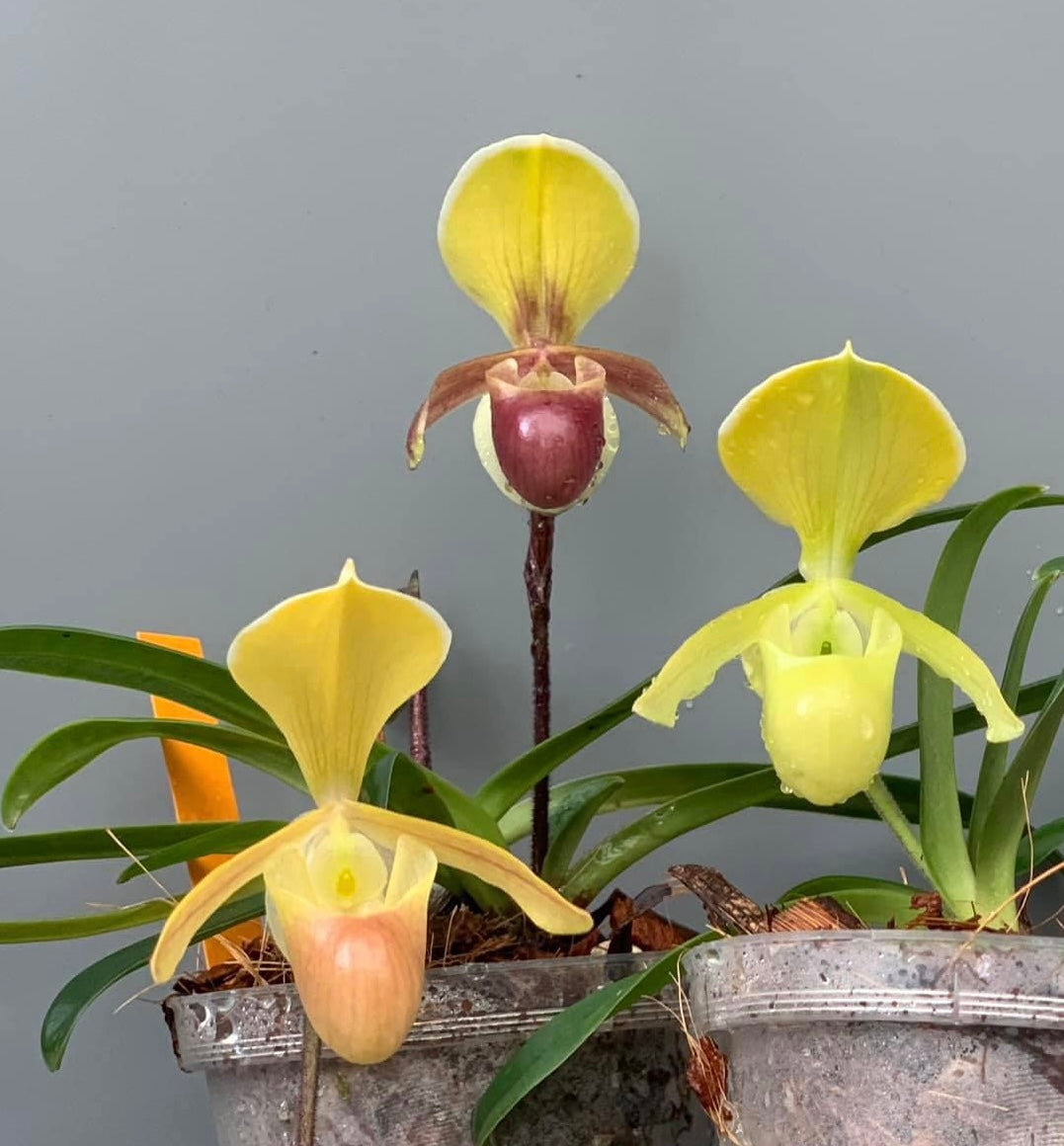
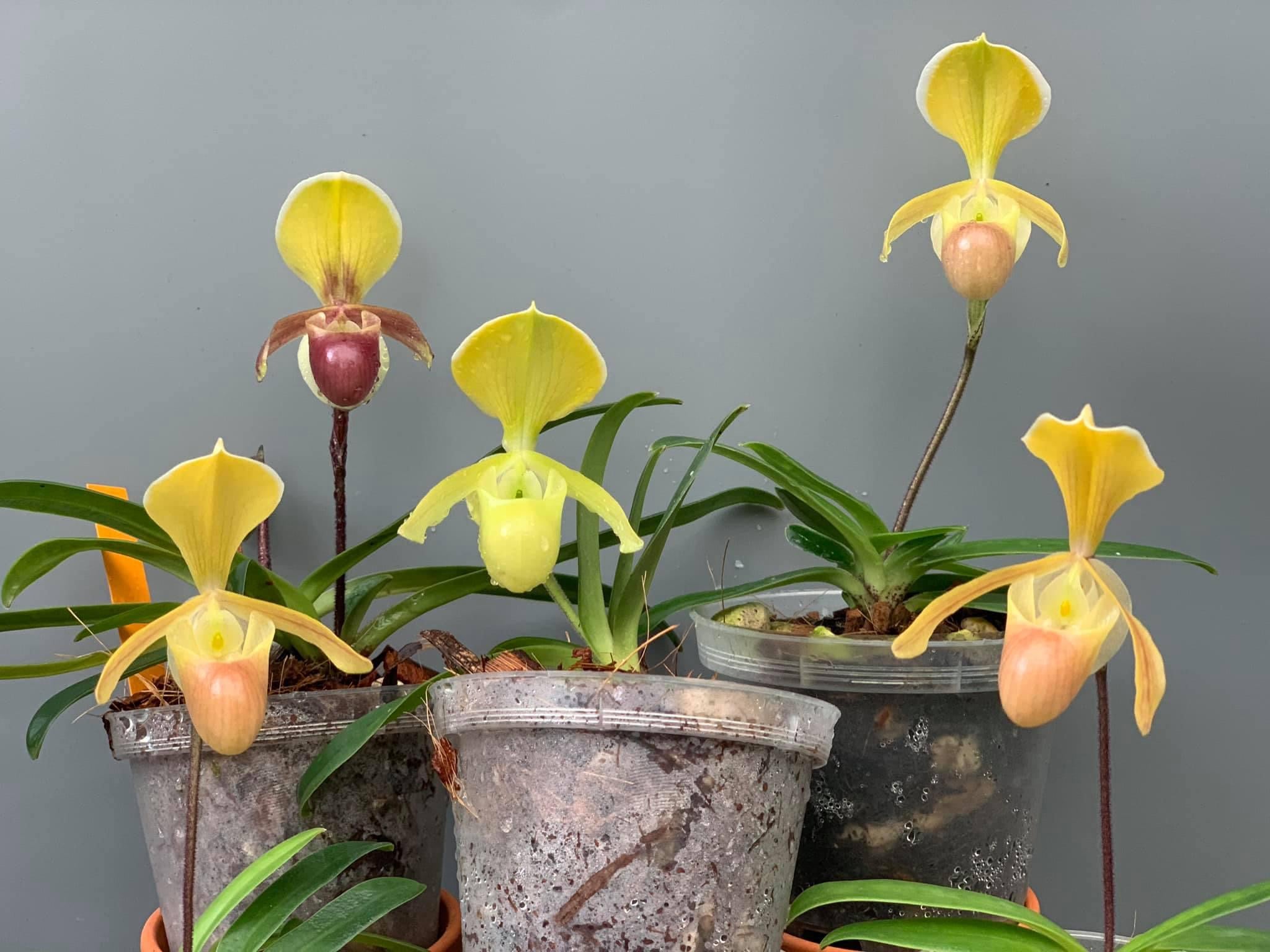
Anyone looking for a compact, yet exceptionally rare orchid with a unique appearance will sooner or later end up with Paphiopedilum helenae 'Dark'. This striking variety is a botanical gem that intrigues novice enthusiasts and experienced collectors alike. The species itself is already rare in culture, but the 'Dark' form is even harder to find and is offered only sporadically worldwide.
What makes this plant so special is the combination of its exceptionally small size and its expressive blooms. The flowers resemble in shape a classic Paphiopedilum, but surprise with their intensely dark colors and sophisticated markings - a rare variation that is not obvious within this species. Its modest size also makes it ideal for those working with limited space, such as in a terrarium or on an orchid rack.
The Paphiopedilum helenae 'Dark' is not a plant that you just come across in a garden center. It is a collectible species, beloved among connoisseurs for its unique color pattern and challenging but rewarding care. This plant demands attention, but also bestows something special in return: a bloom that, however small, evokes a deep sense of wonder.
Origin
The Paphiopedilum helenae is one of the smallest species within the genus Paphiopedilum and is native to the mountainous border region between northern Vietnam and southern China. This particular variety, 'Dark,' is known for its deeper colored flowers - a rarity within a species that is already naturally difficult to find in cultivation. It often grows in nature on calcareous rocky outcrops at elevations around 1,000 meters, where it seeks shelter among moss and shady vegetation.
Characteristics
The "Dark" form of P. helenae displays compact leaves with subtle marbling and produces striking flowers that are darker in color than the standard form: think intense yellow with deep mahogany brown to almost black markings on the carapace and petals. The flower remains relatively small, but its distinct color contrasts make it a real eye-catcher. The plant itself remains extremely compact, with a leaf span of often no more than 10 to 15 centimeters - ideal for collectors with limited space.
Care
Light
Give the plant bright, indirect light. Avoid direct sunlight, especially during midday hours, to prevent leaf burn.
Temperature
This species appreciates cool to moderately warm temperatures. A daytime temperature between 18-24°C and a nighttime drop to around 12-16°C is ideal.
Substrate
Use an aerated and moisture-retentive substrate based on fine bark and sphagnum. Avoid overly coarse bark, but ensure good drainage.
Humidity
An air humidity between 60 and 80% is recommended. When humidity is low, provide additional evaporation via a humidifier or water bowls nearby.
Nutrition
Fertilize sparingly during the growing period (spring to fall) with a balanced orchid fertilizer, diluted to a quarter of the recommended dose.
Watering.
Water with clean rainwater or even better with demineralized water. Never let it dry out completely, but also avoid soggy conditions.
Flowering
The flowering period of P. helenae usually falls in the fall. Each mature growth rosette blooms only once, so encourage new shoots for future flowering. The flowers often last for several weeks and retain their intense color for an especially long time. In spring, the flower may look slightly lighter in color.