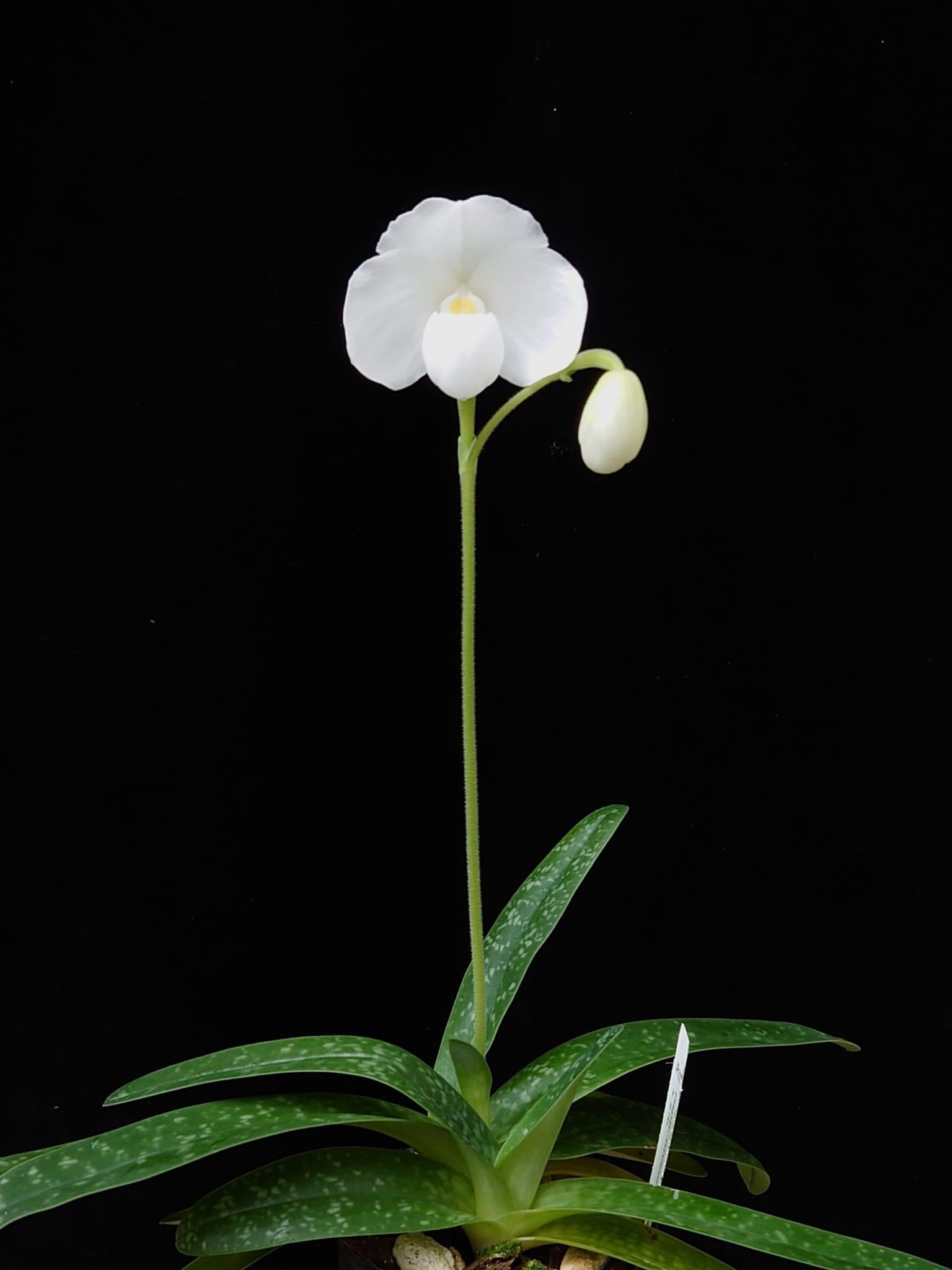
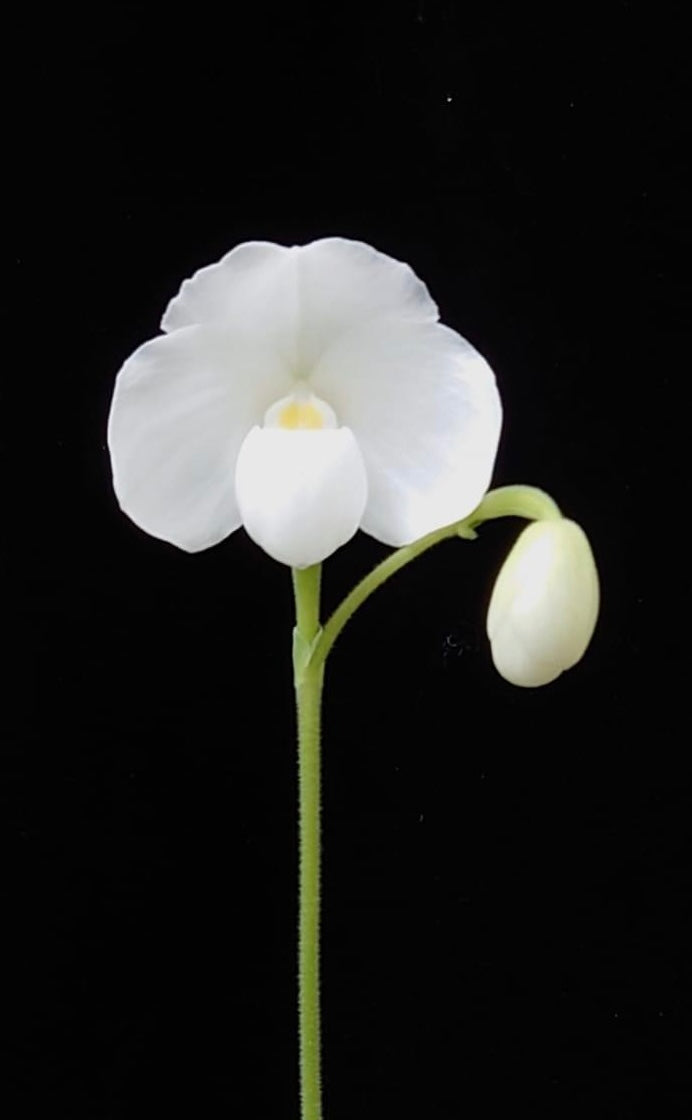
Paphiopedilum niveum 'Albo' is a compact slipper orchid from the marbled-leaf group, known for its relatively round flower shape and bright color appearance. The designation 'Albo' is used in the trade for a selection with distinctly lighter flowers, in which the flower usually appears whiter and the pigment in spots or markings is often less pronounced.
Origins
The species Paphiopedilum niveum has been accepted by Royal Botanic Gardens, Kew and has a natural distribution from peninsular Thailand to northern peninsular Malaysia, with an additional entry for Borneo (Tambelan Islands), according to Plants of the World Online.
In nature, the species grows regularly as a lithophyte in calcareous rocky environments, with organic matter accumulating in crevices and ledges.
Characteristics
The plant stays low and forms a compact growth habit with sturdy, marbled leaves that remain decorative even outside of flowering. The flower is usually round and fairly wide open, with a typical slipper lip, and in the 'Albo' selection the emphasis is on a brighter white flower pattern with often less pronounced markings. The species is known to flower regularly under stable conditions indoors, while the plant itself remains compact.
Because these are living plants, hue, degree of markings and flower shape may vary slightly from one specimen to another, especially with selection forms.
Care
Light
Bright, indirect light to slightly filtered sun suits this species well, which in nature often grows on fairly light rock walls. Too dark light usually produces leaf growth but less chance of flowering, while bright afternoon sun behind glass can damage the leaves.
Temperature
An intermediate to warm regime usually works most predictably, with a steady daytime temperature and a slight drop at night. Large fluctuations or prolonged cold standing increase the risk of growth arrest and root stress.
Substrate
An airy, fine but textured substrate fits best. A base of fine bark texture with a moisture retaining component such as sphagnum helps maintain even moisture while still keeping the roots oxygenated. The substrate does need to be allowed to drain out after watering so that there are no permanently wet areas in the pot.
Humidity
Moderate humidity is usually sufficient, with extra attention to air movement when the environment is more humid.
Watering
Evenly slightly moist is the starting point because Paphiopedilums do not have pseudobulbs and respond less well to repeated drying out. Water left in the pot actually increases the chances of root problems, so proper drainage remains important.
For water quality, soft water often works best. Demineralized water is usable, provided the nutrition is given low and regular and the substrate is flushed well from time to time to reduce salt build-up.
Nutrition
In the growing period, a low dose of orchid nutrition works well. A mild, consistent approach is usually better than occasional heavy fertilizing, especially since salts can build up in the substrate.
Repotting
Repotting makes sense when the substrate sags or becomes noticeably less airy. A fixed location after repotting helps to allow the plant to quietly root again.
Flowering
Flowering can appear at different times depending on growth rate and conditions. Sufficient light, even watering and a stable temperature usually ensure the most reliable bud development and a longer shelf life of the flower.