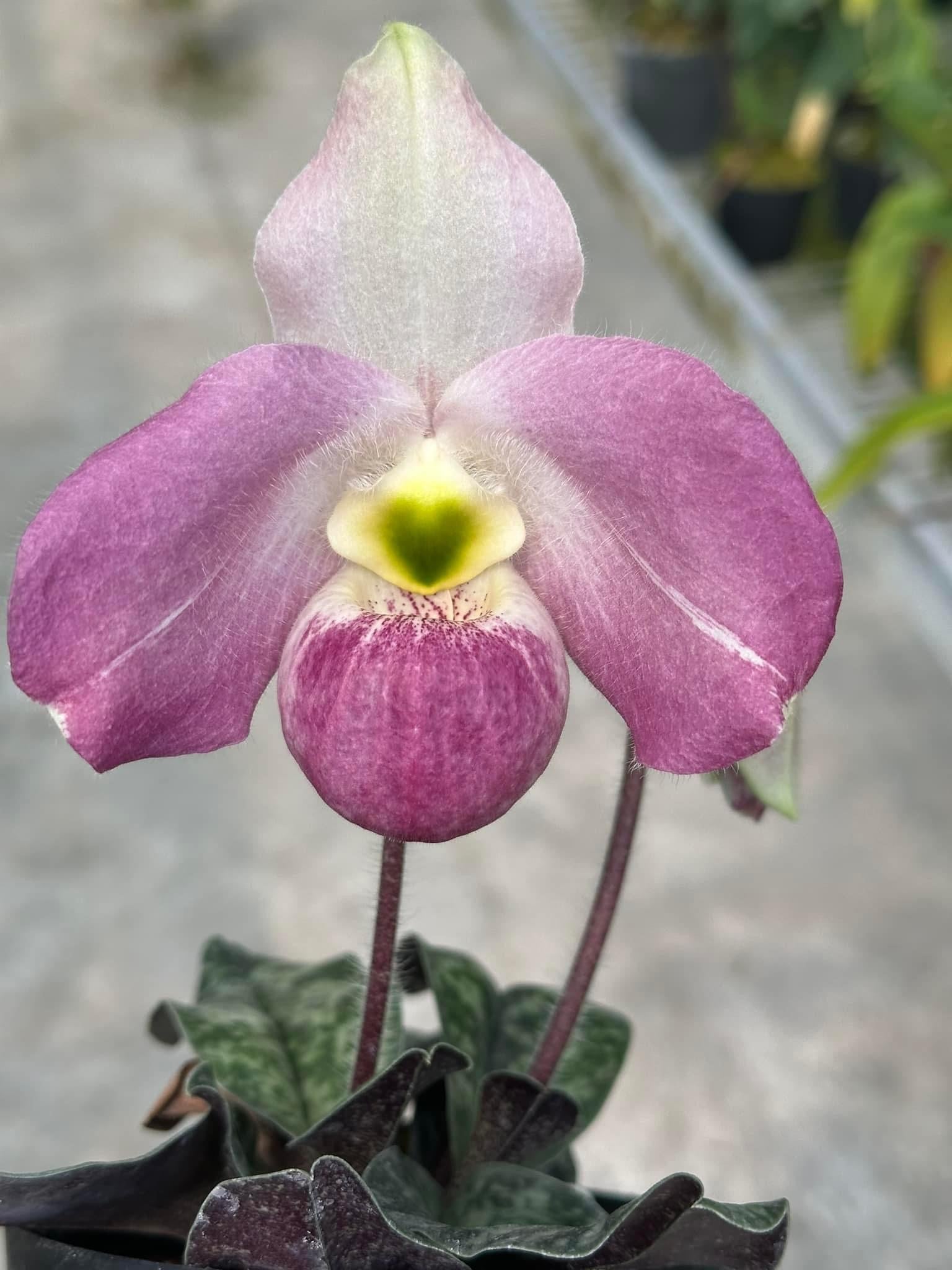
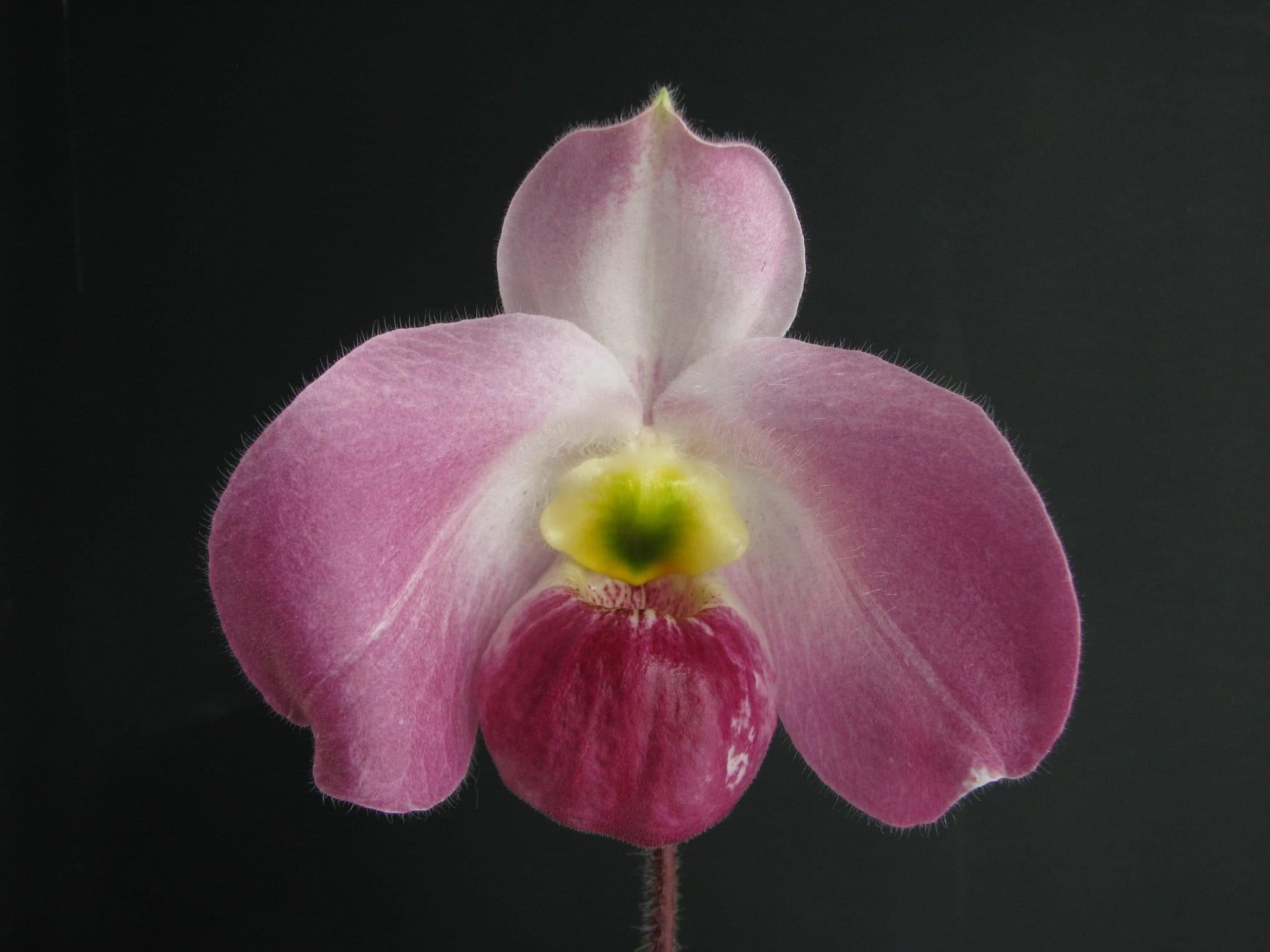
Paphiopedilum is a rare botanical lady's slipper orchid from northern Vietnam. This species was described relatively recently and is therefore one of the more recent discoveries within the genus Paphiopedilum. The plant stands out for its compact growth habit, beautifully marbled leaves, and strikingly large flowers in shades of pink to purplish-pink.
This is an orchid for enthusiasts who are looking for more than just a beautiful flower. Paphiopedilum The Vietnamese orchid has true collector’s value due to its limited natural range, its limestone habitat, and its unique combination of small leaves with a relatively large, soft flower. The plant is visually appealing but does require careful care. It is less straightforward than its compact size and charming appearance might suggest.
Origin
Paphiopedilum Vietnamese is native to northern Vietnam. The species was not described until 1999, making it a relatively recent addition to the scientific Paphiopedilum literature. In the wild, it grows in limestone areas, often on rocky slopes or in crevices where moss, leaf litter, and organic material accumulate.
This natural habitat is important for its care. In nature, the roots do receive moisture—especially during wetter growing seasons—but they do not remain in heavy, wet soil for long periods. Water drains quickly along the limestone, while the plant simultaneously benefits from a mineral-rich, airy root environment.
Paphiopedilum Therefore, the Vietnamese orchid is not a species suited for regular potting soil or an orchid mix that is too compact. The plant requires an airy, slightly calcareous substrate and a clear balance between moisture and oxygen around the roots.
Characteristics
Paphiopedilum Vietnamese forms compact fans with decorative marbled foliage. The leaves are usually green to gray-green with a darker mosaic pattern, keeping the plant attractive even outside the blooming season. This marbled foliage is typical of several compact-growing Paphiopedilum species from limestone environments.
The flower is large in proportion to the plant. Its color usually ranges from pink, soft purple, purple-pink, to warm violet-pink. The floral parts are broad and round in shape, while the lip has the typical shoe-shaped form of Paphiopedilum. The combination of compact foliage and a relatively large flower gives the plant exceptional ornamental value.
Paphiopedilum Vietnamese usually blooms with a single flower per flower stalk. The plant therefore does not need to grow large to be striking. It is precisely the ratio between plant size and flower size that makes this species interesting to collectors.
Care
Light
Provide Paphiopedilum Vietnamese with bright, filtered light. The plant does not like harsh midday sun, but it should not be kept in a spot that is too dark either. A spot with soft morning light, filtered daylight, or grow lights is suitable.
Too little light can slow growth and delay flowering. Too much direct sunlight can damage the marbled leaves or turn them yellow. A bright, filtered windowsill, a greenhouse, conservatory, or plant cabinet with soft lighting works well for this species.
Temperature
Paphiopedilum The Vietnamese variety grows best under moderate conditions. During active growth, a daytime temperature of about 20 to 26°C is suitable. At night, the temperature may drop to about 15 to 19°C.
During cooler periods, the plant can be kept in a slightly cooler spot, as long as the roots are kept drier. Cold and wet are a bad combination. A slight seasonal change with cooler nights and less water helps to better mimic natural growing conditions.
Potting Mix
Use a well-aerated Paphiopedilum mixture containing a calcareous or mineral component. A suitable mixture can consist of fine to medium-coarse bark, perlite, pumice, or Seramis, some sphagnum moss, and a small amount of crushed limestone, oyster shell, or dolomite.
The substrate should retain moisture briefly but also allow oxygen to pass through quickly. Paphiopedilum Vietnamese plants naturally grow in limestone environments and cannot tolerate an old, compacted, oxygen-deprived mixture. An airy structure is more important than a high amount of organic material.
Repot in a timely manner when the mix begins to break down. Root problems can arise, especially in compact Paphiopedilums, when old bark remains wet and acidic for too long.
Humidity
A relative humidity of about 60 to 75% is ideal. The plant prefers stable humidity, but not stagnant, stuffy air. Good air circulation is important, especially when humidity is high or the plant is kept in a cooler location.
In dry living room air, growth may be slower and young roots may stop growing more quickly. A greenhouse, conservatory, display case, or plant cabinet can help keep humidity more stable, as long as there is sufficient ventilation.
Watering
During the active growing season, the Vietnamese Paphiopedilum should be kept evenly slightly moist. Water when the top layer of the growing medium begins to dry out, but before the plant dries out completely. The growing medium should feel moist, not wet and heavy.
When growth slows down, especially during the cooler and darker months, watering can be reduced. Keep the plant slightly drier during this time, without letting it shrivel completely. This transition between a wetter growing season and a cooler, drier dormant period is important for healthy growth.
Preferably use rainwater, demineralized water, or soft water at room temperature. Because this species originates from a limestone environment, a small source of calcium in the growing medium can be beneficial. Avoid using heavily calcareous tap water without monitoring the total salt buildup.
Fertilization
During active growth, apply a light dose of orchid fertilizer regularly. A quarter to half the recommended dose is usually sufficient. Paphiopedilum The Vietnamese orchid grows compactly and does not require heavy fertilization.
Rinse the substrate regularly with clean water to prevent the buildup of fertilizer salts. During the dormant period, fertilization may be significantly reduced or temporarily stopped. Too much fertilizer combined with less light and lower temperatures can damage the roots.
Flowering
Paphiopedilum Vietnamese plants typically produce a single large flower per flower stalk. The flower is pink to purplish-pink and stands out even more because the plant itself remains compact. Flowering can vary by plant and growing conditions, but is usually supported by strong roots, sufficient filtered light, and a clear seasonal rhythm.
After flowering, the flower stalk can be removed once it begins to dry out. The flowering cluster will not bloom again; future blooms will come from new, mature shoots.
Care Level
Paphiopedilum The Vietnamese variety is of medium to advanced difficulty in care. The plant looks compact and friendly, but it is not as easy to care for as a standard commercially grown lady’s slipper orchid. This species requires, above all, a good root environment: airy, slightly moist, calcareous, and never deprived of oxygen for long periods.
The biggest risks are overly wet substrate, insufficient air around the roots, too little seasonal variation, and a location that’s too dark. Keeping it warm and wet year-round can lead to root problems. Keeping it too dry during active growth, on the other hand, inhibits development.
Who is this plant suitable for?
Paphiopedilum The Vietnamese orchid is suitable for enthusiasts and collectors who have experience with Paphiopedilum, Parvisepalum species, or calcareous orchids. The plant is a good fit for someone actively seeking a rare botanical species with marbled leaves and a large pink flower.
This species is less suitable for absolute beginners. Not because it’s impossible to grow, but because its care requires more precision than many standard hybrids. For collectors who want to grow a compact, rare species from Northern Vietnam and are willing to pay close attention to substrate, watering, and seasonal rhythms, Paphiopedilum Vietnamese is a very attractive choice.
Growing Experience Indoors or in a Greenhouse
In a greenhouse, conservatory, or plant cabinet, Paphiopedilum Vietnamese is often easier to keep stable than on a dry windowsill. The plant benefits from higher humidity, filtered light, and better control over temperature and watering.
The plant can also grow on a windowsill, provided the spot is bright enough and the growing medium doesn’t stay wet for too long. Due to its compact size, it takes up little space, but it does require close observation. Sturdy leaves, new roots, and a fresh growing tip are better indicators than rapid above-ground growth.
Additional care tip
Treat Paphiopedilum Vietnamese as a limestone-Paphiopedilum, not as a standard moisture-loving indoor orchid. Provide it with a light, mineral-rich substrate; keep it evenly slightly moist during the growing season, and water it significantly less during the cooler months. That balance between moisture, calcium, air, and seasonal rhythms is the key to success.
Short product description
Paphiopedilum Vietnamese is a rare botanical lady’s slipper orchid from Northern Vietnam, first described in 1999. The plant remains compact, has beautifully marbled leaves, and blooms with a large pink to purplish-pink flower. This limestone-loving species requires an airy, slightly calcareous substrate, filtered light, seasonal watering, and careful care. Particularly suitable for experienced enthusiasts and collectors.