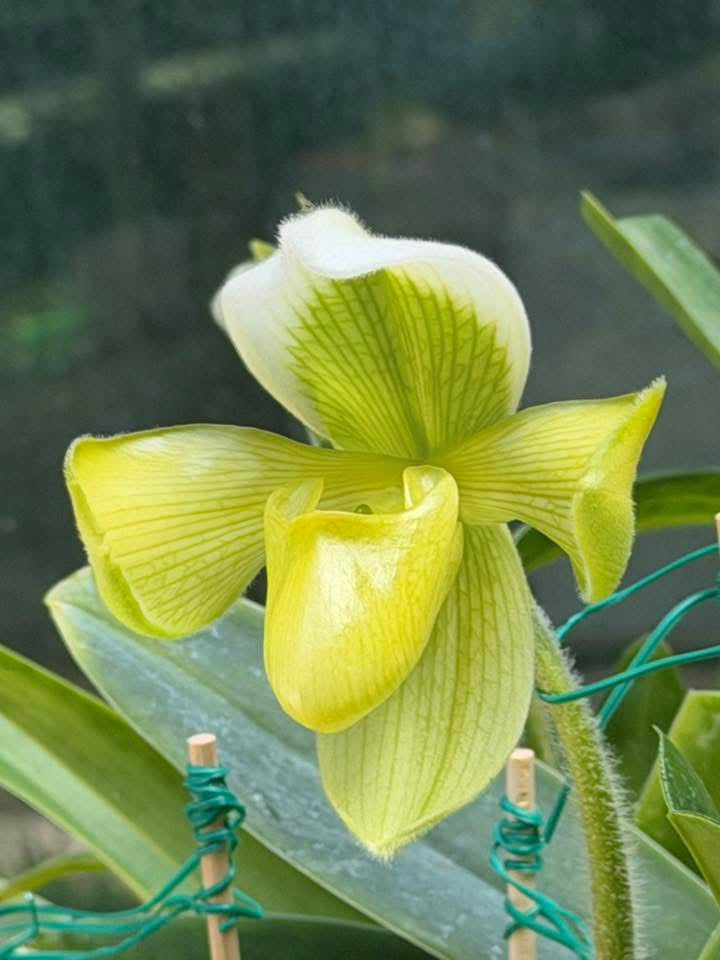
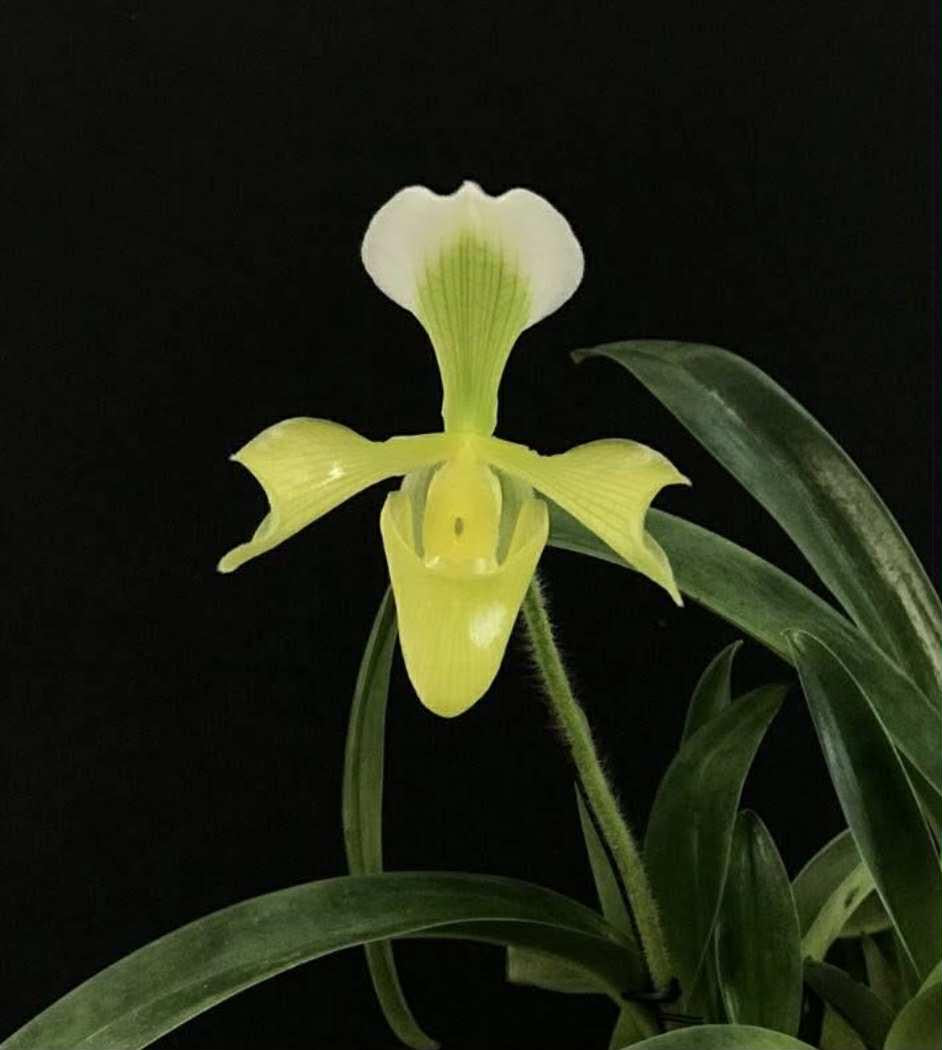
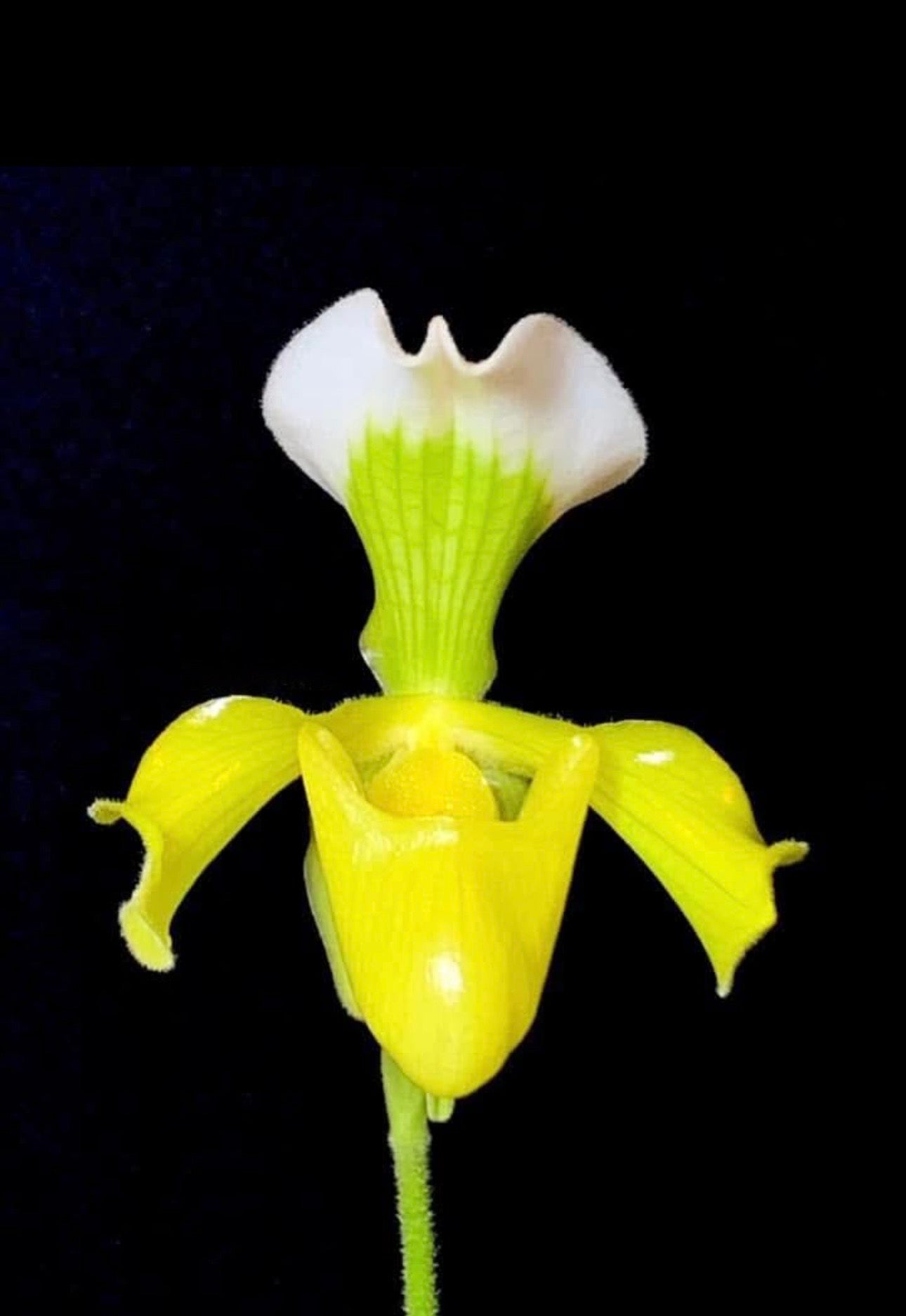
Paphiopedilum villosum f. flava is a special color form of the botanical species Paphiopedilum villosum. This orchid belongs to the so-called lady's shoes and is known for its robust construction and characteristic flower shape. The form flava is distinguished by the lack of reddish-brown pigments in the flower, creating a striking yellow to light green flower color. Within collections, this form is prized for its relatively rare color and its botanical background.
Origin
Paphiopedilum villosum is native to parts of Southeast Asia, including India, Myanmar, Thailand and southern China. The species grows in mountainous areas where there is a temperate tropical climate.
In nature, this orchid usually grows terrestrially or lithophytically. The plants are often found on humus-rich forest floors or among moss and organic material on rocky slopes. Light is filtered through the forest canopy, while humidity and temperature remain relatively stable.
The form Paphiopedilum villosum f. flava is a natural color variant that lacks the red pigment in the flower. This creates a lighter flower color that is considered special within collections.
Characteristics
Paphiopedilum villosum forms sturdy rosettes with oblong, green leaves. The leaves are uniformly green and have a fairly firm texture. The plant grows compactly and produces new shoots from the base of the rosette.
The flower appears on an erect flowering stem and has the characteristic shoe-shaped lip typical of the genus Paphiopedilum. In the form flava, the petals are predominantly yellow to yellow-green in color. The flower may additionally show light green highlights, giving a soft and natural appearance.
The flower is relatively large in relation to the plant and can remain beautiful for a long time. This makes this species popular among collectors of botanical Paphiopedilum species.
Care
Light
Paphiopedilum villosum grows best in bright, indirect light. Direct sunlight can cause leaf damage. A stand with filtered light is ideal.
Temperature
This species grows well at moderate temperatures between about 16 and 24 °C. A slight drop in temperature at night can promote flowering.
Substrate
Use an aerated orchid substrate based on fine to medium bark. This provides adequate ventilation around the roots and prevents the substrate from staying wet for too long.
Humidity
Humidity between about 50 and 70 percent is usually sufficient for healthy growth.
Watering.
Paphiopedilum species do not have pseudobulbs and therefore should not be allowed to dry out completely. Keep the substrate slightly moist and water as soon as the substrate begins to dry up. Preferably use demineralized water or rainwater.
Feeding
During the growing period, a slightly diluted orchid nutrition can be given regularly. In winter, the amount of nutrition can be reduced.
Flowering
A mature plant can develop a sturdy flowering stem with usually one flower. The flower often remains beautiful for several weeks or even months. After flowering, the plant forms new shoots from the base that may rebloom later.