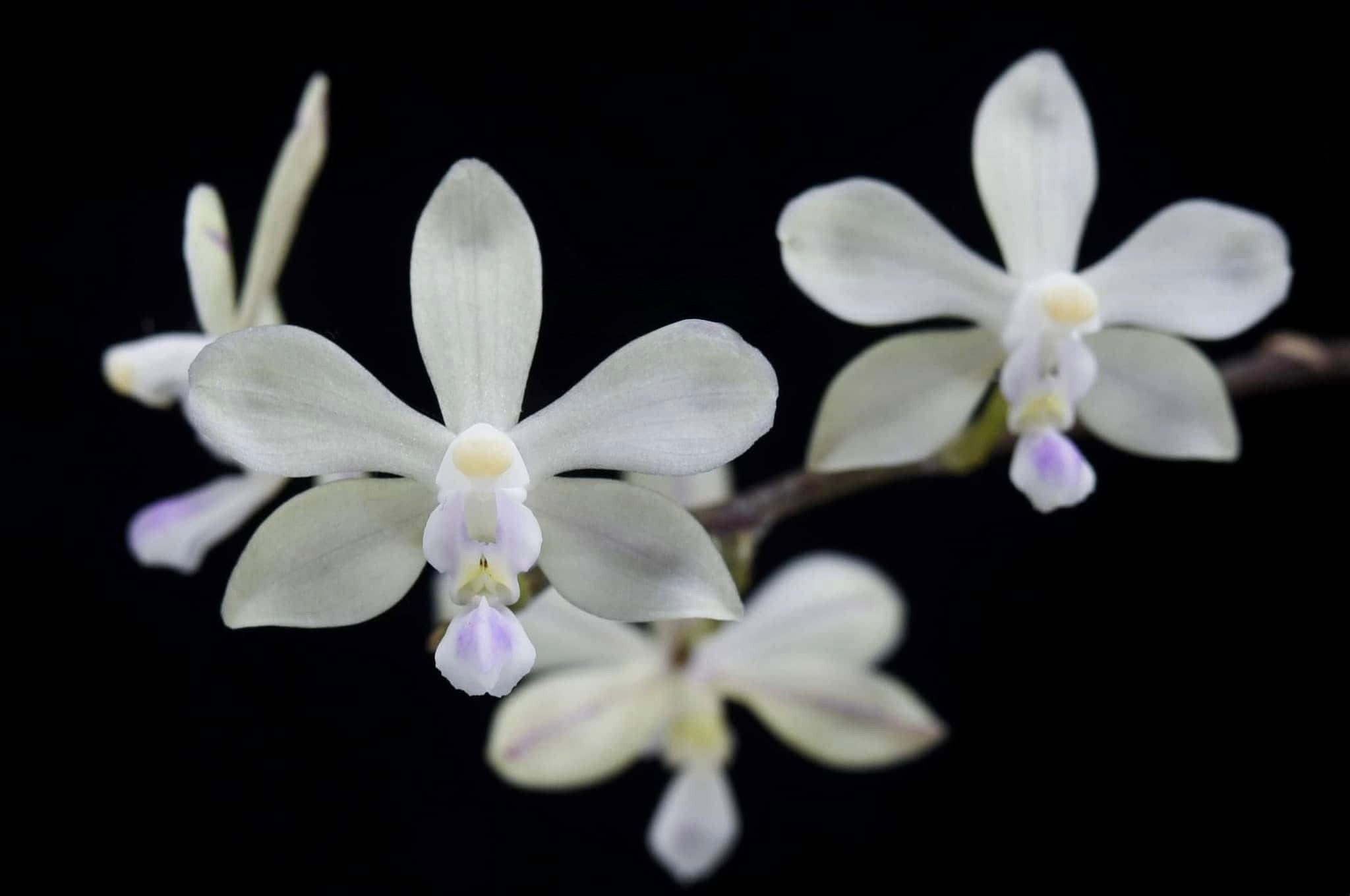
This carefully raised offspring of Phalaenopsis honghenensis is a rare color form straight from the laboratory. The plant is mounted on a sturdy orchid block and thus comes without a pot. For collectors who value authentic growth habit and quality, this is a particularly attractive choice.
Origin
Phalaenopsis honghenensis is native to the mountainous regions of southeastern China, Thailand and Vietnam, where it grows around 2,000 meters in elevation. In these moist, cooler zones, the species attaches itself to moss-covered tree trunks. The name refers to Honghe in Yunnan, a region known for its rich biodiversity.
The color form in this offering is a newly bred variation that does not occur in the wild and has been stabilized in laboratory conditions. This creates a unique flower color rarely found in collector's collections.
Features
This compact butterfly orchid usually forms a small number of leaves that grow to about five to seven inches long when mature. The flowers are about three centimeters in diameter and appear mainly in spring, although a healthy plant can initiate a bloom at other times as well.
The fragrance is one of the most charming features of this species. Collectors describe the perfume as sweet with a spicy undertone reminiscent of cloves. The fragrance is especially evident in the afternoon. The flower color is bright white with a prominent blue to purplish lip. Some specimens show subtle purple-blue stripes across the remaining petals.
As the roots age, they acquire a firm, white texture that was once aptly compared to "shoelaces" by a well-known orchid hobbyist.
Care
Light
Place the plant in a bright location without direct sunlight. Bright filtered light promotes both root growth and flowering.
Temperature
In winter, this species likes cooler nights around 12 °C. During hot summer days, the temperature may rise to around 30 °C.
Substrate
The plant can be kept either on a cube or in a transparent pot. Use an airy substrate based on bark and moss, without adding perlite or limestone materials.
Humidity
A consistently high humidity of 75-85% is ideal. This mimics the natural mountain climate in which this species naturally develops.
Watering
Keep the roots slightly moist and never leave them wet for long periods of time. In block culture, the plant dries more quickly, so regular misting is desirable.
Nutrition
Use a diluted orchid nutrient during the growing season to support leaf and root development.
Flowering
Spring flowering is most typical of this species. Good light conditions and slight temperature differences between day and night encourage new flower stems.
Additional tip
Mist in the morning with room temperature demineralized water. Early evaporation prevents rot and promotes a healthy microclimate around the roots.