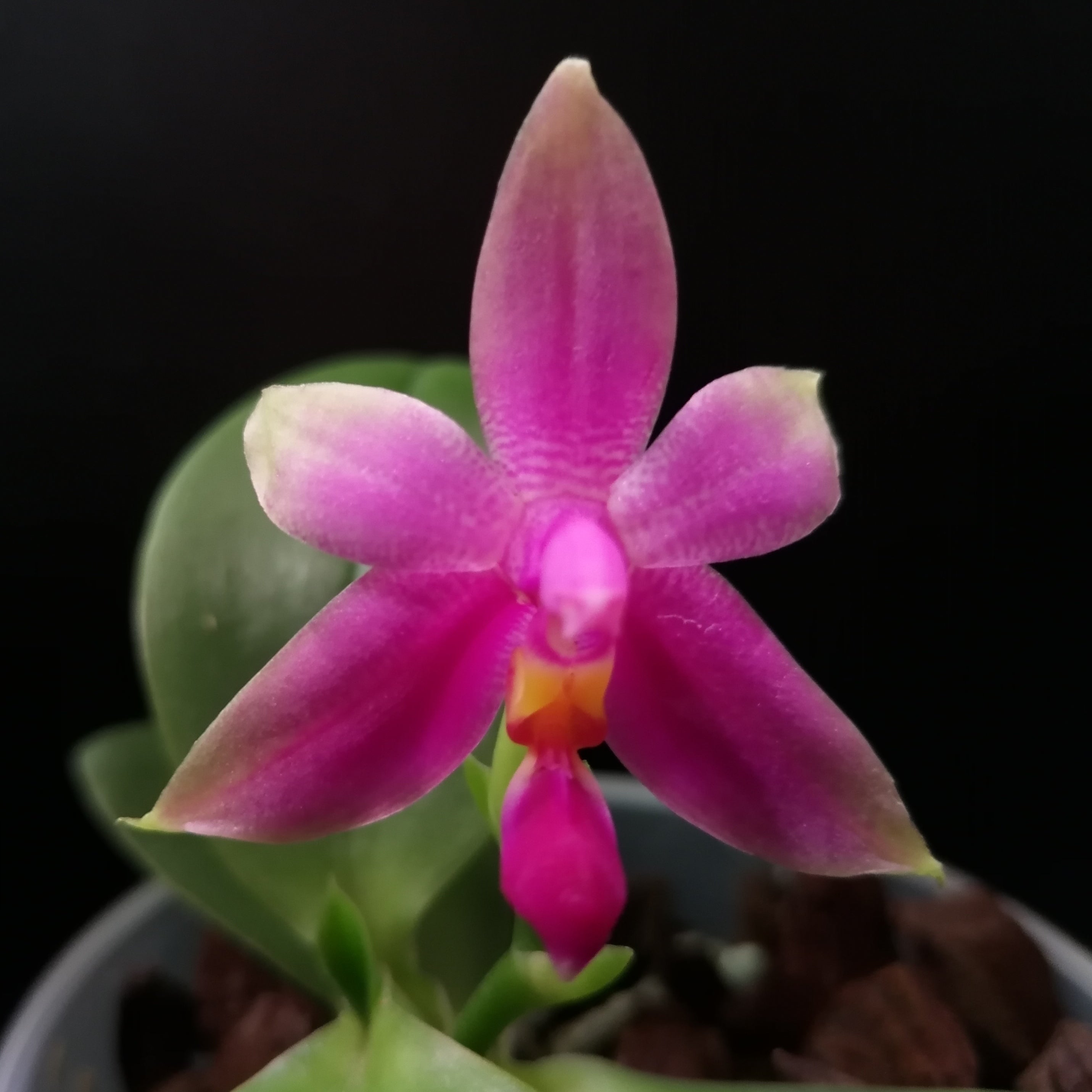
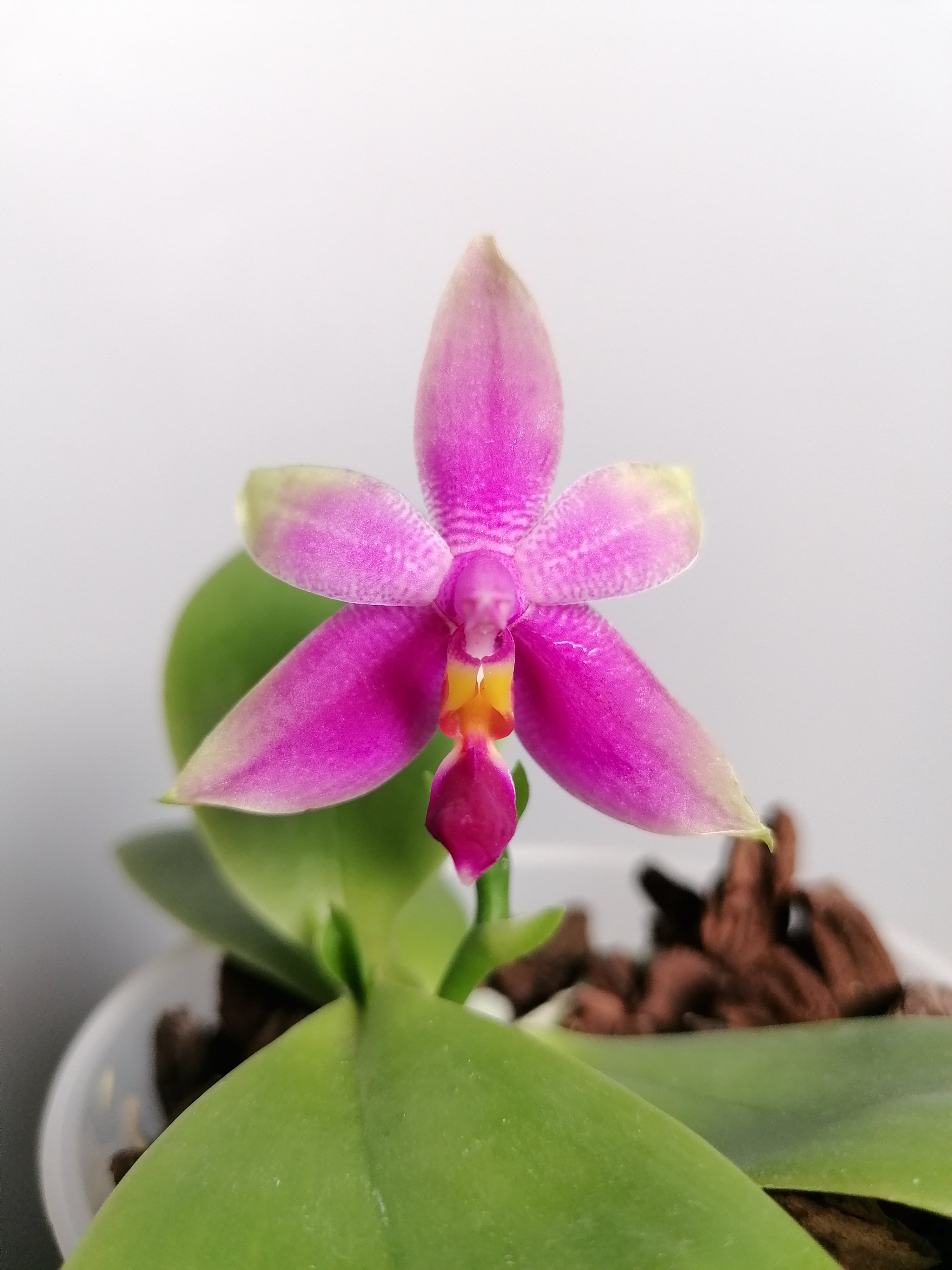
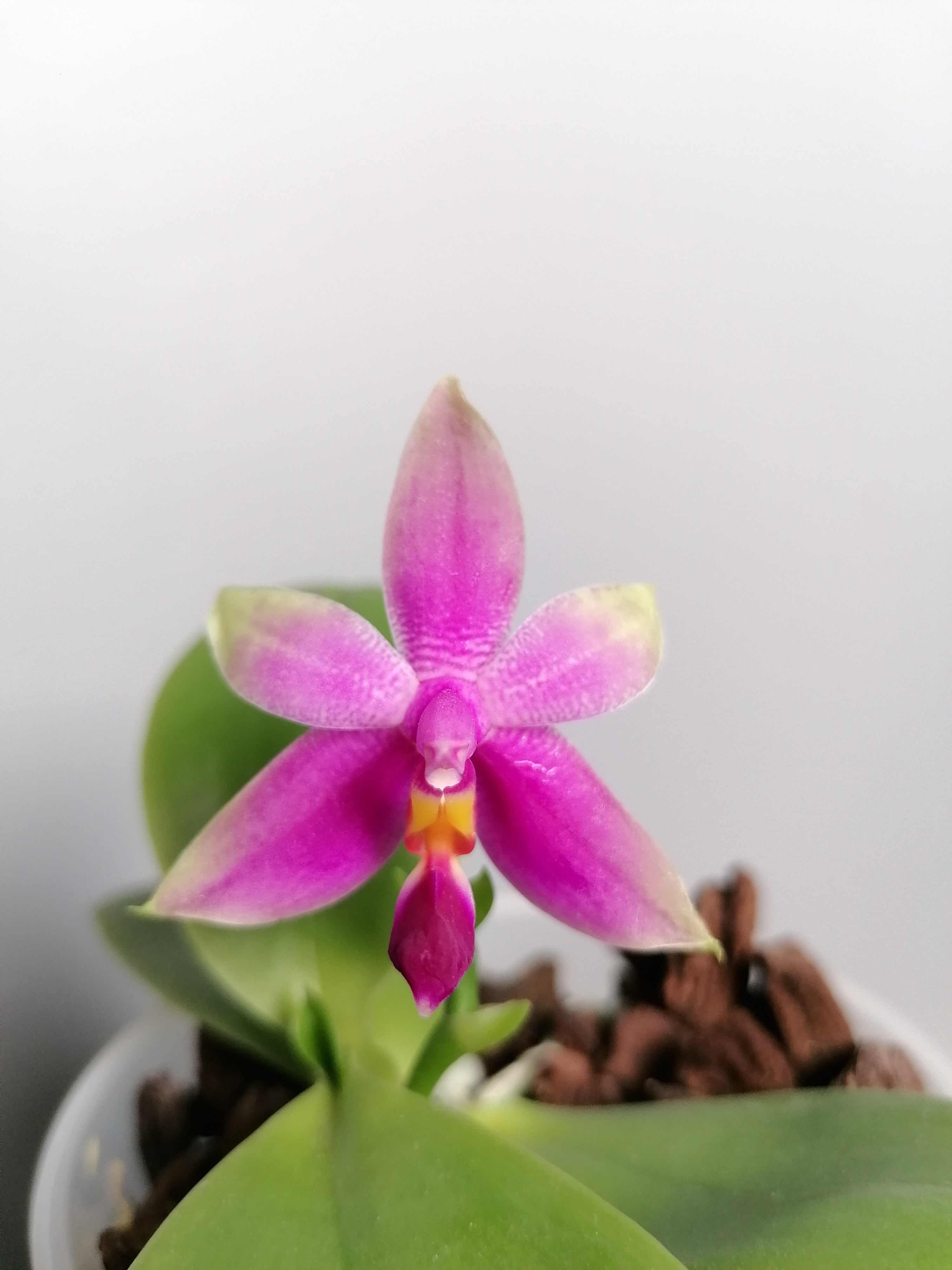
Phalaenopsis violacea “Malaysia” is a botanical Phalaenopsis for enthusiasts seeking fragrance, color, and natural elegance. This variety is known for its compact growth habit, waxy flowers, and distinctively herbaceous fragrance. Unlike many modern Phalaenopsishybrids, this plant does not bloom with large clusters of flowers all at once, but rather with smaller, distinctive flowers that may appear one after another on the same flower stalk.
The “Malaysia” form refers to plants originating from or inspired by the Malaysian form of Phalaenopsis violacea. This form is often prized for its warm violet-pink to purple-pink color, often with greenish or yellow-green hues toward the center of the flower. The flowers are firm, glossy, and can emit a distinct fragrance in warm conditions.
Origin
Phalaenopsis violacea is native to the Malay Peninsula through Sumatra. There, the species grows as an epiphyte in warm, humid tropical forests. The plants grow on trees, often in sheltered, humid conditions with filtered light, high humidity, and regular air movement.
Its natural habitat explains a great deal about its care. Phalaenopsis violacea thrives in warmth, gentle humidity, and a well-aerated root zone. The plant does not thrive in cold or dry conditions, but it should also not be left in damp, stuffy conditions for long periods. A stable, warm environment usually promotes the best growth and flowering.
Characteristics
Phalaenopsis violacea “Malaysia” usually remains more compact than many modern large-flowered Phalaenopsis hybrids. The plant develops sturdy, leathery leaves and relatively short flower stalks. The flowers are usually waxy in texture and have a distinct, herbaceous scent, especially during the warmest parts of the day.
Flower color can vary by plant or clone. You’ll often see shades of violet, pink-violet, purple-pink, or magenta, sometimes with lighter or greenish hues in the center. The flowers usually do not all open at once but appear one after another on a flower stalk. As a result, a healthy plant can produce flowers repeatedly over an extended period.
An important difference from standard Phalaenopsis hybrids is that green flower stalks should not be cut off too soon. In the case of Phalaenopsis violacea, existing flower stalks can become active again and form new buds later on.
Care
Light
Provide Phalaenopsis violacea “Malaysia” with bright, filtered light. The plant prefers a bright spot but does not like harsh midday sun. Morning sun or late afternoon sun is often fine, especially when humidity is sufficient.
If there is too little light, the plant will grow slowly and may fail to bloom. If there is too much direct sunlight, the leaves may turn yellow or get scorched. An east-facing window, a lightly shaded south-facing window, or a warm plant cabinet with grow lights is usually suitable.
Temperature
This species prefers warm conditions. A daytime temperature of about 22 to 29°C is ideal. At night, the temperature may drop slightly, but it’s best to keep the plant above 18°C. Prolonged cold is unfavorable, especially when the growing medium remains moist.
Phalaenopsis violacea clearly grows better in stable warmth than on a cool windowsill. Warm days, mild nights, and sufficient humidity best suit its tropical origins.
Potting Mix and Cultivation Method
Use a well-aerated Phalaenopsis mixture that retains moisture briefly but does not become compacted. Medium-coarse bark, possibly mixed with some sphagnum moss, perlite, or coconut coir, works well. The roots need oxygen and should not be left in wet, compacted potting mix for long periods.
Because Phalaenopsis violacea prefers a warm and humid environment, the growing medium can remain slightly more consistently moist than with some orchids grown in drier conditions. However, good aeration remains important. A transparent pot can be useful for better monitoring the roots and moisture levels.
Humidity
A relative humidity of about 60 to 80% is ideal. The plant can grow in a dry living room, but root growth and flower development are often better with more stable humidity. A plant cabinet, display case, warm greenhouse, or a cluster of plants together can help.
High humidity must always be combined with gentle air circulation. Stagnant, humid air can cause leaf and root problems, especially when water remains in the leaf axils.
Watering
Keep the plant evenly slightly moist, without keeping the roots wet for long periods. Water again when the growing medium is almost dry, but before the plant dries out completely. During warm, sunny periods, this will be necessary more often than during cooler or darker months.
Preferably use rainwater, demineralized water, or soft water at room temperature. Water in the morning whenever possible, so that any moisture on the leaves or in the leaf axils can dry off during the day.
Fertilization
During active growth, apply a light dose of orchid fertilizer regularly. A quarter to half the recommended dose is usually sufficient. Phalaenopsis violacea does not thrive with high fertilizer concentrations; regular, gentle feeding is better than occasional heavy feeding.
Rinse the substrate occasionally with clean water to prevent the buildup of fertilizer salts. In winter or during slower growth, fertilization may be reduced, but the plant does not require a strict, dry dormancy period.
Flowering
Phalaenopsis violacea “Malaysia” blooms with waxy, fragrant flowers on relatively short flower stalks. The flowers often appear one after another, allowing the blooming period to extend over a longer time. The scent is usually spicy and becomes particularly stronger in warm, bright conditions.
Do not cut off green flower stalks immediately after flowering. This species may later form new buds on an existing stalk. Remove the stalk only when it is completely brown and dry.
Care Level
Phalaenopsis violacea “Malaysia” is of moderate difficulty. The plant isn’t extremely difficult, but it does require warmer and more stable conditions than many standard Phalaenopsis hybrids. Temperature, humidity, and well-aerated potting mix are especially important.
The biggest mistake is keeping the plant too cool or too wet. It grows best when heat, moisture, and air around the roots remain in balance. Those accustomed to standard Phalaenopsis should especially keep in mind the need for more warmth and pay slightly more attention to humidity.
Who is this plant suitable for?
Phalaenopsis violacea “Malaysia” is suitable for enthusiasts looking for a botanical Phalaenopsis with fragrance and character. The plant is a good fit for collectors of species, fragrant orchids, and compact plants for a warm windowsill, display case, or plant cabinet.
For someone who primarily expects a large, supermarket-bought Phalaenopsis that blooms profusely for months on end, this is not the most logical choice. This variety blooms more subtly and naturally, but offers greater fragrance, botanical value, and collectible value.
Growing experience indoors or in a greenhouse
In a warm plant cabinet, display case, or greenhouse, Phalaenopsis violacea “Malaysia” often grows more easily than on a cool windowsill. The plant prefers stable warmth and slightly higher humidity. It can also thrive on a bright, warm windowsill, as long as the growing medium remains well-aerated and the plant doesn’t dry out or get too cold.
The plant takes up relatively little space and often blooms repeatedly. This makes it suitable for enthusiasts who prefer a compact, fragrant variety over a large hybrid that blooms profusely just once a year.
Extra care tip
Leave green flower stems in place. Phalaenopsis violacea can rebloom from existing stems, so cutting them too early may prevent future blooms. Pay close attention to root growth, leaf firmness, and active flower stems: these are good indicators of whether the plant is thriving.