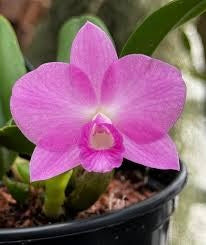
Sophronitis wittigiana × Laelia alaorii is a compact, botanically inspired hybrid for lovers of miniature Cattleya orchids. This hybrid combines the vibrant flower color and small plant size of Sophronitis wittigiana with the refined, delicate flower shape of Laelia alaorii. The result is a small orchid with a distinct collector’s appeal: modest in size, yet striking in bloom.
In modern taxonomy, both parents are often classified under the genus Cattleya. Sophronitis wittigiana is then referred to as Cattleya wittigiana, and Laelia alaorii is referred to as Cattleya alaorii. Nevertheless, the classic names remain widely used in the orchid trade because they immediately indicate what type of plant you can expect: compact, graceful, richly colored, and closely related to the Brazilian miniature Cattleya orchids.
This hybrid is particularly interesting for collectors who have limited space but still want to grow unique Cattleya-like orchids. The plant is not intended to be a mass-flowering variety with large flower spikes, but rather a refined miniature with botanical elegance and rich detail.
Origin
This hybrid does not occur in the wild but was created from two Brazilian orchid species in the Cattleya alliance. Sophronitis wittigiana, now often called Cattleya wittigiana, is known for its compact growth habit and pink to reddish-pink flowers. Laelia alaorii, now known as Cattleya alaorii, is a small epiphytic species from Bahia, Brazil, with a delicate flower form and miniature growth habit.
The combination of these parents makes this hybrid suitable for enthusiasts who seek the charm of botanical miniature orchids but also want a plant that, in cultivation, can prove slightly more practical and more prolific in flowering than some pure species. Both parents grow epiphytically, with roots that require air, moisture, and rapid drying. This is also important for this hybrid.
Characteristics
Sophronitis wittigiana × Laelia alaorii remains compact. The plant forms small pseudobulbs with firm leaves and grows sympodially, meaning that new shoots form alongside older ones. As the plant becomes stronger, it can develop multiple growth points and gradually become fuller.
The flowers are usually pink, reddish-pink, magenta, or soft purple-pink, depending on the individual seedling and the influence of the parents. The flower shape can vary: some plants display the rounder, more striking appearance of Sophronitis wittigiana, while others exhibit the softer, more delicate form of Laelia alaorii.
Since both parents are compact species, the hybrid also remains small and easy to care for. The flowers are striking in proportion to the plant, which is precisely what makes this cross appealing to windowsill growers and collectors of miniature orchids. Expect typically one to a few flowers per inflorescence, not the heavy clusters of flowers found on large Cattleya hybrids.
Care
Light
Provide this hybrid with bright, filtered light. The plant can tolerate more light than many shade-loving orchids, but intense midday sun through glass can damage the leaves. Morning sun or late afternoon sun is usually suitable.
Sufficient light is important for compact growth and flowering. With too little light, the plant often remains green and healthy, but it will flower less readily. A bright windowsill, a display case with grow lights, a sunroom, or a small greenhouse is suitable.
Temperature
Sophronitis wittigiana × Laelia alaorii grows best under intermediate conditions, with warm days and slightly cooler nights. A daytime temperature of about 20 to 26°C is suitable. At night, the temperature may drop to about 14 to 18°C.
The influence of Laelia alaorii makes the plant suitable for warmer conditions, while Sophronitis wittigiana actually prefers slightly cooler air and good air circulation. Avoid prolonged exposure to cold combined with wet roots.
Substrate and Cultivation Method
This hybrid grows best in a very airy growing medium. A small pot filled with fine to medium-coarse bark, possibly mixed with perlite and a small amount of sphagnum, works well. Mounting on cork or wood also suits the epiphytic background of both parents.
For pot culture, a small pot is important. Too much growing medium around fine roots stays wet for too long and can cause root problems. With mounted cultivation, the plant dries out faster and requires more frequent watering, but the roots do get plenty of air.
Humidity
A humidity level of about 60 to 80% is ideal. The plant prefers a stable, slightly moist environment, especially when it is actively growing. Good air circulation remains important, particularly at higher humidity levels.
In a display case or small greenhouse, this species is often easier to keep stable than on a dry windowsill. It can also grow well on a windowsill, provided the growing medium remains well-aerated and the plant does not dry out for too long.
Watering
Water regularly during active growth, but allow the roots to dry out slightly afterward. This hybrid does not like roots that remain wet for long periods, nor does it tolerate extreme drying out during new root growth.
For potted plants, water again when the growing medium is almost dry. Mounted plants need watering more frequently, especially in warm or dry conditions. Preferably use rainwater, demineralized water, or soft water at room temperature.
During cooler and darker periods, watering may be reduced slightly. Keep the plant slightly drier during this time, but do not let the pseudobulbs shrivel excessively.
Fertilizer
During active growth, apply a light dose of orchid fertilizer. A quarter to half the recommended dose is usually sufficient. This miniature variety does not require heavy fertilization. Too much fertilizer can damage the delicate roots.
Rinse the substrate or roots regularly with clean water to prevent salt buildup. During slower growth in winter, fertilization may be reduced or temporarily stopped.
Flowering
Flowers usually emerge from mature new shoots. The flowers are strikingly large in proportion to the plant and can range in color from pink, reddish-pink, magenta, or soft purple. Because this is a primary hybrid between two species, there may be variation among individual plants.
Over time, a vigorous plant may produce multiple shoots simultaneously, resulting in a fuller bloom. Flowering is primarily supported by sufficient light, healthy roots, and a clear distinction between active growth and a slightly more dormant period.
Care Level
Sophronitis wittigiana × Laelia alaorii is of moderate difficulty. The plant is small and easy to handle, but it does require precise watering. The delicate roots should not remain wet for long, but they should also not dry out completely too often during active growth.
For enthusiasts with experience in miniature orchids, Cattleya alliance species, Sophronitis, or mounted plants, this is a logical and attractive hybrid. For absolute beginners, the plant may be suitable if there is sufficient light and one is willing to pay close attention to the roots and drying time.
Who is this plant suitable for?
This hybrid is suitable for collectors looking for a compact, Cattleya-like orchid with botanical parentage and striking flower color. The plant is a good fit for enthusiasts of miniature orchids, windowsill cultivation, display cases, small greenhouses, and Brazilian Cattleya species.
It is less suitable for someone expecting a large, long-blooming orchid with many flowers at once. However, for those who appreciate small plants with a striking presence, rare parent combinations, and refined blooms, Sophronitis wittigiana × Laelia alaorii is a very interesting choice.
Growing Experience Indoors or in a Greenhouse
This hybrid is pleasant to have indoors because it takes up very little space. A bright windowsill with filtered sunlight works well, especially if the pot remains small and airy. In a display case or greenhouse, the plant often grows more steadily, as humidity and temperature are better controlled.
The plant makes its well-being quite clear. Firm pseudobulbs, new root tips, and fresh green foliage indicate good conditions. Wilting may indicate insufficient water uptake or damaged roots. Soft roots usually indicate that the plant has been left wet for too long.
Why We Love This Variety
This hybrid is particularly appealing to customers who are specifically looking for a compact, botanically inspired Cattleya hybrid. Its value lies not in bulk or size, but in the combination of two exceptional Brazilian parents: the vivid color of Sophronitis wittigiana and the refinement of Laelia alaorii.
For collectors, this is an interesting purchase because the plant requires little space but clearly displays genuine species influence. It fits well in specialized collections featuring miniature Cattleya, Sophronitis hybrids, and other compact Laeliinae. If you’re looking for a rare, subtle orchid with character—rather than a standard flowering houseplant—this hybrid is the right choice for you.
Additional care tip
It’s better to use a small, well-ventilated pot rather than one that’s too spacious. With miniature Cattleya orchids, repotting is a common mistake: too much potting mix stays wet for too long around the delicate roots. Repot only when new roots become visible, so the plant can quickly establish itself in the fresh mix.
Brief product description
Sophronitis wittigiana × Laelia alaorii is a compact, botanically inspired hybrid within the Cattleya alliance. This miniature orchid combines pink to reddish-pink flower colors with a refined, compact growth habit. Ideal for enthusiasts of miniature Cattleya orchids, display cases, sunny windowsills, and unique Brazilian orchids.