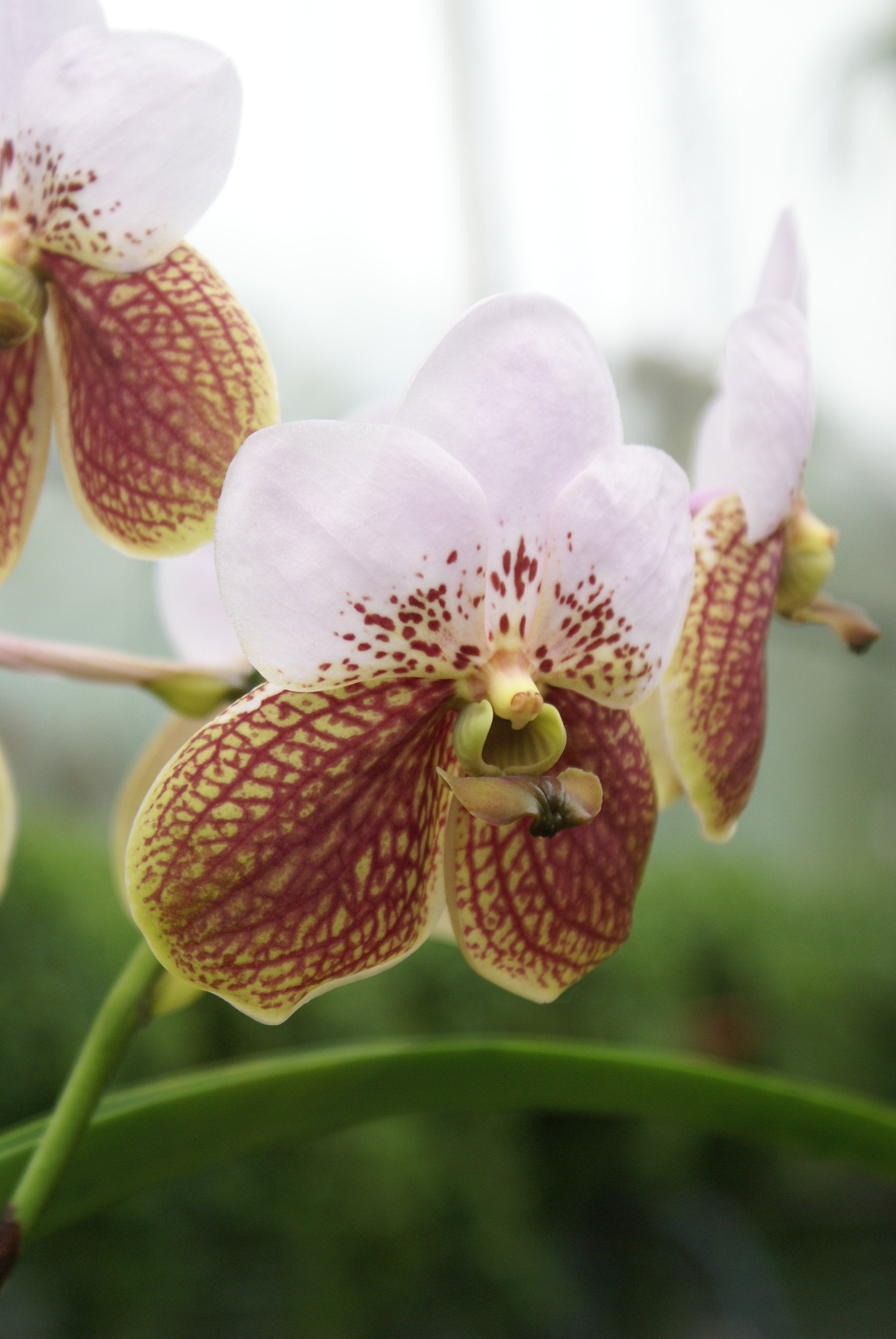
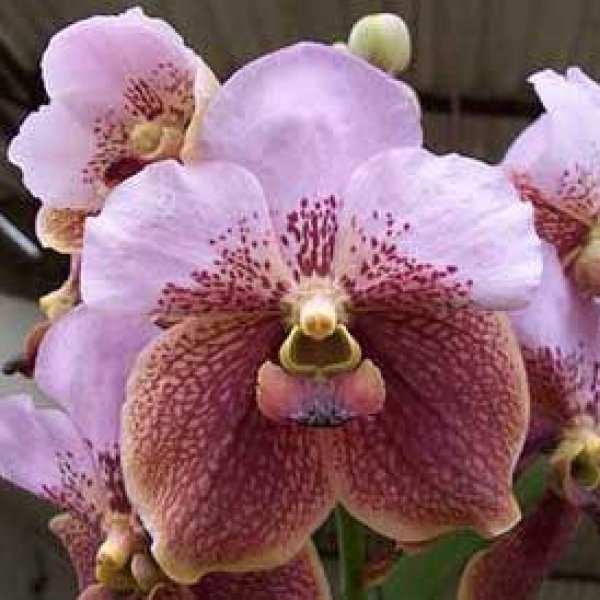
Vanda sanderiana is an iconic botanical Vanda from the Philippines, beloved for its large, flat-opening flowers and striking appearance. This species is also known as Waling-waling and is considered one of the most exceptional Vanda species for collectors. The flowers are large, broad, and strikingly marked, usually in shades of pink, purplish-pink, brownish-pink, and warm purple, often with contrasting markings on the lower parts of the flower.
This is not a standard orchid for a dark windowsill, but a true collector’s plant for enthusiasts who can provide plenty of light, warmth, and air around the roots. With proper care, Vanda sanderiana can grow into an impressive plant with a very distinctive bloom. The plant requires more attention than a common Phalaenopsis, but in return offers a much rarer and botanically more interesting experience.
Origin
Vanda sanderiana is native to Mindanao in the Philippines. In its natural habitat, the species grows as an epiphyte on trees in warm, humid tropical conditions. The roots hang freely in the air or attach themselves to tree bark, where they regularly absorb moisture but also dry out quickly.
Its natural habitat explains much about its care requirements. Vanda sanderiana thrives in bright light, warm temperatures, high humidity, and constant air movement around its roots. The plant does not grow in ordinary potting soil and is also not suited to a dense, persistently wet substrate. An airy growing medium is essential.
The name “Waling-waling” is strongly associated with this species in the Philippines. Due to its large flower shape, rarity, and cultural significance, Vanda sanderiana holds a special status within the orchid world.
Characteristics
Vanda sanderiana grows monopodially. This means the plant grows upward from a single central growth point, with sturdy leaves arranged in two rows along the stem. The leaves are leathery, elongated, and robust. A healthy plant forms thick aerial roots with active green root tips.
The flowers are large and widely open. Vanda sanderiana is known for its flat flower shape and bold markings. The upper parts of the flower are often lighter pink to purplish-pink, while the lower sepals may be more richly marked with brownish-pink, purple, or net-like patterns. The exact color may vary from plant to plant, depending on light, the age of the flower, and growing conditions.
This species is often used in Vanda breeding because it effectively passes on flower size, shape, and appearance. For collectors, however, it is the botanical species itself that is of interest: Vanda sanderiana has a distinct character that cannot be fully compared to modern Vanda hybrids.
Care
Light
Vanda sanderiana requires plenty of light to grow vigorously and bloom. A very bright location with filtered sunlight is ideal. Morning sun or late afternoon sun is usually well tolerated, but intense midday sun through glass can cause leaf damage.
Indoors, light is often the limiting factor. This species is therefore best placed near a very bright window, in a sunroom, warm greenhouse, plant room, or under strong grow lights. If there is insufficient light, the plant can survive and produce leaves, but flowering often fails to occur.
Temperature
Vanda sanderiana thrives in warm conditions. A daytime temperature of about 22 to 30°C is suitable. At night, the temperature may drop to about 18 to 22°C. Short-term fluctuations are usually not a problem, but prolonged cold should be avoided.
Wet roots combined with low temperatures are particularly risky. This plant grows best in stable warmth, with sufficient humidity and good air circulation. Higher temperatures can be tolerated if watering, humidity, air movement, and shade are adjusted accordingly.
Substrate and Cultivation Methods
Vanda sanderiana grows best with plenty of air around the roots. Bare-root cultivation, a wooden basket, a Vanda basket, or a very open basket with coarse bark are suitable options. A regular pot with compact orchid potting mix is not suitable, as the roots will remain wet and oxygen-deprived for too long.
For indoor cultivation, an open basket is sometimes more practical than full bare-root cultivation. The roots remain well-aerated but dry out slightly less quickly. In a greenhouse or conservatory, bare-root cultivation can work well, provided there is sufficient humidity and regular watering.
Humidity
A humidity level of about 60 to 80% is ideal. In bright light and warm conditions, the humidity may be higher, as long as there is sufficient air circulation. Stagnant, humid air can cause mold or rot, especially in leaf axils and around young roots.
In a dry living room, Vanda sanderiana may require extra care. The roots dry out quickly in such conditions, especially when the plant is kept without a growing medium. Regular soaking, misting, or a more humid growing environment can help.
Watering
When watering, allow the roots to get completely wet and then dry out thoroughly. Healthy Vanda roots turn green when wet and silvery when they dry out. This makes it easy to see when watering is needed again.
When growing bare-root plants, watering may be needed frequently during warm, sunny periods—sometimes daily. In an open basket filled with coarse bark, slightly more moisture remains available, allowing you to gradually increase the watering schedule. During cooler or darker periods, water less frequently.
Preferably use rainwater, demineralized water, or soft water at room temperature. Do not allow water to stand in the leaf axils for long periods.
Fertilization
During active growth, Vanda sanderiana can be lightly fertilized regularly. Use an orchid fertilizer at a low dosage, such as one-quarter to one-half the recommended amount. The plant absorbs nutrients more effectively when there is plenty of light, warmth, and active root growth.
Rinse the roots regularly with clean water to prevent the buildup of fertilizer salts. During darker or cooler periods, you may reduce the amount of fertilizer.
Flowering
Vanda sanderiana can produce large, impressive flowers on sturdy flower stalks. The flowers are wide open and often feature striking pink to purplish-brown markings. Flowering usually requires a mature, strong plant with healthy roots and plenty of light.
A well-developed plant can produce a very stately bloom. However, Vanda sanderiana is not a species that will bloom quickly under moderate conditions. Light, warmth, and root health are the most important requirements.
Care Level
Vanda sanderiana is of moderate to advanced difficulty to care for. The plant is not delicate, but it has specific requirements. Plenty of light, warm temperatures, humidity, and an airy growing environment are particularly important. If you keep the plant in a location that is too dark, too wet, or too cold, you’ll usually see little growth and no blooms.
This species requires more attention than a standard living room orchid. Care is less about a fixed weekly schedule and more about observation: root color, leaf turgor, new root tips, and drying time indicate what the plant needs.
Who is this plant suitable for?
Vanda sanderiana is suitable for orchid enthusiasts and collectors who deliberately choose a botanical Vanda with a history and collector’s value. The plant is a good fit for people with a sunroom, warm greenhouse, plant room, grow lights, or experience with Vandas and other epiphytic orchids.
This species is less suitable for a dark living room or for someone looking for a low-maintenance orchid. For enthusiasts who can provide sufficient light, warmth, and regular watering, Vanda sanderiana is actually one of the most exceptional Vanda species to grow.
Growing Experience at Home or in a Greenhouse
Vanda sanderiana usually grows more easily in a greenhouse, conservatory, or plant room than in a regular living room. The combination of light, heat, and humidity is more stable there. The plant can also grow well indoors, but a very bright spot is essential, and watering requires more attention.
The plant gives clear signals. Active green root tips indicate healthy growth. Wilted leaves may indicate insufficient water intake or damaged roots. Dark green leaves with little growth may indicate insufficient light. A healthy plant feels firm to the touch, produces new roots, and grows slowly but steadily upward.
Extra care tip
Pay special attention to the roots. With Vanda sanderiana, healthy roots determine almost everything: growth, leaf turgor, and flowering. Water generously when the roots are dry, but make sure they get air again afterward. Too much light without enough water causes stress; too much water without air causes root problems. The right balance between light, heat, water, and air is the key.