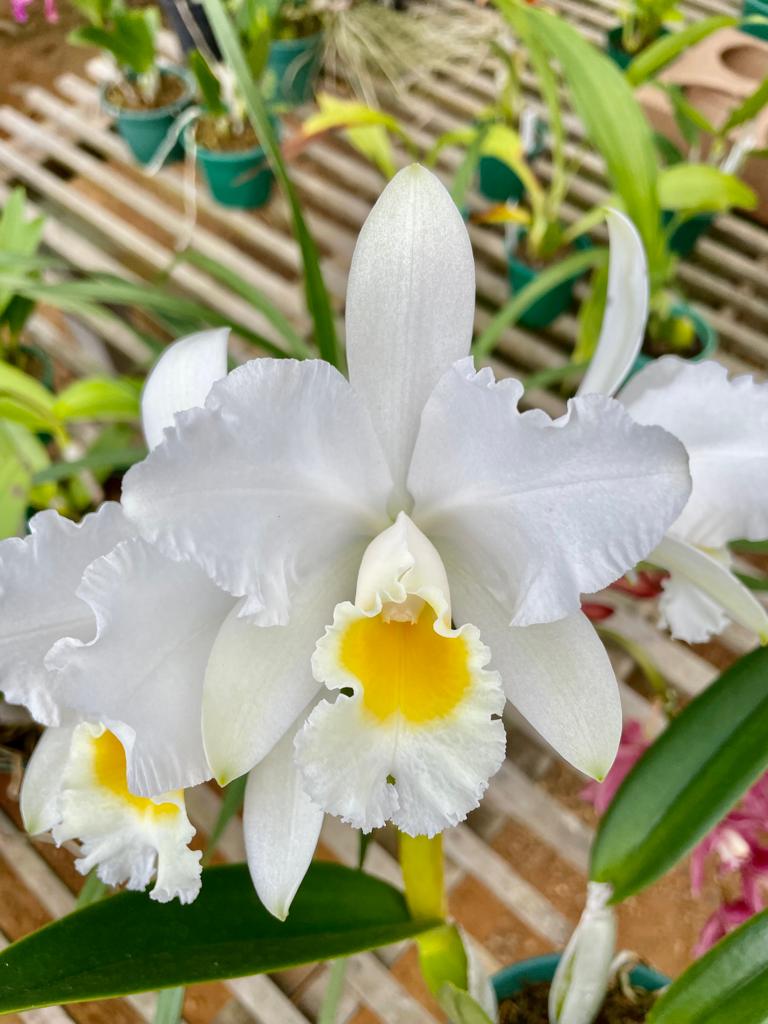
Sometimes you're not looking for color, but brightness and form. This cross brings together the winter character of percivaliana var. alba with the calm, classic line of 'Hawaiian Wedding Song'. The flowers open white to ivory, broad and flat with a soft, warm glow in the throat. In good light, the lip shows fine markings without being crowded. The scent is distinctly Cattleya: fresh, elegant and immediately recognizable. It is a quiet presence that in bloom brightens the room.
Origin
Its parents have roots in northwestern South America and in classic Cattleya hybridization. Percivaliana is known for winter bloom and fragrance, while 'Hawaiian Wedding Song' brings that bright, white signature and refined flower form. In culture, this translates to a need for lots of light, air and a clear rhythm between day and night.
Characteristics
The plant forms slender pseudobulbs with sturdy, unifoliate leaves. Several, rather large flowers appear per stem with ample segments and a calm, white appearance; in the throat often a warm yellow accent. The fragrance is noticeable in good light. In our regions, flowering usually occurs late fall to winter, sometimes through to early spring, depending on location and light.
Care
Light
Place the plant in a very bright spot. Morning and late afternoon sun are welcome; bright afternoon sun prefer to filter light. Too little light quickly translates into hesitant or absent flowering.
Temperature
Moderate to warm. About 18-28 °C during the day, a few degrees cooler at night. A clear day/night difference supports bud formation and keeps the plant compact.
Substrate
Choose airy and fast-draining. Coarse bark with some charcoal works well. Pot prefer slightly tighter: that way the roots dry up predictably and remain active. Those with experience can also mount on cork or in a basket; adjust the water regime accordingly.
Humidity
Aim for 60-80% with constant ventilation. Brief misting in drier air is fine, but always allow leaves and growing tips to dry out smoothly. Gentle air flow prevents stagnation.
Feeding
During active growth, feed regularly but lightly, for example once every 1-2 weeks with diluted orchid nutrition. As shoots mature and light decreases, the frequency may be reduced.
Watering
Use demineralized water. In the growing season, water liberally and let dry slightly in between; in the darker, cooler months more sparingly, without standing soaking wet for long periods. In a basket or mounting, the plant dries faster: then increase the frequency briefly and directed.
Bloom
Leading up to the season, lots of light and a noticeable temperature difference between day and night helps. Repot or move preferably not in the bud phase. Protect open flowers from dry, hot air currents and bright midday sun; this will preserve shape and fragrance nicely.