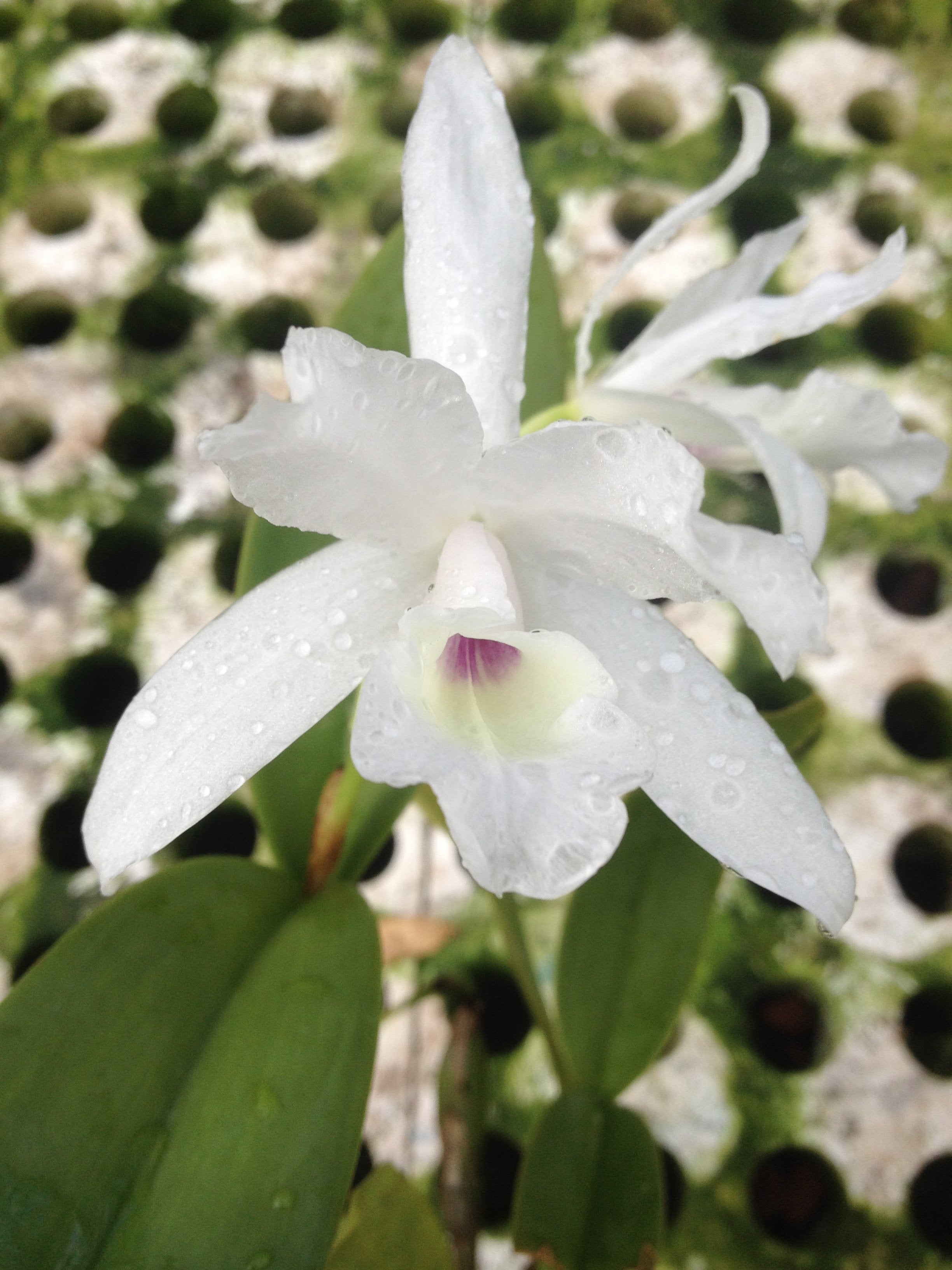
Some plants take the noise out of a room. Cattleya skinneri var. alba does just that with flowers that open porcelain white and quietly return the light. Where the species normally turns soft purple-pink, this alba form remains bright and pure; the flower clusters are airy, the fragrance is pleasant without being intrusive. In bloom, the plant has that classic, well-organized Cattleya presentation that automatically keeps your gaze fixed on it.
Origin
Cattleya skinneri comes from Central America, where it grows high in trees in areas with lots of light, air movement and distinct seasons. In culture, this translates to a preference for rapid drainage, constant ventilation and a distinct rhythm between day and night. The alba form is favored in collecting circles for its striking brightness within this familiar silhouette.
Features
The plant remains uncluttered in size with slender, unifoliate pseudobulbs and sturdy leaves. In the flowering season, several large, flat-opening flowers per stem appear at the tip of a mature shoot; the sepals and petals are pure white, the lip is also white with, at most, a soft, warm yellow glow deep in the throat. In good light, a fresh Cattleya fragrance is perceptible. The whole thing looks orderly and light: a cluster that feels simultaneously peaceful and festive-precisely the combination that makes skinneri so accessible, but in a rarer, white jacket.
Care
Light
Plenty of bright light is essential. Morning and late afternoon sun are welcome; bright afternoon sun prefer light filtering. Too little light quickly results in modest or no blooms.
Temperature
Moderate to warm. About 18-28 °C during the day, a few degrees cooler at night. A clear day/night difference supports compact growth and bud establishment.
Substrate
Choose airy and fast-draining: high-quality coarse orchid bark works well. Preferably pot slightly tighter so that the mixture dries out predictably and the roots get sufficient oxygen. A (wooden) basket can also be used, provided the watering is adjusted accordingly.
Humidity
Aim for 60-80 % with good ventilation. Mist briefly in drier air, but always allow leaves and growing tips to dry out smoothly; avoid stagnant, moist air.
Nutrition
During active growth feed regularly but lightly: once every 1-2 weeks dilute orchid fertilizer. Feed less once shoots mature and light decreases.
Watering.
Use demineralized water or clean rainwater at room temperature. In the growing season, water regularly and let dry slightly in between; more sparingly in cooler or shorter days. In a basket, the plant dries faster: if so, increase frequency with short, directed turns.
Flowering
In our regions, often late winter to early spring. A little more light in the run-up helps, as does stability in location and temperature. Leave the plant alone during the bud phase (do not repot or move often) and protect open flowers from bright midday sun and dry, hot air currents.