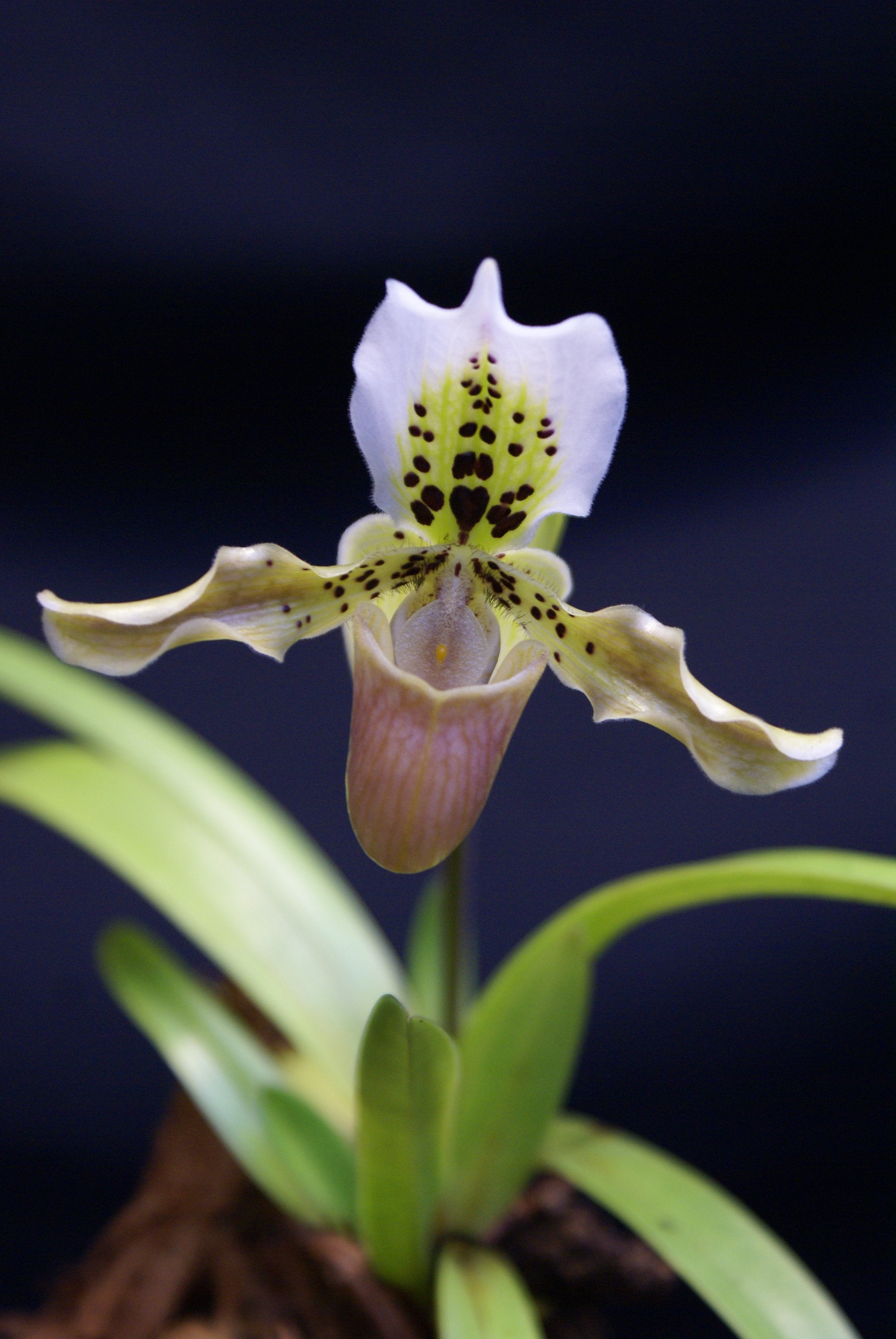
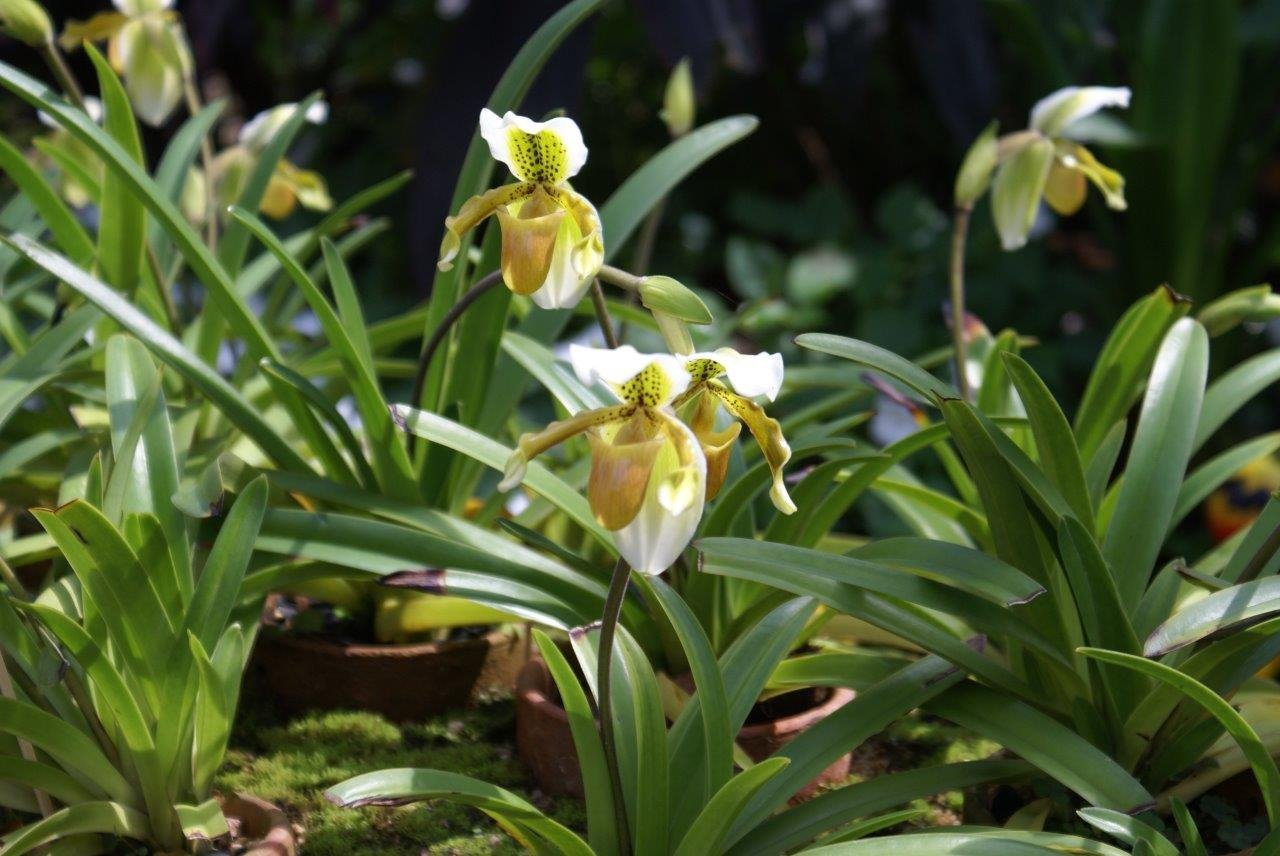
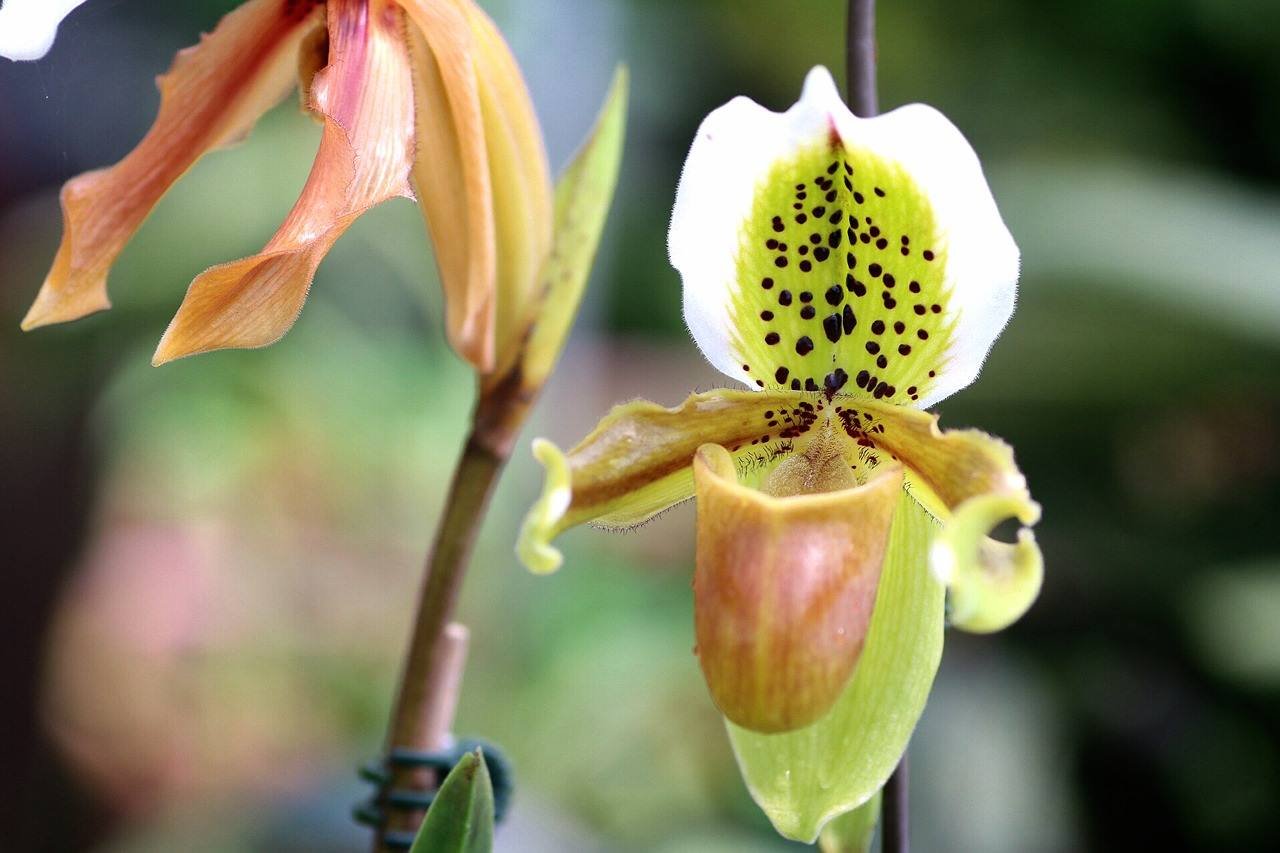
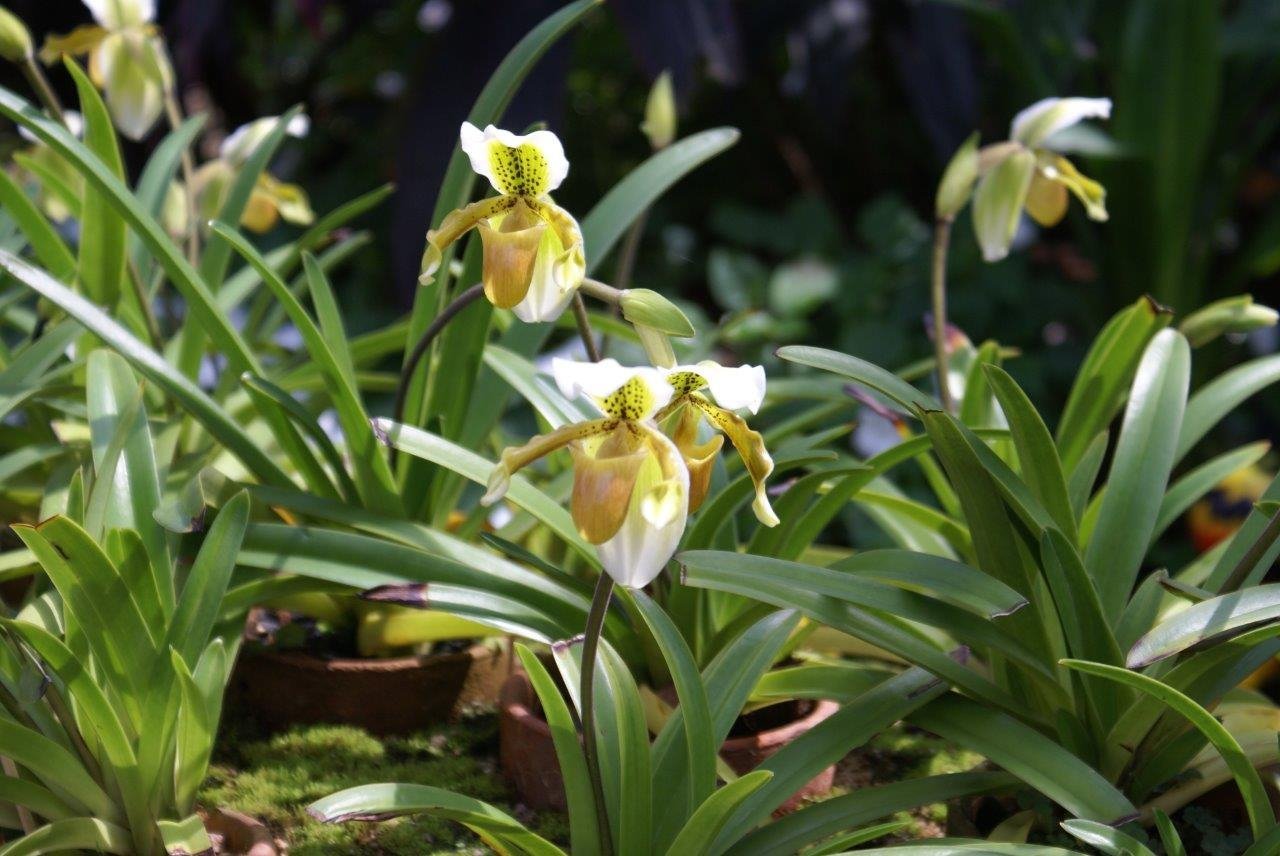
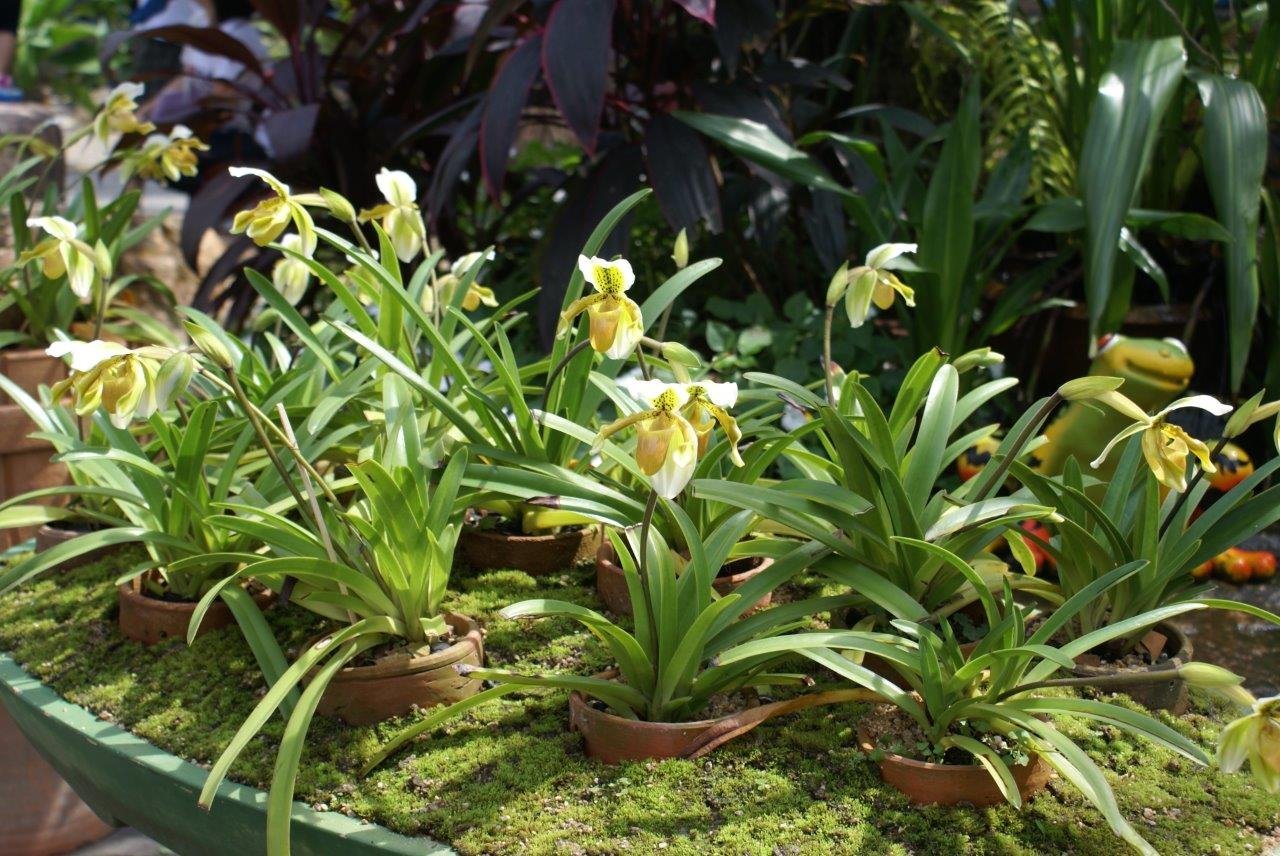
Paphiopedilum exul is a compact slipper orchid with bright green, strap-shaped leaves and usually one flower per flowering stem. It is a species that in nature does not grow deep in the forest, but rather is bound to rocky sites. This translates in culture to a preference for plenty of air around the roots, an even moisture supply and a location with relatively high light within the Paphiopedilum spectrum.
Origin
According to Plants of the World Online from Royal Botanic Gardens, Kew, its natural range is in Thailand. The species is described there as a perennial plant that can grow lithophytically in a wet tropical biome.
In several descriptions, Paphiopedilum exul is linked to rock walls and cliffs in the south of the peninsula, where humus-rich material accumulates in crevices and pockets.
Characteristics
The plant forms a compact rosette with several narrow, firm-touch leaves that remain bright green, without the mottled leaf pattern found in many other Paphiopedilums. The flowering stem is slender and usually bears one flower. Flower color is often in the yellow-green spectrum, with a slight slip and subtle reddish highlights, where the fused lateral peduncles can be relatively striking when the flower is viewed from the front. Within seedlings, there may be variation in intensity of color and markings, while the recognizable type of this species remains distinct.
Care
Light
Bright, filtered light complements well. For Paphiopedilum, the American Orchid Society states as a general guideline that several hours of filtered sunlight or a light window stand works well, with protection from harsh midday sun behind glass.
Temperature
Paphiopedilums often do stably in the home at normal room temperatures, with nights cooler than days. The AOS lists about 13 to 22°C at night and 21 to 29°C during the day as a general range, with attention to protection from cold as that can trigger rot.
Substrate
An airy, textured substrate that retains moisture without clogging fits best. With this species, it helps if the medium can breathe quickly so the roots are not oxygen-deprived for long periods. A bark-oriented mixture with an organic moisture buffer often works predictably in practice, provided excess water can always escape.
Humidity
Moderate to higher humidity supports even growth. A range around 40 to 50 percent is often cited as a general guideline, with additional air movement as humidity rises.
Nutrition
Regular, mild feeding is usually sufficient. The AOS emphasizes that Paphiopedilums can tolerate quite a bit, but periodic flushing makes sense when salt buildup becomes apparent.
Watering
The medium should be kept evenly moist without leaving the pot wet for long periods of time. The Smithsonian Institution mentions that Paphiopedilums do not have pseudobulbs and therefore do not like to dry out completely, while water at the bottom can cause root rot.
Preferably use demineralized water, not softened water as salts can cause damage.
Flowering
Flowering is usually solitary per stem. Flowers often remain present for a long time under stable conditions, with an even location and consistent watering helping most to keep bud development and flower quality just right.