
Orchids from Southeast Asia
729 products
Showing 25 - 48 of 729 products
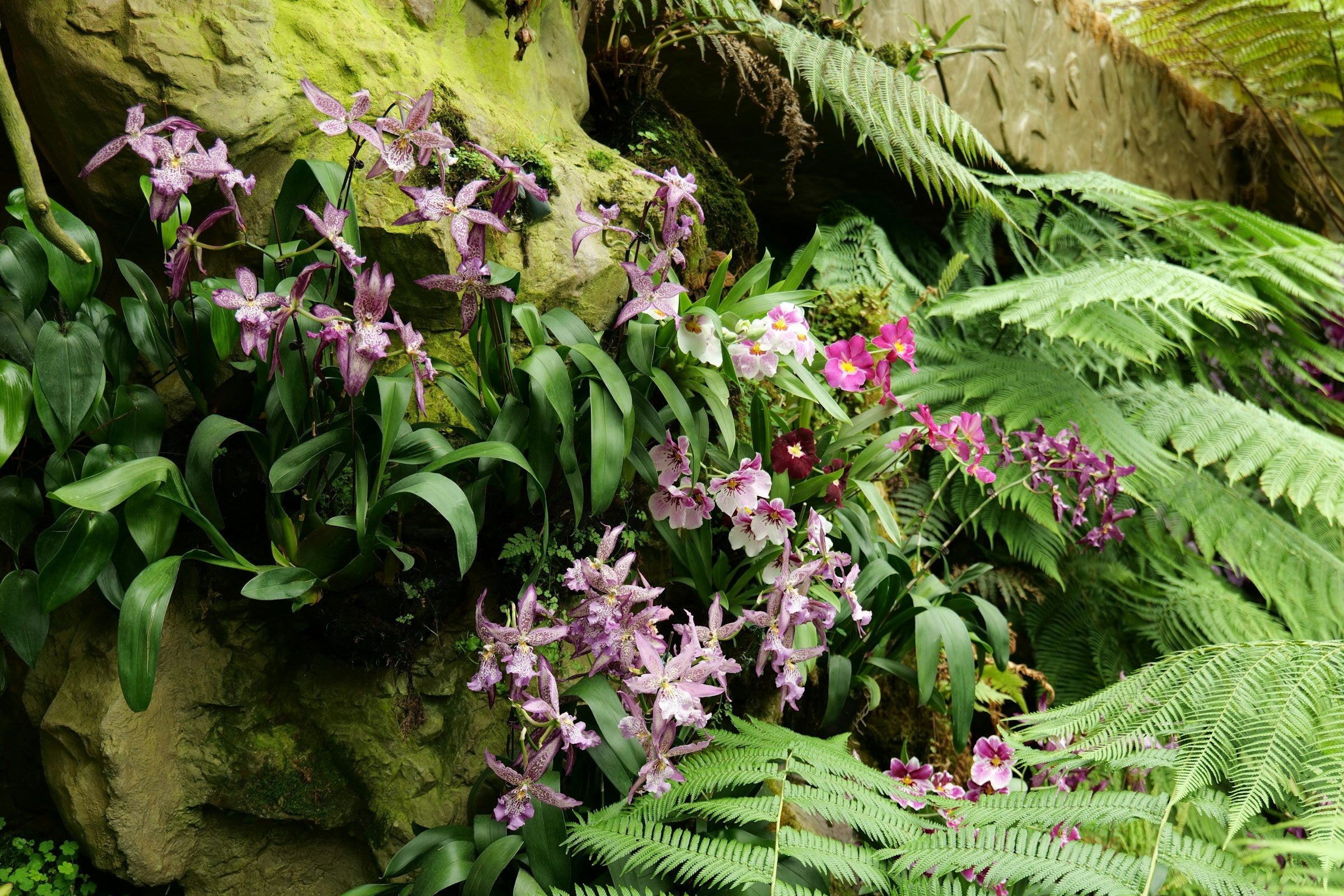
From the minuscule Schoenorchis and leafless Chiloschista to profusely flowering Dendrobiums, epiphytic Vandas, and unusual Paphiopedilums: tropical and subtropical Asia has produced some of the most diverse orchids in the world.
In this collection, you’ll find botanical species and exceptional hybrids from Southeast Asia and neighboring parts of Asia and the western Pacific. A large portion of our assortment is selected from specialized Asian growers. In doing so, we consider not only rarity or flower color, but also the plant’s stage of development, root condition, growth habit, and suitability for European growing conditions.
Also check out our Dendrobiums, Vandas, Paphiopedilums, Phalaenopsis, mini orchids, and rare orchids.
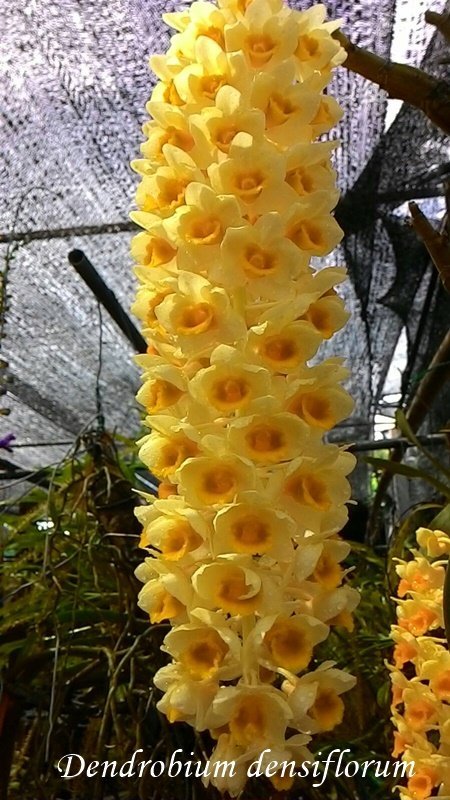
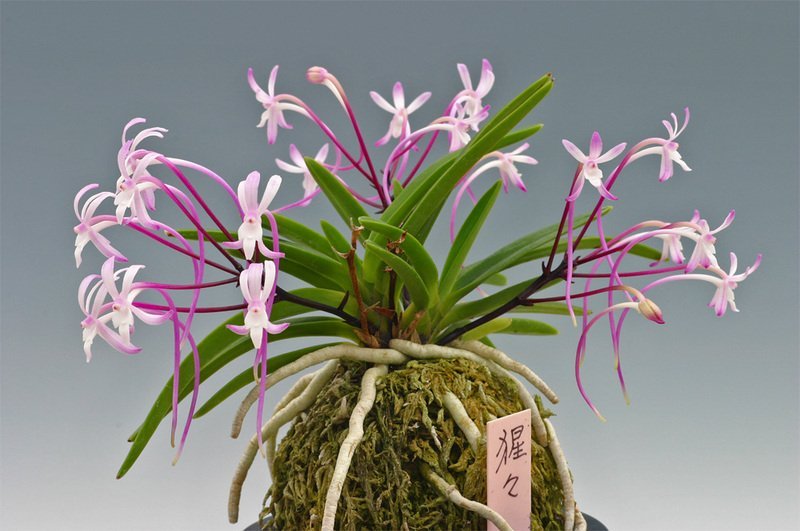
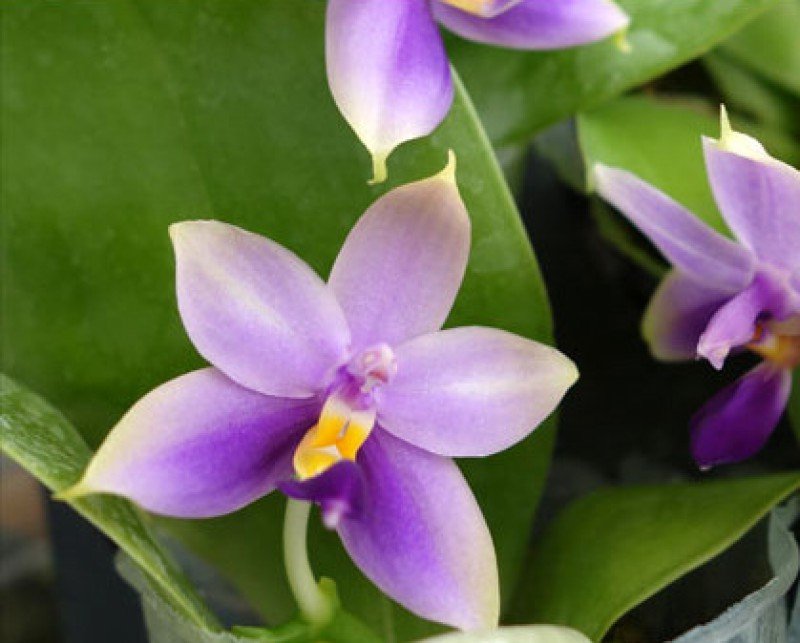
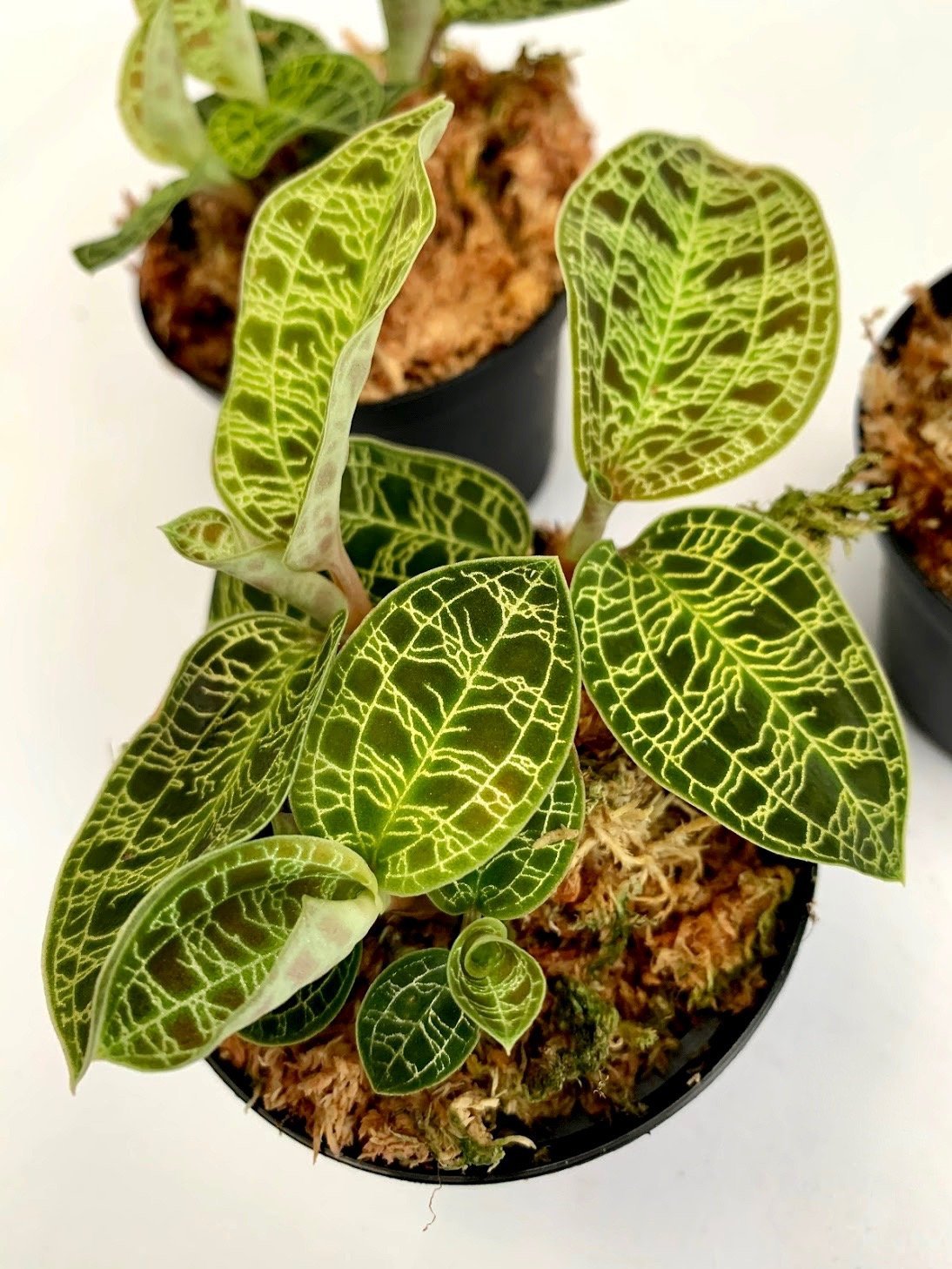
Recent bekeken
Which region is covered by this collection?
In a strict geographical sense, Southeast Asia includes Thailand, Vietnam, Laos, Cambodia, Myanmar, Malaysia, Indonesia, the Philippines, Singapore, Brunei and Timor-Leste. However, many well-known orchid genera do not adhere to these modern national boundaries.
Dendrobium for example, occurs from tropical and subtropical Asia to New Zealand and the Pacific. Phalaenopsis grows from parts of India and southern China through Southeast Asia to New Guinea and northeastern Australia. Vanda also extends from the Himalayas and southern China to Indonesia, New Guinea and the western Pacific.
That is why this collection, in addition to species from Southeast Asia, also contains related orchids from South China, Taiwan, Japan, the Himalayas and New Guinea. The separate product page lists the more specific origin and growth method where possible.
Origin is a clue, not a complete care instruction
A common mistake is to treat all Asian orchids as warm, moist and shade-loving. However, the region contains lowland rainforests, dry monsoon forests, limestone areas and cool high-altitude montane forests.
Two orchids from the same country can therefore require completely different conditions. A warm growing one Phalaenopsis from a lowland forest responds differently to a Dutch winter than a Coelogyne or Dendrobium from a cooler mountain area.
Therefore, when choosing, do not just look at the country of origin. The following properties are usually more important:
altitude at which the species naturally occurs;
warm, temperate or cool growing;
continuously moist or seasonally drier;
epiphytic, terrestrial or lithophytic growth;
amount of light;
final adult size.
Orchids from warm lowland forests
In tropical lowland areas, temperatures remain relatively high throughout the year. Many species grow here as epiphytes on trees, where their roots have access to air, rainwater and organic material that collects between branches.
Inside “Phalaenopsis” hear types like Phalaenopsis bellina and Phalaenopsis violacea in this warmer group. They form relatively compact plants with waxy, often fragrant flowers. Unlike many commercial butterfly orchids, these botanical species do not usually produce a long branch that is completely covered in flowers at once. They can form individual new flowers from an existing flower branch over a longer period of time.
Also Rhynchostylis gigantea, various Aerides and various warm-growing Vanda relatives are better suited to a light, warm growing spot. They generally require a lot of air around the roots and should not be left in a heavy, closed substrate for long periods of time.
A warm living room can be suitable, but only if there is sufficient light and good root condition. Heat without light does not automatically lead to strong growth or flowering.
Orchids from areas with a wet and drier period
Not all of Southeast Asia is equally wet all year round. In monsoon areas, a lot of rain falls during the growing season, after which a cooler or drier period may follow.
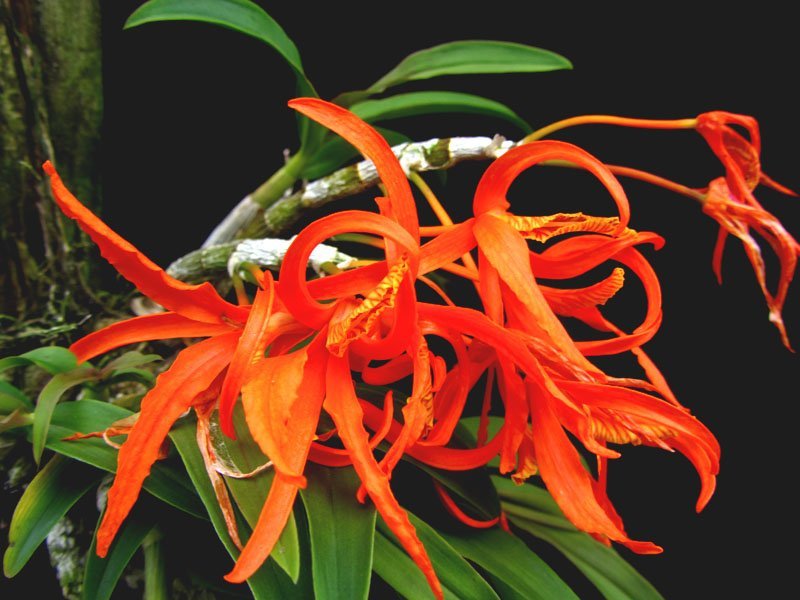
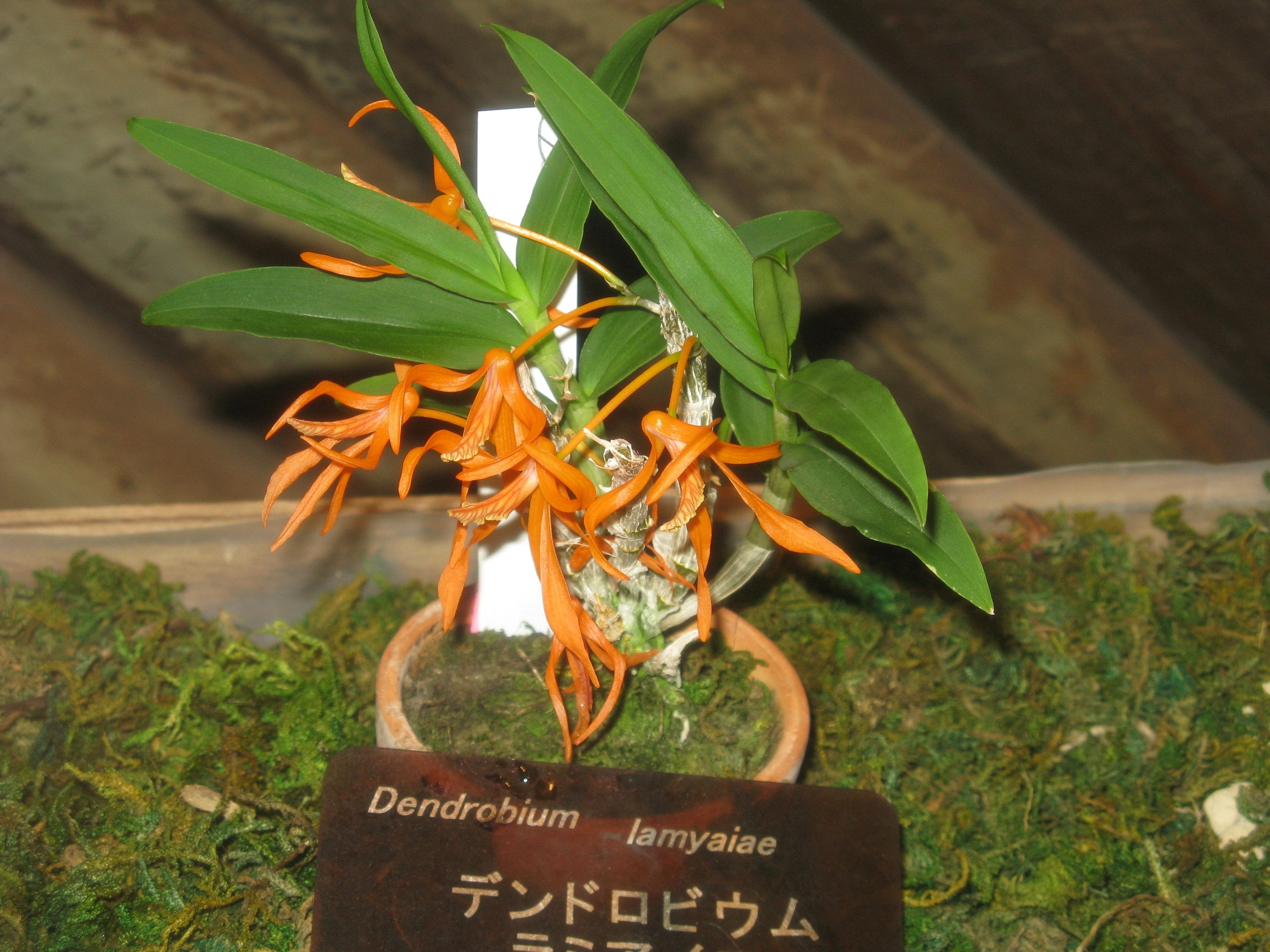
Inside “Dendrobium” this difference is particularly important. The genus includes evergreen species that are cared for evenly, but also deciduous species where water and nutrition are markedly reduced after the new growth matures. This seasonal change may be necessary to initiate flowering.
One Dendrobium nobile-like type, a Dendrobium from the Callista group and a warm growing one Dendrobium from New Guinea should therefore not automatically be treated according to the same schedule. Dendrobium is distributed from warm tropical lowlands to cool mountain areas and includes epiphytic, lithophytic and terrestrial growth forms.
When choosing a product, it is therefore more important to know which growth group the plant belongs to than just that Dendrobium stated on the label.
Cooler orchids from mountain areas
At higher altitudes, nights can be considerably cooler than in the tropical lowlands. The air often remains moist due to clouds, fog and regular rain, while the roots still receive a lot of oxygen.
Coelogyne cristata is a well-known example of an orchid that appreciates a cooler and drier winter period. Also several other Coelogyne, Dendrochilum, Pleione- and Dendrobium species originate from mountainous areas.
These plants are not always suitable for a permanently warm living room. An unheated conservatory, light, cool room or greenhouse can better suit their natural rhythm. Especially during warm Western European summers, cool-growing species may require more attention.
There are also warm and cooler species within one genus. The name Coelogyne or Dendrobium alone is not enough to determine the correct temperature.
Vanda, Aerides and Rhynchostylis
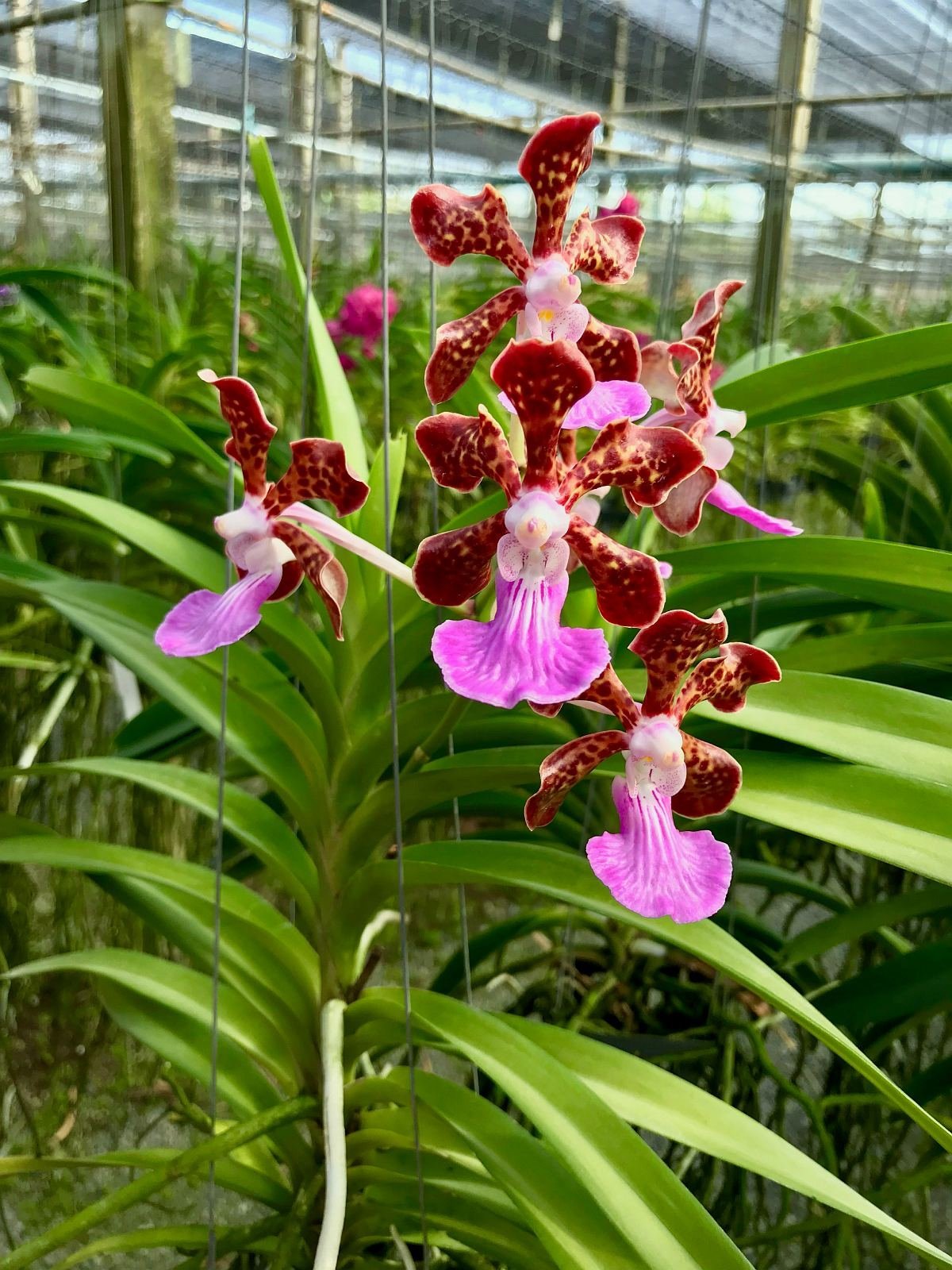
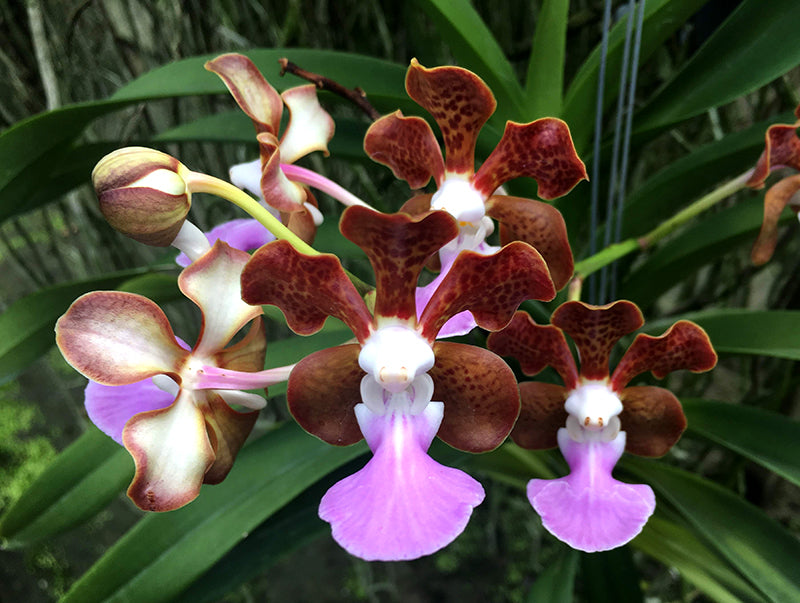
“Vandas” and related genera are valued for their bright colors, floral markings, scent and characteristic aerial roots. Some varieties form large plants over the years, while others remain surprisingly compact.
Vanda species usually grow monopodially: the plant continues to grow upwards from one central stem. Healthy aerial roots play an important role in the absorption and storage of water. As a result, many Vandas are grown in an open basket, on cork or in a very airy root environment.
However, there is no universal warm regime here either. Vanda coerulea and some other species come from higher elevations and tolerate or require cooler nights than distinctly lowland species. The genus occurs from southern and eastern Asia to New Guinea and the western Pacific, with species from very different altitude zones.
Aerides and Rhynchostylis often form fragrant flower clusters. They are interesting for collectors who, in addition to flower color, also value scent and the sculptural shape of an adult plant.
Botanical Phalaenopsis opposite the common butterfly orchid
Most consumers know Phalaenopsis like a strong hybrid from the garden center. Botanical Phalaenopsisspecies, however, can respond much more specifically to temperature, drought and humidity.
Its natural range includes warm and permanently moist areas, but also regions with a seasonally dry or cooler period. Some varieties have thick, fleshy leaves, while others may even lose some of their leaves during a pronounced dormant period.
A botanical Phalaenopsis should therefore not be chosen solely because the standard hybrid grows well at home. Also look at:
desired minimum temperature;
need for air movement;
plant size;
inflorescence;
sensitivity to prolonged wet roots;
grow warm or seasonally cooler.
Kinds like Phalaenopsis bellina and violacea are especially interesting because of their scent, flower structure and repeated flowering from existing flower branches. Other species are collected precisely because of their silver-marked leaves, miniature growth or a pronounced seasonal rhythm.
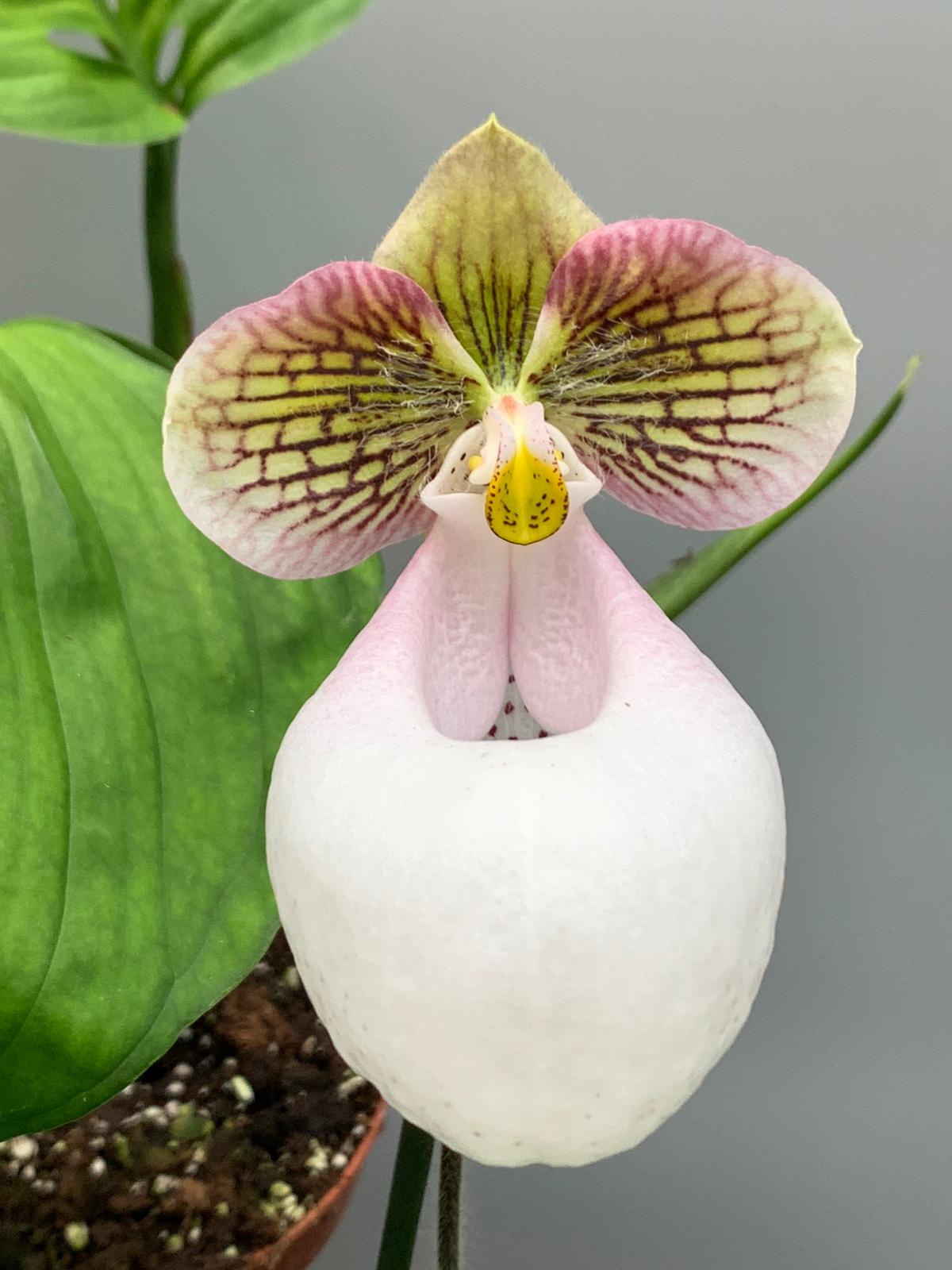
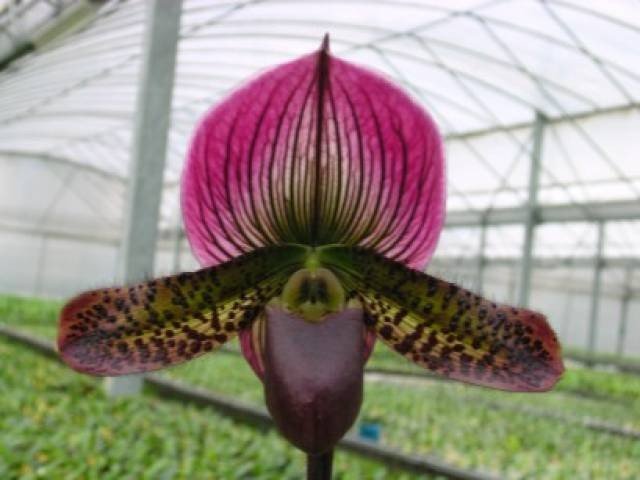
Paphiopedilum from forests and limestone areas
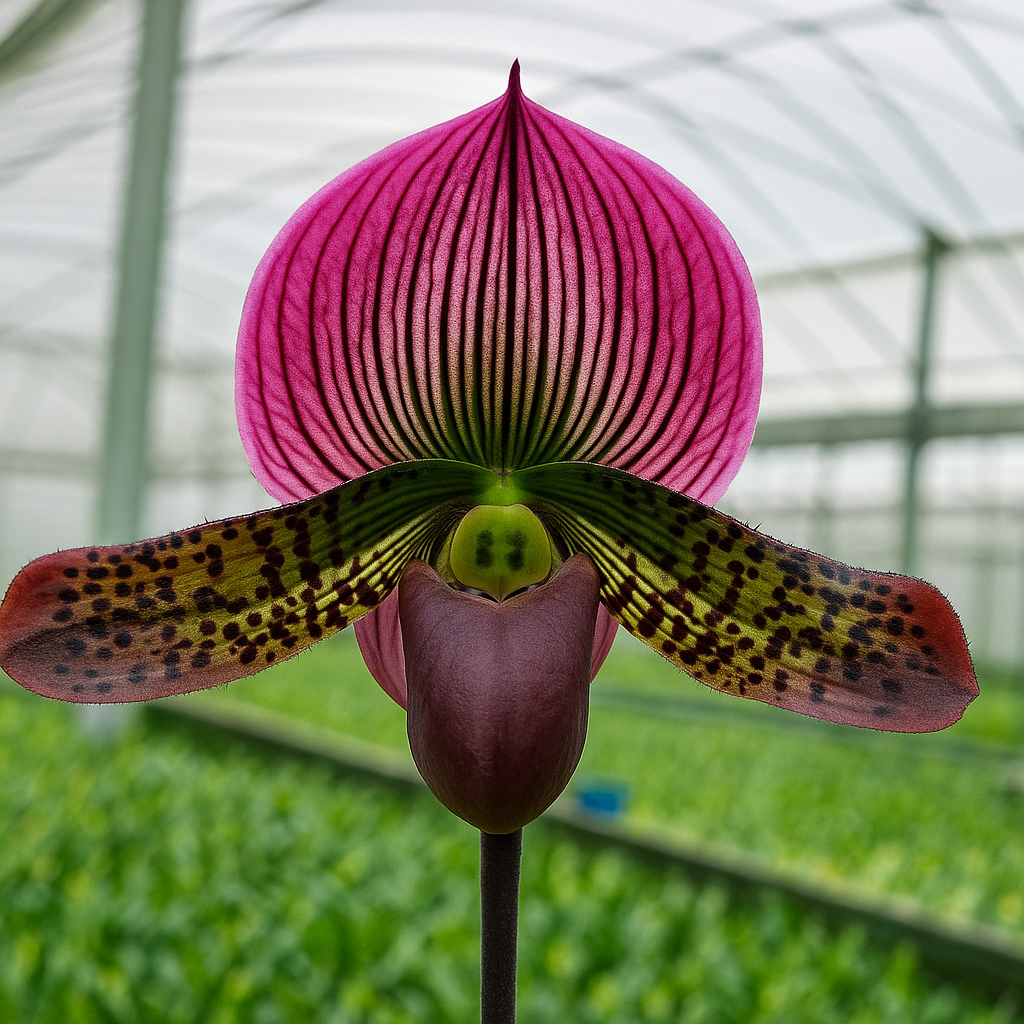
“Paphiopedilums” grow terrestrially or lithophytically and do not have pseudobulbs in which they can store water for long periods of time. The plants form fans of leaves and produce one flower spike from each mature fan.
The genus occurs from southern China and the Himalayas to Southeast Asia, the Philippines and New Guinea. Some species grow among humus and leaf litter, while others are strongly associated with limestone rocks and more alkaline material around the roots.
Also inside Paphiopedilum there are clear differences:
marble-leaved varieties often grow warmer and more shady;
green-leaved mountain varieties may require cooler conditions;
multi-flowered varieties usually require a lot of time, root space and stable heat;
limestone-dwelling species can benefit from an airy substrate with a suitable calcareous component.
A young one Paphiopedilum may require several years before first flowering is achieved. An adult or larger plant therefore not only represents more leaves, but also several years of development.
Coelogyne, Dendrochilum and other rich flowering species
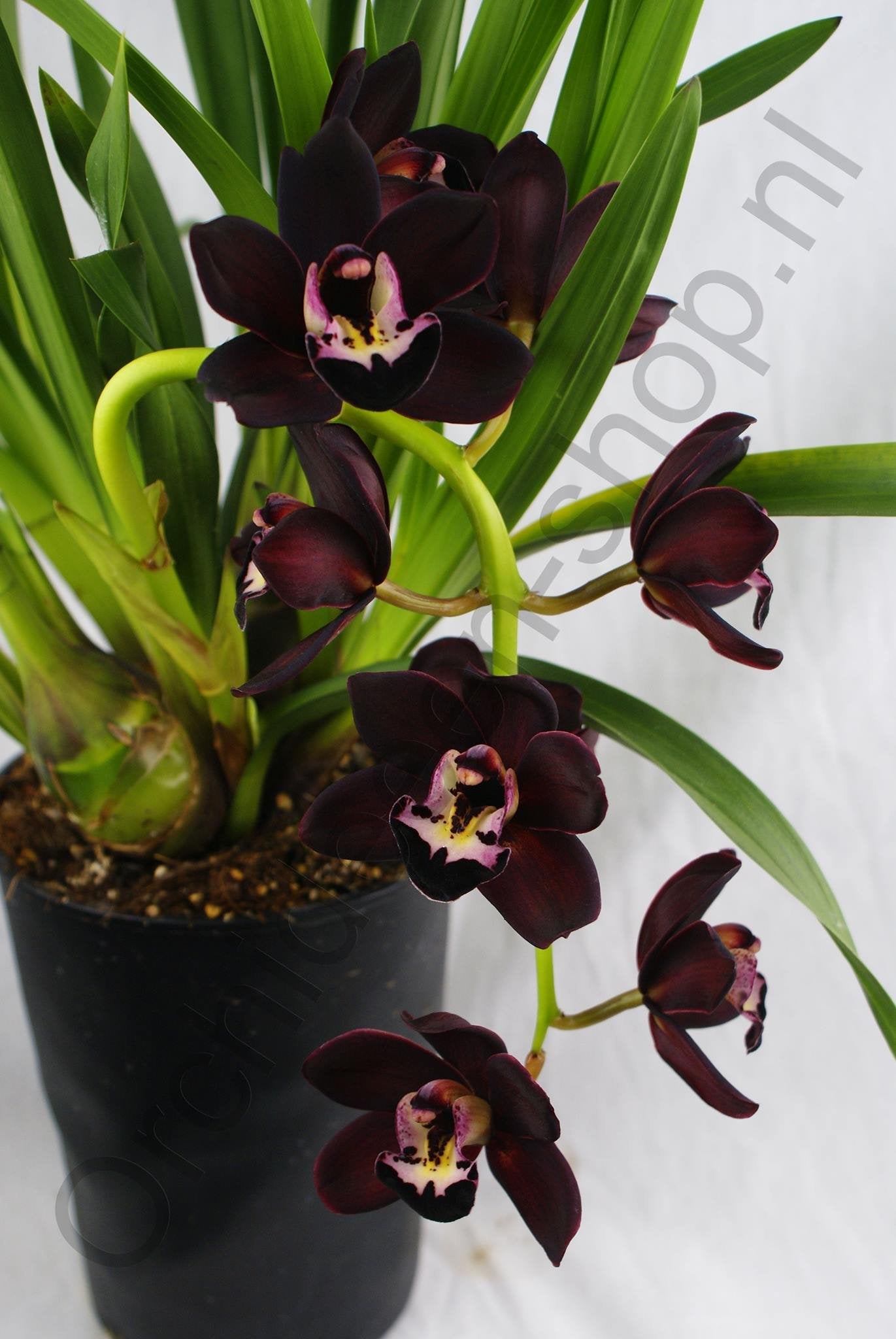
Coelogyne and its related groups include species with widely varying plant forms. Some produce large white or cream-colored flowers, while others develop long, gracefully arching racemes with dozens of small flowers.
With Dendrochilum the attraction often lies in the movement of the flower clusters. The many small flowers together form a fine, almost textile line above or next to the leaf. Several varieties also emit a distinct odor.
This group contains both warm-growing tropical species and distinctly cooler mountain orchids. Therefore, always check the specific species instead of keeping all Coelogynes and Dendrochilums in the same place.
Miniature orchids from Asia
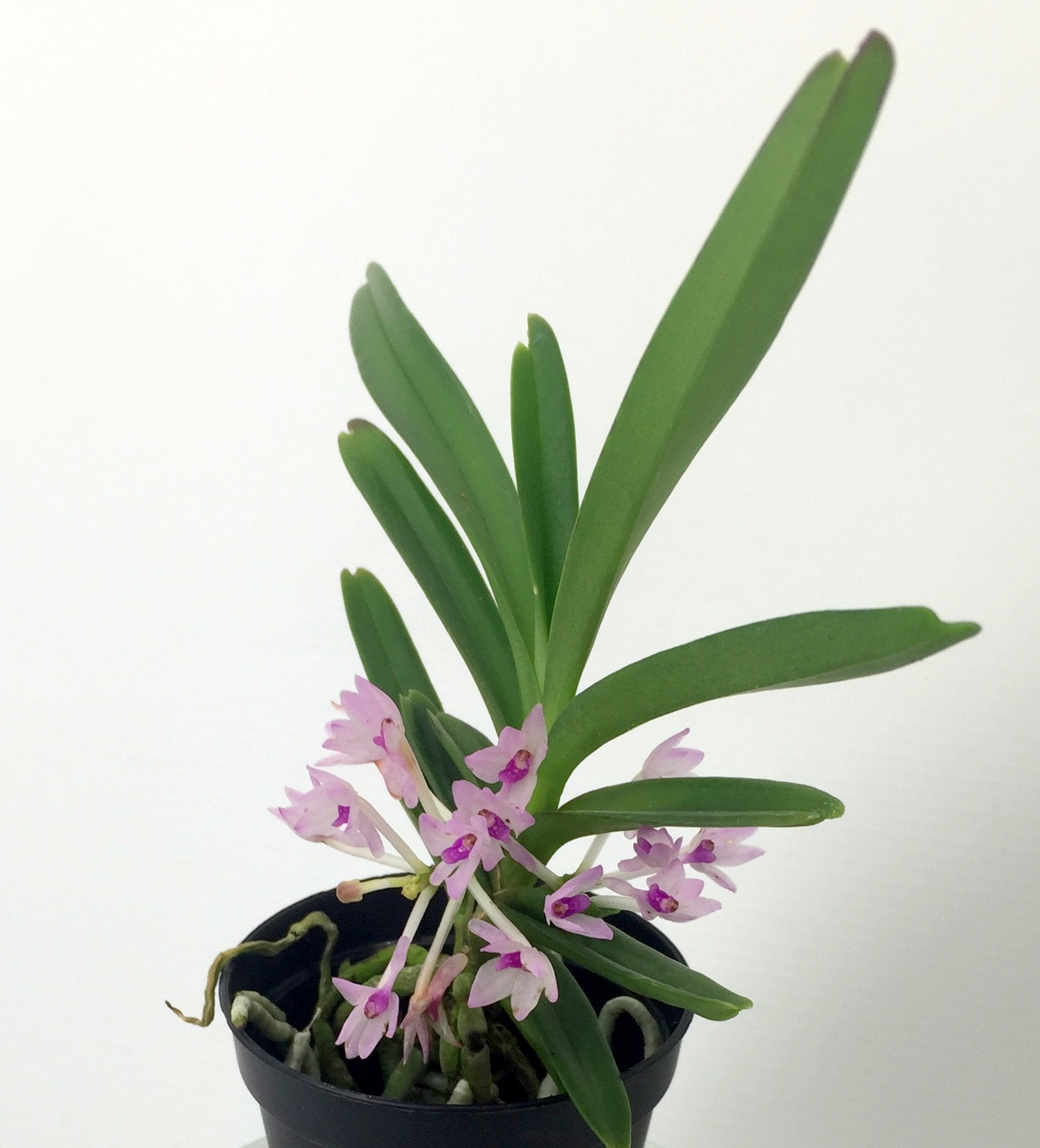
Southeast Asia is also rich in very small epiphytic orchids. Schoenorchis, Hymenorchis, Ceratocentron, Gastrochilus and certain Bulbophyllum- and Dendrobium species can remain particularly compact as an adult plant.
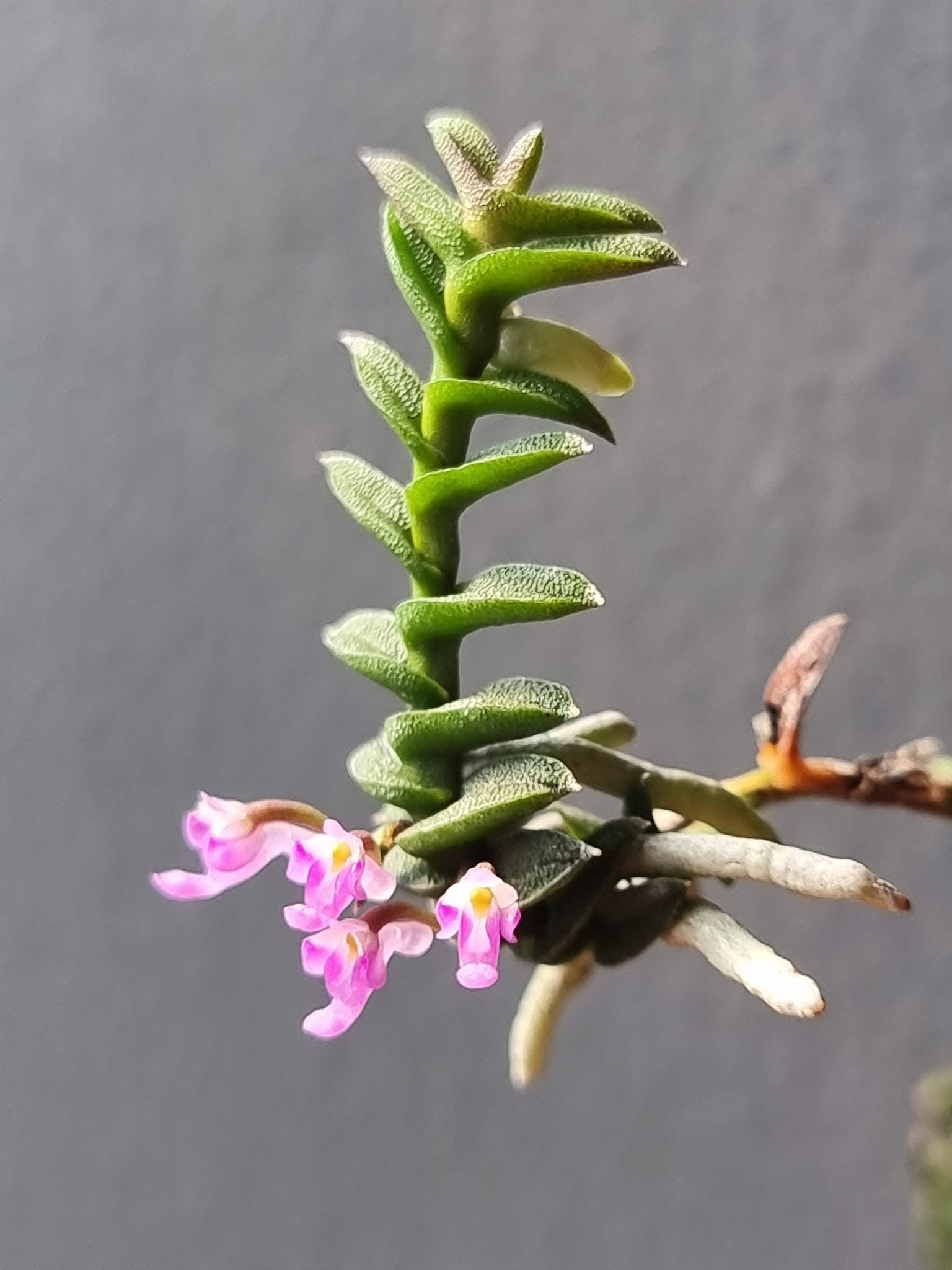
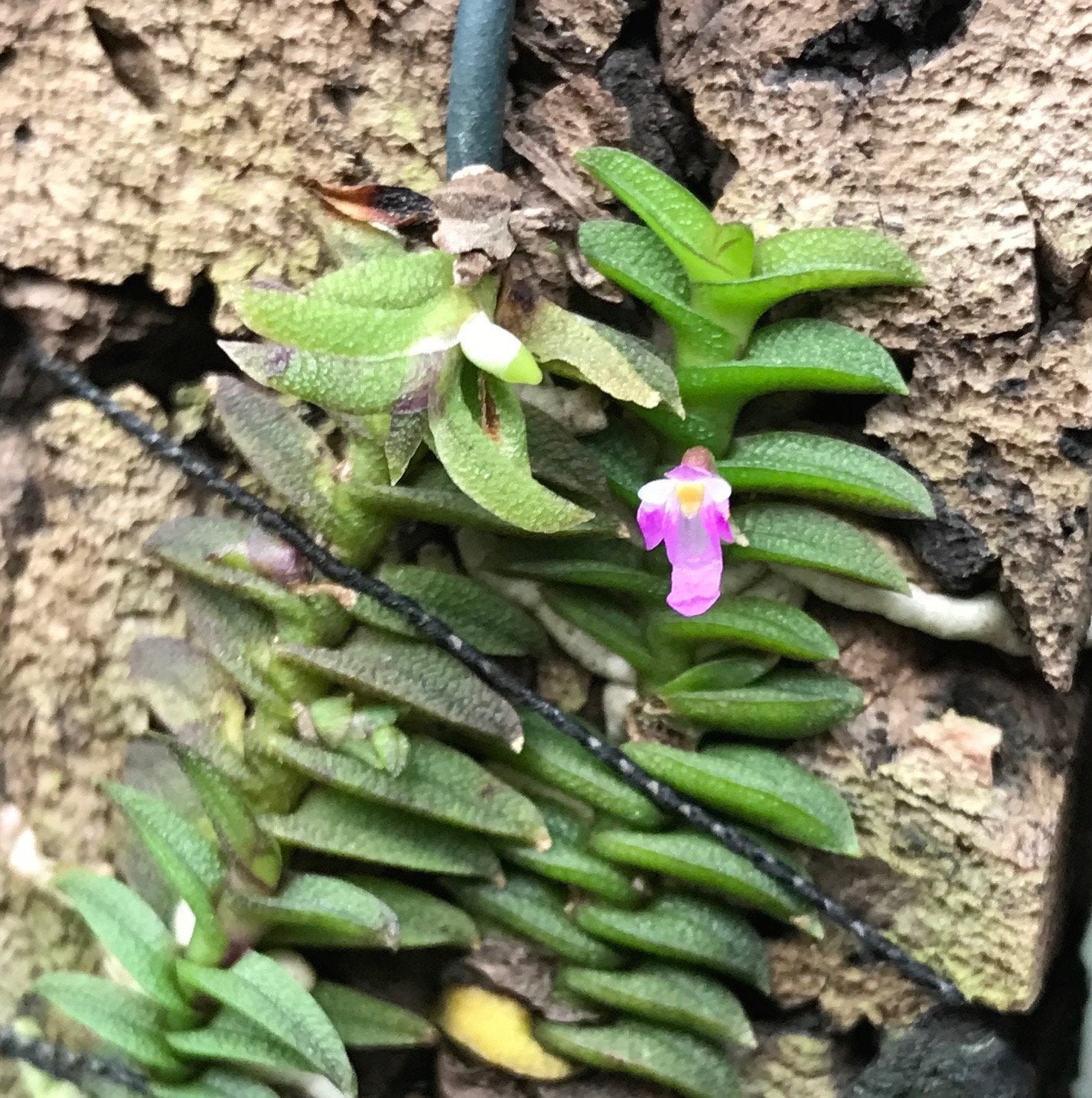
“Schoenorchis” forms small plants with fine flower clusters. Schoenorchis fragrans is also appreciated for its sweet scent. Gastrochilus combines compact growth with waxy flowers that are often strikingly spotted or striped.
Leafless Chiloschista species show a completely different growth form. Outside of flowering, the plant consists largely of green roots that capture light. During flowering, fine flower branches are formed between the network of roots.
These plants fit well in a specialized display cabinet or greenhouse, but their small size does not automatically make them easy to grow. Small tied orchids have little moisture reserve and can dry out quickly during hot, dry days.
Also view our collection for this growth form “mini orchids”.
Asian jewel orchids
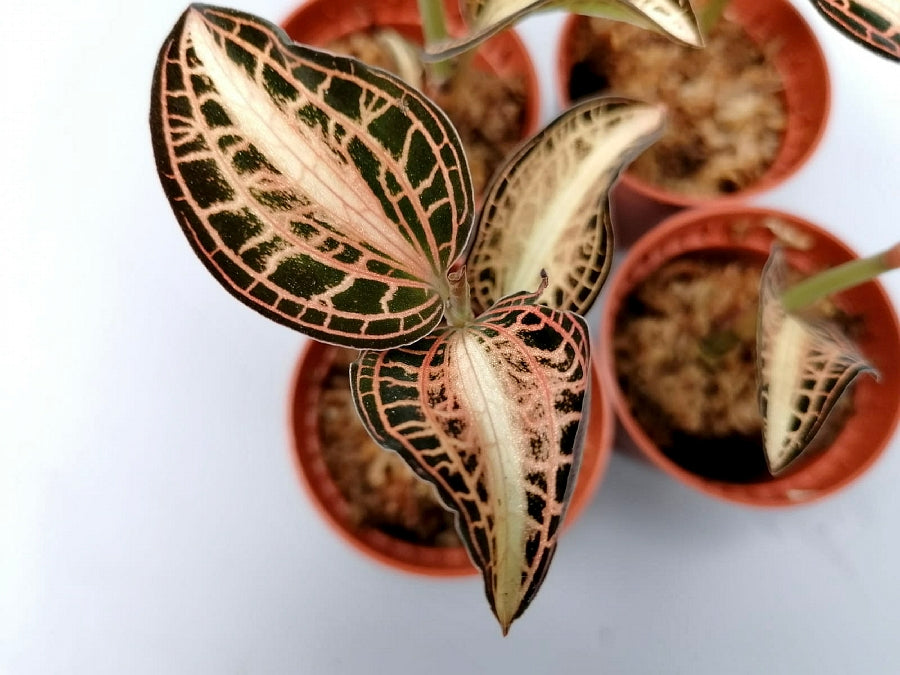
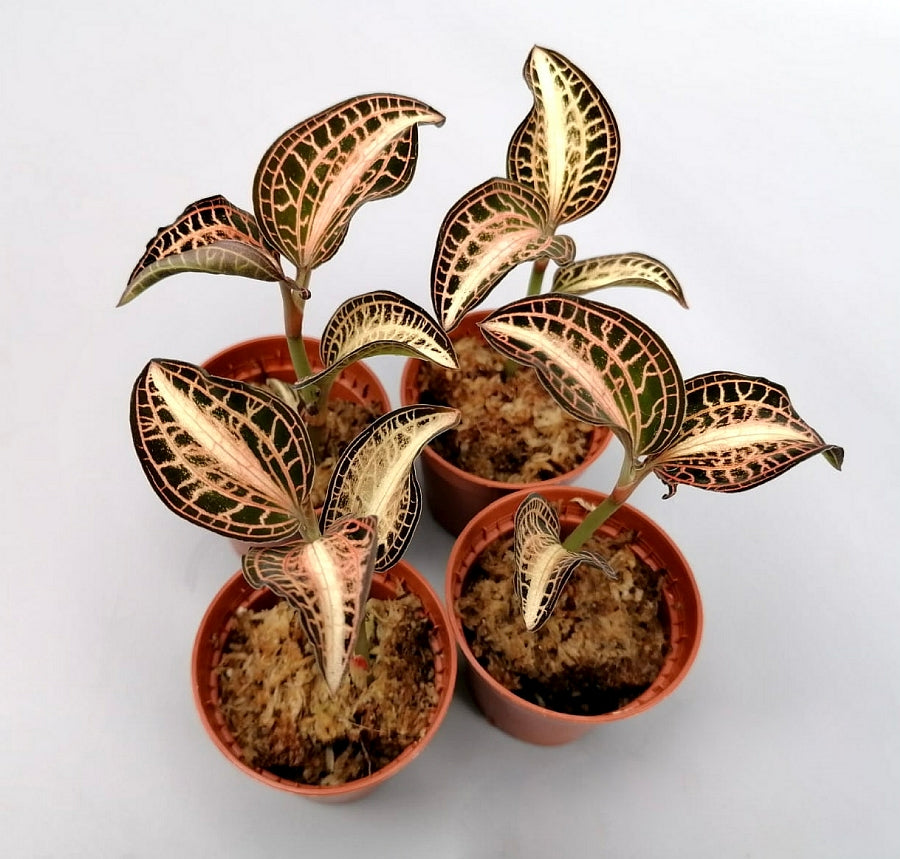
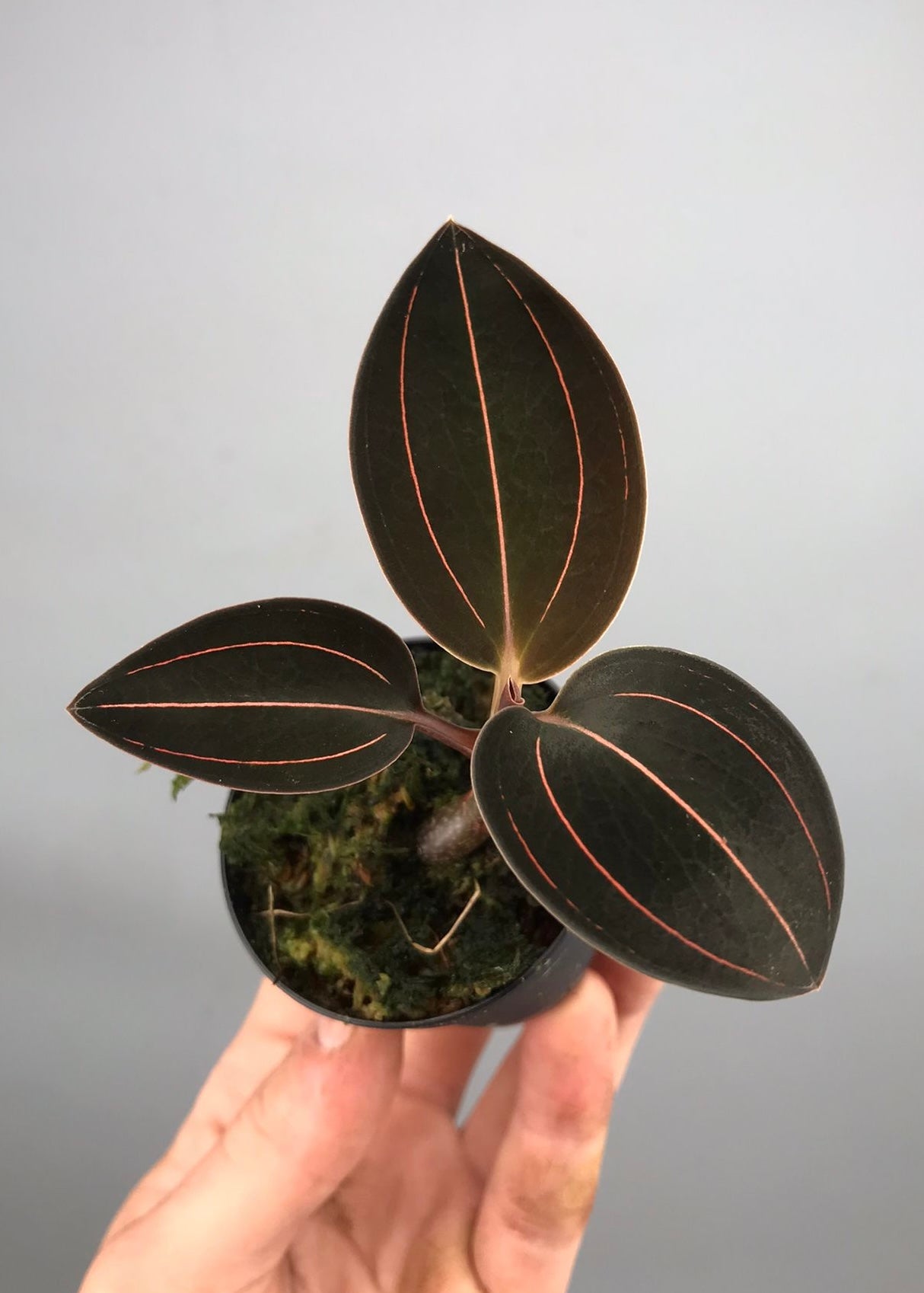
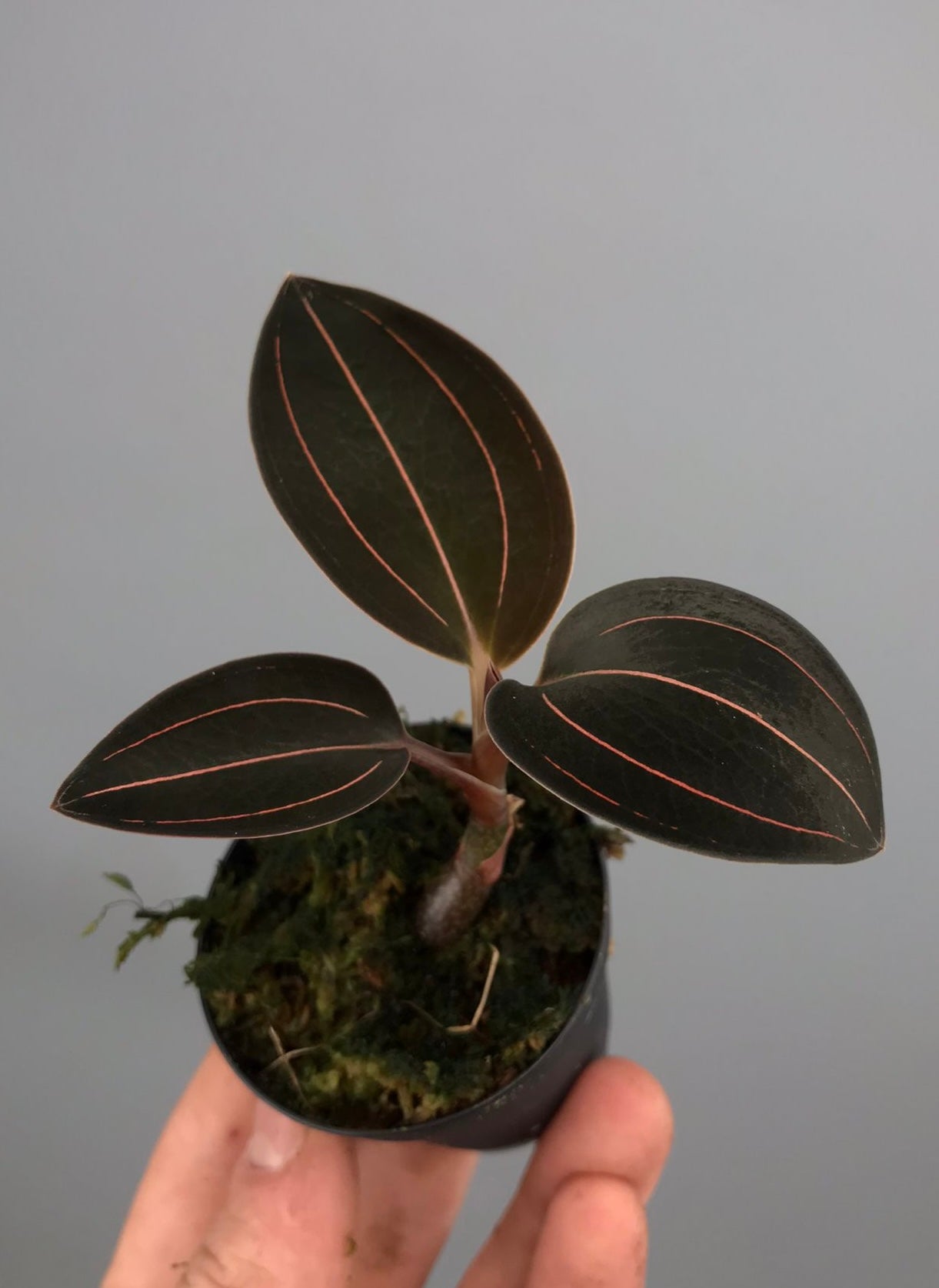
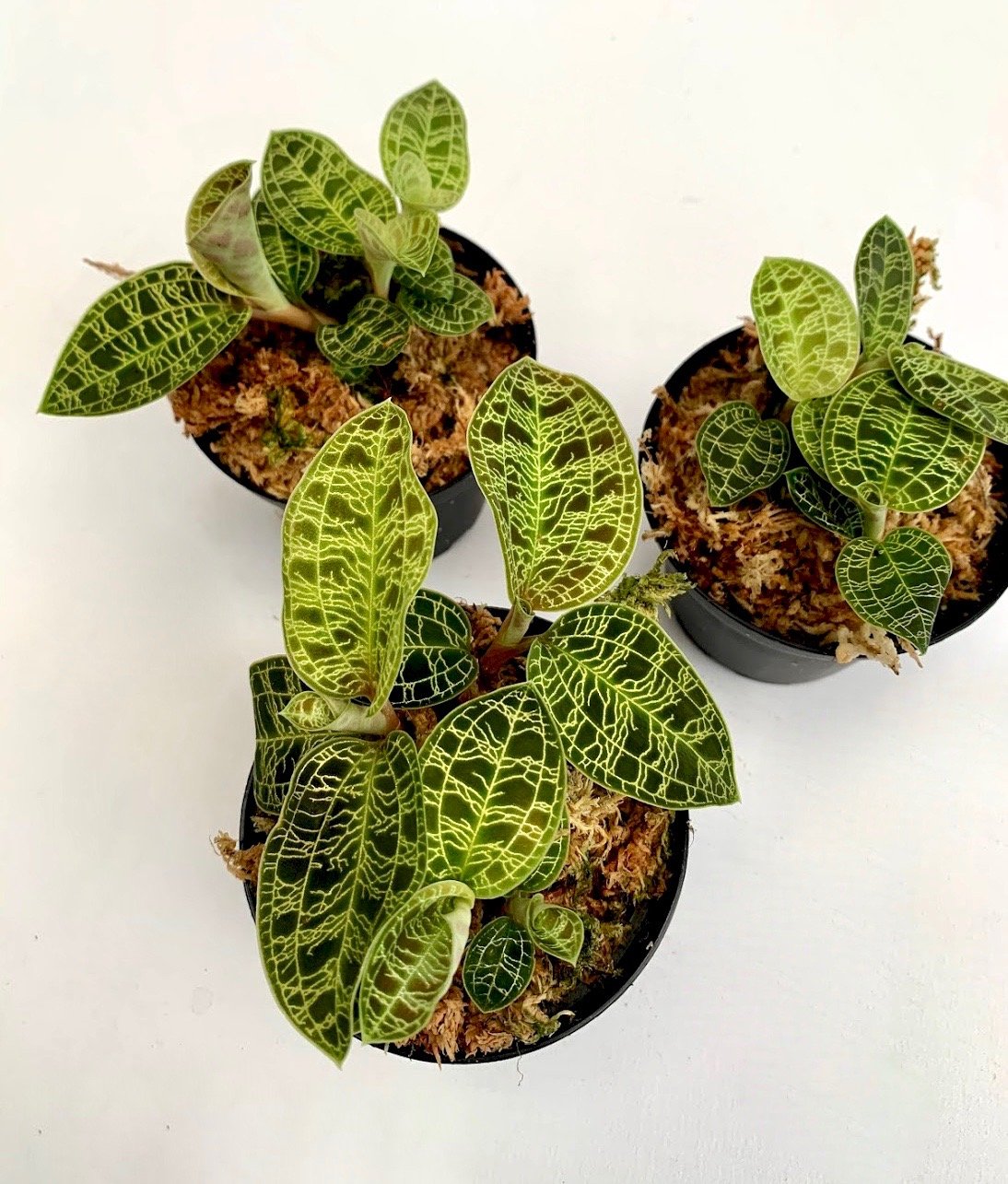
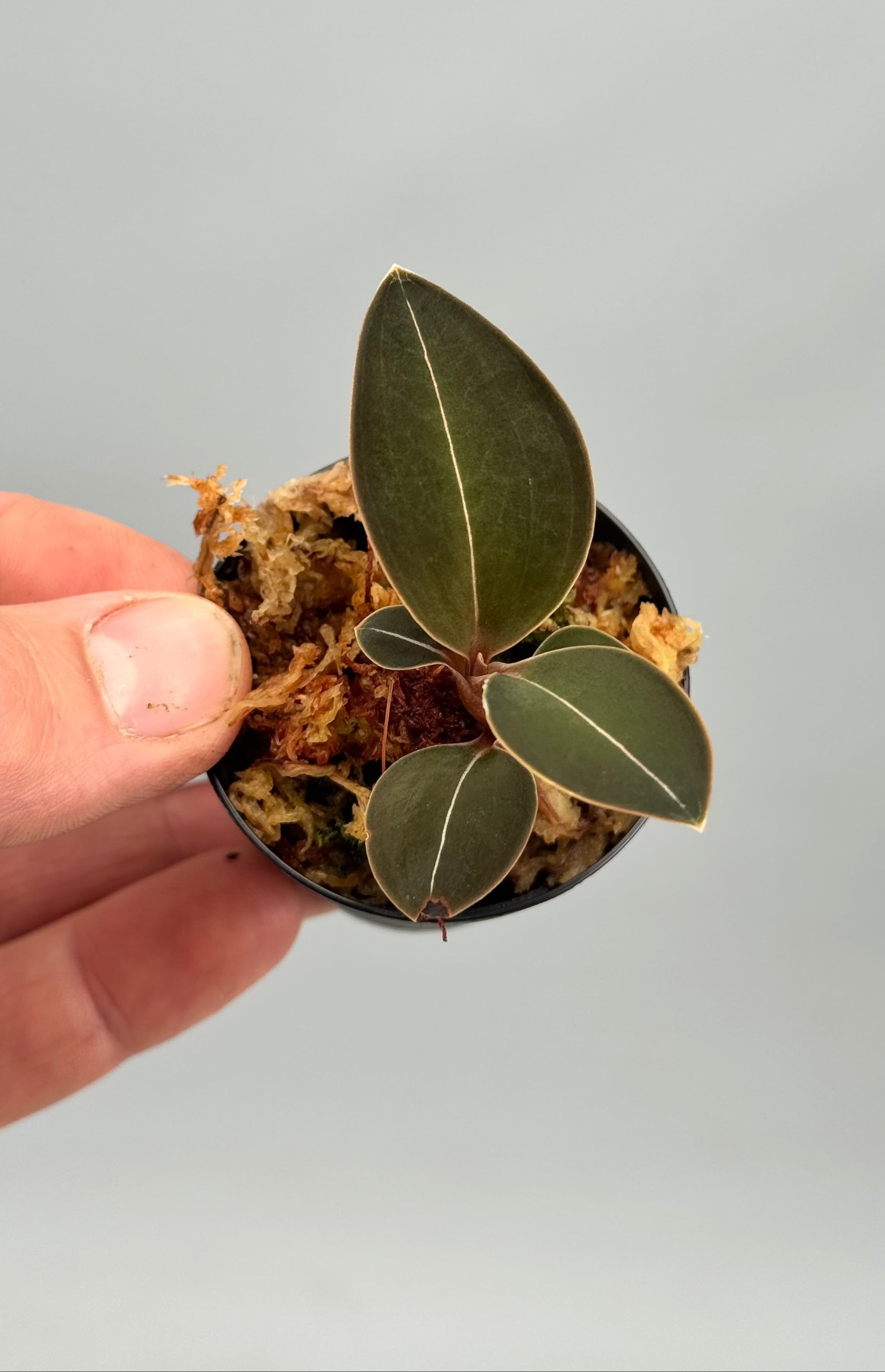
Not every orchid from this region is collected primarily for the flower. Macodes, Anoectochilus, Ludisia, Dossinia and various Goodyera species stand out because of their velvety leaves, metallic veins and dark leaf colours.
This one “jewel orchids” usually grow terrestrially and require a finer, more moisture-retaining root environment than epiphytic Vandas or Phalaenopsis. Tolerance also varies greatly within this group. Ludisia usually adapts more easily to normal living conditions than a sensitive Dossinia or Macodes.
Therefore, do not automatically place jewel orchids with other Asian orchids just because the geographical origin is similar. The growth habit and root needs are more decisive.
Which Asian orchid suits your growing location?
For a warm living room
Look at warm growing botanicals Phalaenopsis, certain Dendrobium hybrids and well-rooted plants that are offered in pots. Check that the available location receives sufficient light and avoid heavy, constantly wet substrates.
For a light conservatory or greenhouse
Vanda, Aerides, Rhynchostylis, large Dendrobiums and various Cymbidiums get more space, light and air movement here. Pay attention to the temperature regime: a warm Vanda requires something different than a cooler growing one Cymbidium or Coelogyne.
For a terrarium or display cabinet
Choose compact varieties that suit the temperature of the setup. Schoenorchis, certain Gastrochilus, small Bulbophyllums and jewel orchids may be suitable. High humidity must be combined with gentle air movement and an appropriate drying time.
For a cool plant room
Certain Coelogyne, Pleione-, Cymbidium- and Dendrobium species come into their own here better than in a permanently warm living room. Species from mountain areas in particular may need a clear difference between summer and winter.
Import and acclimatization in Western Europe
An orchid that grew up with an Asian grower comes from a climate with different light intensity, day length, humidity and temperature than a Dutch living room or greenhouse.
Therefore, first give a newly received plant time to adapt to the new conditions. Do not change the location, pot, substrate and watering at the same time if there is no immediate need to do so.
During acclimatization, pay special attention to active root tips and the beginnings of new growth. Old leaf damage will no longer recover, but new healthy roots and leaves show that the plant has accepted the transition.
A plant with a large root system and multiple mature growing points usually has more reserves than a small seedling. This makes plant stage an important purchasing choice, especially for slow Paphiopedilums and specialist miniatures.
What do seedling mean? Adolescent and adult?
Various plant stages are offered within this collection.
One seedling is a young plant that may need several growing seasons before flowering is possible. This is often the most economical way to obtain a rare species, but it also requires the most patience.
One Adolescent plant is between seedling and maturity. The plant is further developed, but not always large enough to flower immediately.
One mature plant has normally reached the age and development to flower under suitable conditions. This does not automatically mean that the plant has a flower or flower spike when shipped.
Always check the variant Blooming: Yes or Blooming: No. The flower photo shows what the species can produce and is not automatically a representation of the condition in which each specimen is delivered.
Responsible sourcing of Asian orchids
International trade in orchids is regulated. The orchid family largely falls under CITES Appendix II, while Paphiopedilum if gender is included in Appendix I. This makes verifiable, artificial propagation and correct documentation important.
We work with specialized growers and regular import channels. The plants in the market have been grown and are accompanied by the required documents where necessary. Buying a special botanical species does not have to be at the expense of wild populations.
For the buyer, this also means that a slow-growing or rare species may have a higher price. The price reflects not only the rarity, but also propagation, cultivation time, loss, documentation and transport.
Buy orchids from Southeast Asia
This collection contains one of the broadest parts of our orchid range: from accessible hybrids to botanical species for experienced collectors. The range changes regularly because new batches arrive and rare plants are sometimes only available in small numbers.
Don't just choose based on flower color or country of origin. Also check:
the desired minimum and maximum temperature;
amount of light;
mature plant size;
potted or tied culture;
rest period;
plant stage;
flowering or non-flowering liver form.
Claessen Orchids & Plants has been working with special orchids since 2005. The plants are checked before departure and carefully prepared for shipment from the Netherlands. More information about packaging, delivery and weather protection can be found at “shipping” and in the “frequently asked questions”.
Discover the current range and choose an Asian orchid that not only looks special, but also suits the temperature, space and care that you can actually provide.